


News
A cheese packaging plant in the Netherlands sent us a form-fill-seal machine harness in March. Eight months in service, on a line that runs three shifts and gets a full foam-and-rinse washdown twice a day. The jacket on the main cabinet harness had swollen to about 1.4× its original diameter and was soft enough to mark with a thumbnail. Two M12 connectors on the sealing-jaw heater circuit had green corrosion inside the shell. And the cable the customer had specified as "food grade, blue" was black — the supplier had shipped the standard industrial part and assumed nobody would notice. They noticed. The plant had just failed a customer audit for not being able to show the material certificate for a cable running inside a food production zone. That audit failure cost them more than the harness would have cost at ten times the price. Food packaging is the most over-specified and under-engineered category of harness work we do. Everyone knows the words — IP69K, food grade, hygiene. Very few RFQs say what cleaning chemistry the machine sees, how many flex cycles the drag chain runs per shift, or which of the four or five current standards that machine actually has to satisfy. This article is what we ask before we quote.
Custom Outdoor Charging Equipment Wire Harnesses: Built for Rain, Salt, Cold, and 350 A of Heat A marina operator in Norway sent us a box last February. Fourteen J1772 handles from outdoor AC pedestals along the docks, all of them from the same supplier, all of them one winter old. Every single one had a crack in the jacket right where the cable exits the handle body. Not a scratch — a crack, split through to the shield, with green copper visible inside. Two of the pedestals had tripped their RCD and nobody could figure out why until we cut the handle open and found standing water in the strain-relief boot. The cable was rated for the job on paper. Outdoor, flexible, -40 °C to +90 °C printed right on the jacket. What it was not rated for was being flexed at -18 °C, twelve times a day, by people wearing gloves, while salt spray dried on the surface and the sun hit it for four months of the year. That is the gap between a datasheet and an outdoor charging installation, and closing that gap is most of what this article is about.
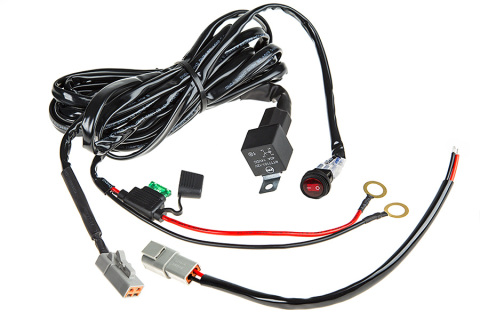
An RV converter in Germany emailed us last winter. His interior lighting harness supplier had shipped three SKUs in the wrong keyway. The ambient LED strip was drawing 1.2 A through a 22 AWG pair that was actually 24 AWG with a thick jacket painted to look like 22. After two weeks of warm-up, the jacket got tacky and started transferring brown residue onto the headliner. He asked if we could rebuild the harness, this time with the right wire, the right connector, and a print that matched his revised trim layout. We could. It took us a week. That is more or less what this whole article is about — what goes into a custom automotive interior wire harness, and where most suppliers cut corners that you only find out about six months after delivery.
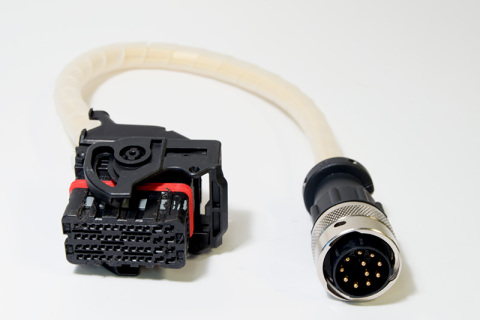
Last spring a customer sent us a harness from his old supplier and asked what was wrong with it. The complaint was hum. Not loud hum, but enough that his installed conference room mics picked it up. We cut the boot off one XLR and found the problem in about ten seconds: the shield had been soldered to pin 1 with a three-centimeter pigtail, and the drain wire had been twisted into a neat little antenna sitting right next to the hot pin. That is what this article is about. Audio harnesses are not hard to build badly. They are hard to build so they stay quiet in a rack, on a stage, or inside a powered speaker that gets trucked across a country twice a month. We build custom audio cable assemblies and speaker wire harnesses for pro audio, installed AV, and hi-fi OEM customers out of our factory in Xiamen, and this is everything we have learned about getting it right.
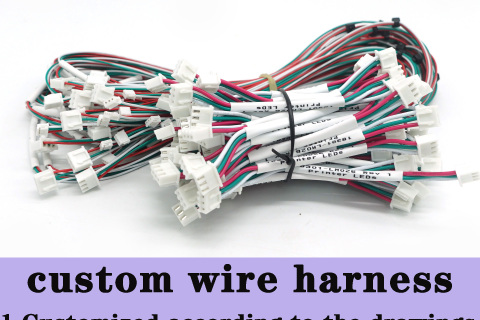
Here is a scene we see every few weeks. An engineer emails us a drawing, then follows up an hour later because his line is down. The supplier before us shipped a batch of connectors that were "JST-compatible" but turned out to be anything but. Pins would not seat. Housings cracked. His PCB was already sitting in the wave solder machine. We have built JST and Molex harnesses for ten years now, for kiosk terminals, battery packs, energy storage cabinets, 3D printers, you name it. This guide is basically everything we learned the hard way, so you do not have to. In this guide: JST and Molex series, with the numbers that actually matter (pitch, current, wire size) JST vs Molex: an honest comparison, because neither brand wins everywhere How a custom JST wire harness gets built, step by step, no shortcuts Wire, stripping, crimping, and the tests that catch a bad crimp before it ships Where these harnesses actually fail in the field, and what to do about it A spec template you can copy into your next RFQ Table of Contents
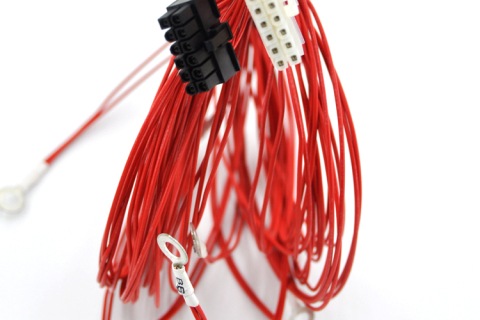
We design and manufacture battery connection harnesses, BMS sensing leads, cell interconnects, and custom cable assemblies for battery pack manufacturers worldwide. From 3-cell LiPo balance leads to 400V energy storage arrays. ISO 9001:2015 Certified | UL / CE / UN38.3 / IEC 62133 Compatible | IPC/WHMA-A-620 Class 2 & 3 | 100% Electrical + Hi-Pot Tested | Free DFM Review
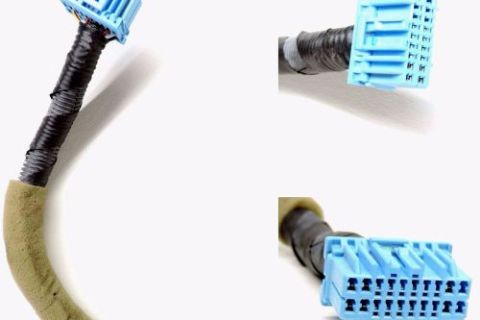
Custom RC Car Wiring Harnesses — Because the Off-the-Shelf Stuff Never Fits Right
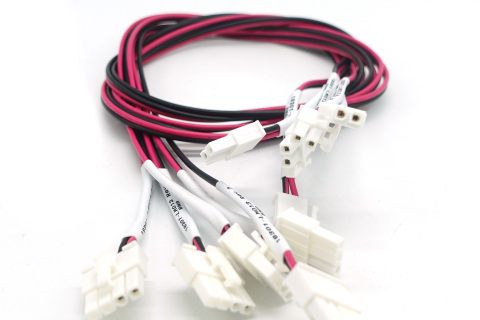
Custom Electronic Component Wire Harness: Precision Cable Assemblies for PCB, Sensors & Industrial Electronics High-Precision Custom Wiring Solutions for Electronic OEMs — From Prototype to Mass Production, Engineered for Signal Integrity, Space Constraints, and Reliability ✓ ISO 9001:2015 Certified | ✓ IPC/WHMA-A-620 Class 2 & 3 | ✓ UL / CE / RoHS / REACH Compliant | ✓ 100% Continuity + Hi-Pot Tested | ✓ Fine-Pitch Connector Expert (JST, Molex, TE, Hirose, JAE, I-PEX) | ✓ Free DFM Review | ✓ 5-Day ECO Turnaround
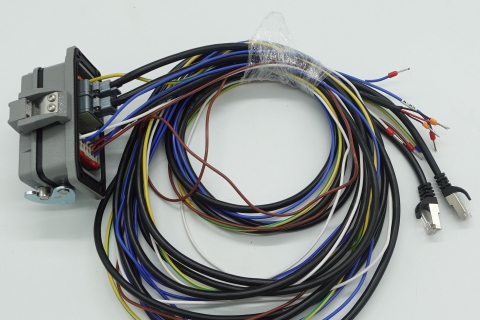
Why Metro X-Ray & Railway Detection Systems Demand Industrial-Grade Harnesses