


News
Last spring a customer sent us a harness from his old supplier and asked what was wrong with it. The complaint was hum. Not loud hum, but enough that his installed conference room mics picked it up. We cut the boot off one XLR and found the problem in about ten seconds: the shield had been soldered to pin 1 with a three-centimeter pigtail, and the drain wire had been twisted into a neat little antenna sitting right next to the hot pin. That is what this article is about. Audio harnesses are not hard to build badly. They are hard to build so they stay quiet in a rack, on a stage, or inside a powered speaker that gets trucked across a country twice a month. We build custom audio cable assemblies and speaker wire harnesses for pro audio, installed AV, and hi-fi OEM customers out of our factory in Xiamen, and this is everything we have learned about getting it right.
Here is a scene we see every few weeks. An engineer emails us a drawing, then follows up an hour later because his line is down. The supplier before us shipped a batch of connectors that were "JST-compatible" but turned out to be anything but. Pins would not seat. Housings cracked. His PCB was already sitting in the wave solder machine. We have built JST and Molex harnesses for ten years now, for kiosk terminals, battery packs, energy storage cabinets, 3D printers, you name it. This guide is basically everything we learned the hard way, so you do not have to. In this guide: JST and Molex series, with the numbers that actually matter (pitch, current, wire size) JST vs Molex: an honest comparison, because neither brand wins everywhere How a custom JST wire harness gets built, step by step, no shortcuts Wire, stripping, crimping, and the tests that catch a bad crimp before it ships Where these harnesses actually fail in the field, and what to do about it A spec template you can copy into your next RFQ Table of Contents
We design and manufacture battery connection harnesses, BMS sensing leads, cell interconnects, and custom cable assemblies for battery pack manufacturers worldwide. From 3-cell LiPo balance leads to 400V energy storage arrays. ISO 9001:2015 Certified | UL / CE / UN38.3 / IEC 62133 Compatible | IPC/WHMA-A-620 Class 2 & 3 | 100% Electrical + Hi-Pot Tested | Free DFM Review
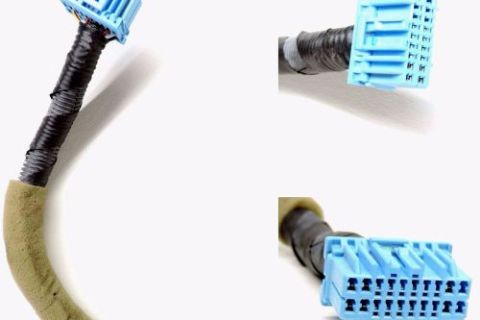
Custom RC Car Wiring Harnesses — Because the Off-the-Shelf Stuff Never Fits Right
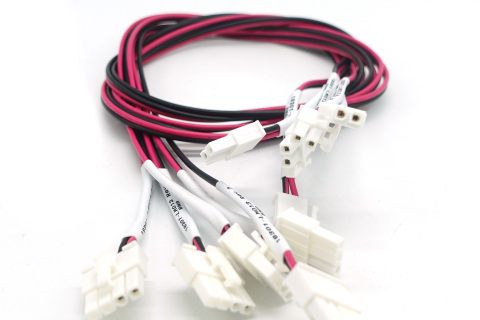
Custom Electronic Component Wire Harness: Precision Cable Assemblies for PCB, Sensors & Industrial Electronics High-Precision Custom Wiring Solutions for Electronic OEMs — From Prototype to Mass Production, Engineered for Signal Integrity, Space Constraints, and Reliability ✓ ISO 9001:2015 Certified | ✓ IPC/WHMA-A-620 Class 2 & 3 | ✓ UL / CE / RoHS / REACH Compliant | ✓ 100% Continuity + Hi-Pot Tested | ✓ Fine-Pitch Connector Expert (JST, Molex, TE, Hirose, JAE, I-PEX) | ✓ Free DFM Review | ✓ 5-Day ECO Turnaround
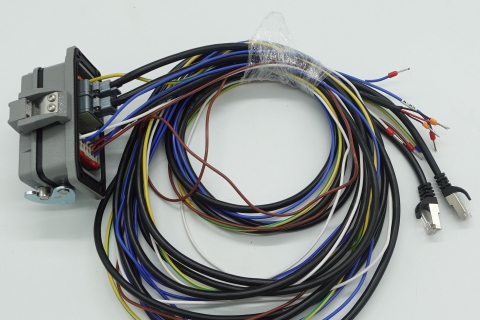
Why Metro X-Ray & Railway Detection Systems Demand Industrial-Grade Harnesses
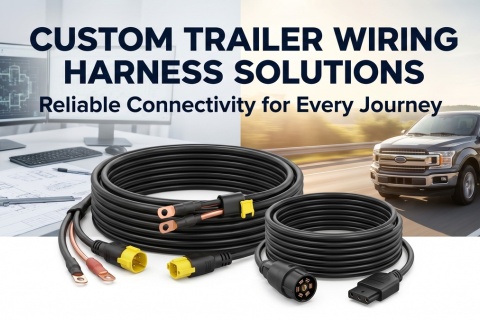
1. Why Trailer Wiring Harnesses Demand a Specialist Supplier A trailer wiring harness operates in one of the most electrically hostile environments imaginable: constant vibration, wide temperature swings (−40 °C to +85 °C), road salt, water immersion, UV exposure, and repeated mechanical flexing at every coupling cycle. A failed harness on a highway-bound tow combination is not just an inconvenience — it is a safety event. Running lights, brake lights, turn signals, and electric brake actuators all depend on a harness that survives tens of thousands of connection cycles without degradation.
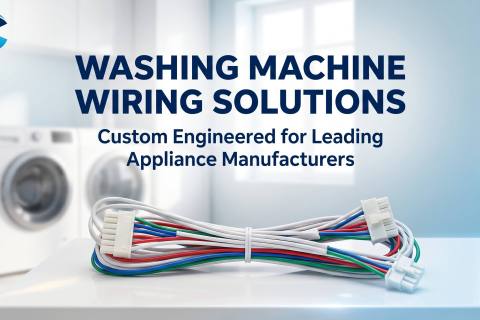
1. Why Washing Machine Wire Harnesses Demand Specialized Manufacturing A washing machine is one of the most electrically demanding home appliances on the market. Inside a single unit, you'll find motor drives pulling 10–15A, high-temperature heating elements, water inlet solenoid valves, drain pumps, electronic control modules, and safety interlock switches — all packed into an enclosure that subjects every component to water spray, high humidity, detergent vapor, and constant mechanical vibration.
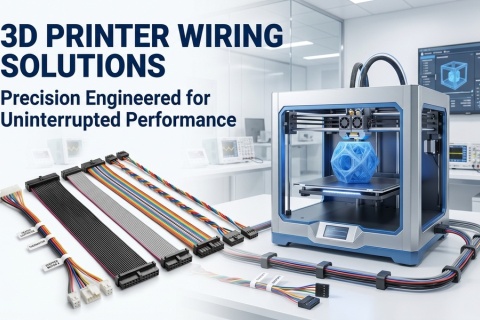
Precision-engineered wiring harnesses for desktop 3D printers, industrial FDM systems, SLA/MSLA resin printers, and large-format additive manufacturing platforms — built to your exact specs, from prototype to mass production.
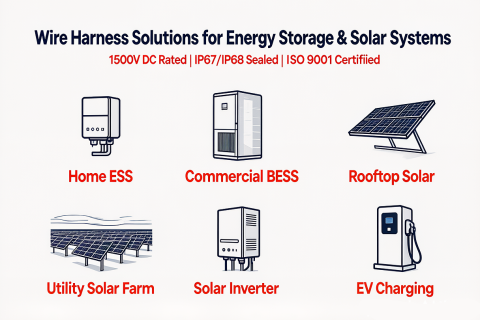
OEM/ODM Wire Harness Manufacturing for Battery Energy Storage Systems, Off-Grid Solar, Residential ESS, and Commercial PV Installations