


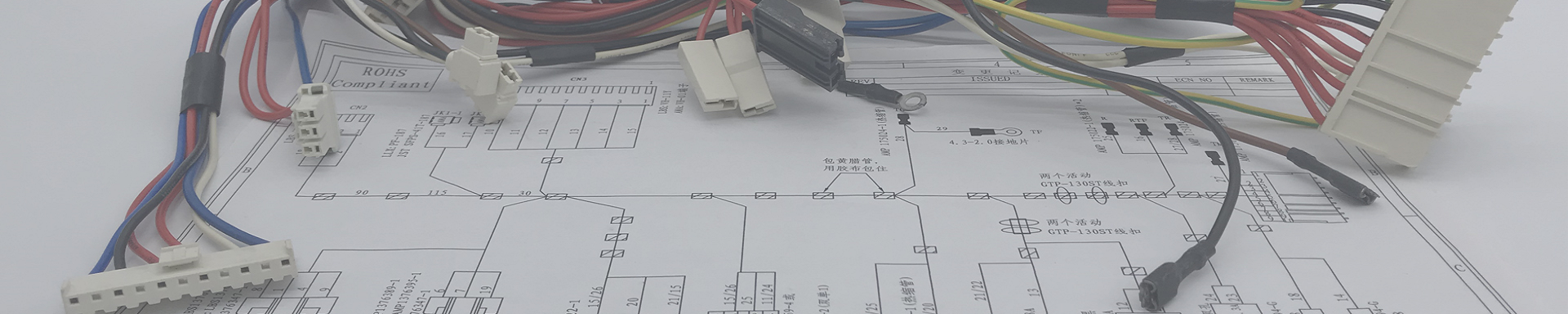
Custom JST & Molex Wire Harness: What a Factory Actually Checks Before You Order
2026-08-11 17:30Custom JST & Molex Wire Harness: What a Factory Actually Checks Before You Order
Here is a scene we see every few weeks. An engineer emails us a drawing, then follows up an hour later because his line is down. The supplier before us shipped a batch of connectors that were "JST-compatible" but turned out to be anything but. Pins would not seat. Housings cracked. His PCB was already sitting in the wave solder machine.
We have built JST and Molex harnesses for ten years now, for kiosk terminals, battery packs, energy storage cabinets, 3D printers, you name it. This guide is basically everything we learned the hard way, so you do not have to.
In this guide:
JST and Molex series, with the numbers that actually matter (pitch, current, wire size)
JST vs Molex: an honest comparison, because neither brand wins everywhere
How a custom JST wire harness gets built, step by step, no shortcuts
Wire, stripping, crimping, and the tests that catch a bad crimp before it ships
Where these harnesses actually fail in the field, and what to do about it
A spec template you can copy into your next RFQ
Table of Contents
Why JST and Molex Show Up Everywhere
Open up almost any board that does not need heavy industrial connectors, and you will see JST or Molex on it. They are not the only connector brands out there, but they own a big slice of the low-to-medium current market, and it is not by accident.
You can buy them from more than one source. JST and Molex each run on sealed standards. The footprints and mating interfaces are fixed, so you can buy housings and contacts from several licensed manufacturers and they will still fit together. For us, that means we can build a custom JST Molex cable assembly without chasing down some obscure part number.
The tooling is everywhere. Crimp applicators and semi-auto machines for these terminals are mass produced. A proper factory runs a dedicated applicator for each terminal size. That is how you hold the same crimp height across twenty thousand cycles. Try the same thing with a no-name connector and you will be chasing pull-out failures by the second batch.
The ratings are documented. JST and Molex publish current ratings, contact resistance, insertion force. When your product needs UL or CE, that paperwork matters. With a proprietary connector, your compliance engineer has to write a justification letter. With JST or Molex, you quote the datasheet and move on.
So the short version: if you are under 20 A per circuit and need a reliable, cheap interconnect, start with a custom JST wire harness or a custom Molex wire harness. Nine times out of ten it is the right call.
JST Series: PH, XH, EH, ZH, SH, GH
JST makes a lot of series. In our experience, six of them cover about 90% of the custom harness requests we get. Here is the breakdown with the numbers engineers actually ask about.
| Series | Pitch (mm) | Circuits | Current Rating | Voltage Rating | Typical Wire Size | Typical Use |
|---|---|---|---|---|---|---|
| PH | 2.0 | 2-16 | 2 A | 100 V | 30-24 AWG | Signal, LED, sensors, small fans |
| XH | 2.5 | 2-20 | 3 A | 250 V | 30-22 AWG | Battery packs, BMS boards, chargers |
| EH | 2.5 | 2-15 | 3 A | 250 V | 30-22 AWG | Low-cost consumer electronics |
| ZH | 1.5 | 2-13 | 1 A | 50 V | 32-28 AWG | Tiny boards, wearables, IoT sensors |
| SH | 1.0 | 2-15 | 1 A | 50 V | 32-28 AWG | Ultra-compact PCBs, earbuds, modules |
| GH | 1.25 | 2-15 | 1 A | 50 V | 30-26 AWG | Servo, drones, compact motor drivers |
What we actually build:
JST PH harness is the default for fan and LED cables in kiosk and POS gear. Cheap, reliable, and the 2.0 mm pitch lines up with standard board layouts.
JST XH connector runs battery work. The 2.5 mm pitch handles more current, and the housing sits better under vibration than PH, which is why BMS boards and power tool packs use it.
JST SH and ZH show up when the PCB designer runs out of room. At 1.0 mm and 1.5 mm pitch, these need fine wire (28-32 AWG) and careful stripping, because nicking a strand on a 30 AWG is almost invisible until it fails.
One thing most engineers do not think about: JST housing colors and polarities are not cosmetic. The keying stops you from plugging it in backwards. When we build custom JST wire harnesses, we always double-check the housing color against the drawing, because a few series share dimensions but differ in keying.
Molex Series: KK, Micro-Fit, Mini-Fit, PicoBlade
Molex plays in the same board-to-wire space, but with a different set of strengths: more heavy-current options, and locking systems that hold up under vibration better than most JST latches.
| Series | Pitch (mm) | Circuits | Current Rating | Voltage Rating | Typical Wire Size | Typical Use |
|---|---|---|---|---|---|---|
| KK 254 | 2.54 | 2-15 | 2.5 A | 250 V | 30-22 AWG | Legacy PCB, breadboard-style layouts |
| PicoBlade | 1.25 | 2-15 | 1 A | 125 V | 30-26 AWG | Compact consumer gear, portable devices |
| Micro-Fit 3.0 | 3.0 | 2-24 | 8.5 A | 600 V | 30-16 AWG | Power distribution, motor drives, servers |
| Mini-Fit Jr | 4.2 | 2-24 | 9-13 A | 600 V | 22-16 AWG | High-current power, appliances, EV aux |
| Mega-Fit | 5.7 | 2-10 | Up to 23 A | 600 V | 18-12 AWG | Heavy power, motors, industrial |
What we actually build:
Molex Micro-Fit harness lands in server power supplies and motor controllers, where you need 6-8 A per circuit but do not want to step up to the bulkier Mini-Fit.
Molex Mini-Fit is the go-to for appliances and industrial control panels. The 4.2 mm pitch plus secondary locking give it a reputation for staying put. We use it a lot in energy storage cabinet interconnect harnesses.
PicoBlade goes head-to-head with JST GH. If your team already standardizes on Molex tooling, PicoBlade keeps the ecosystem consistent.
A warning about Molex crimping: the terminals are picky about crimp height windows. The gap between a good crimp and a marginal one is often 0.05 mm. That is why we run dedicated applicators and pull-test five contacts per batch with a micrometer.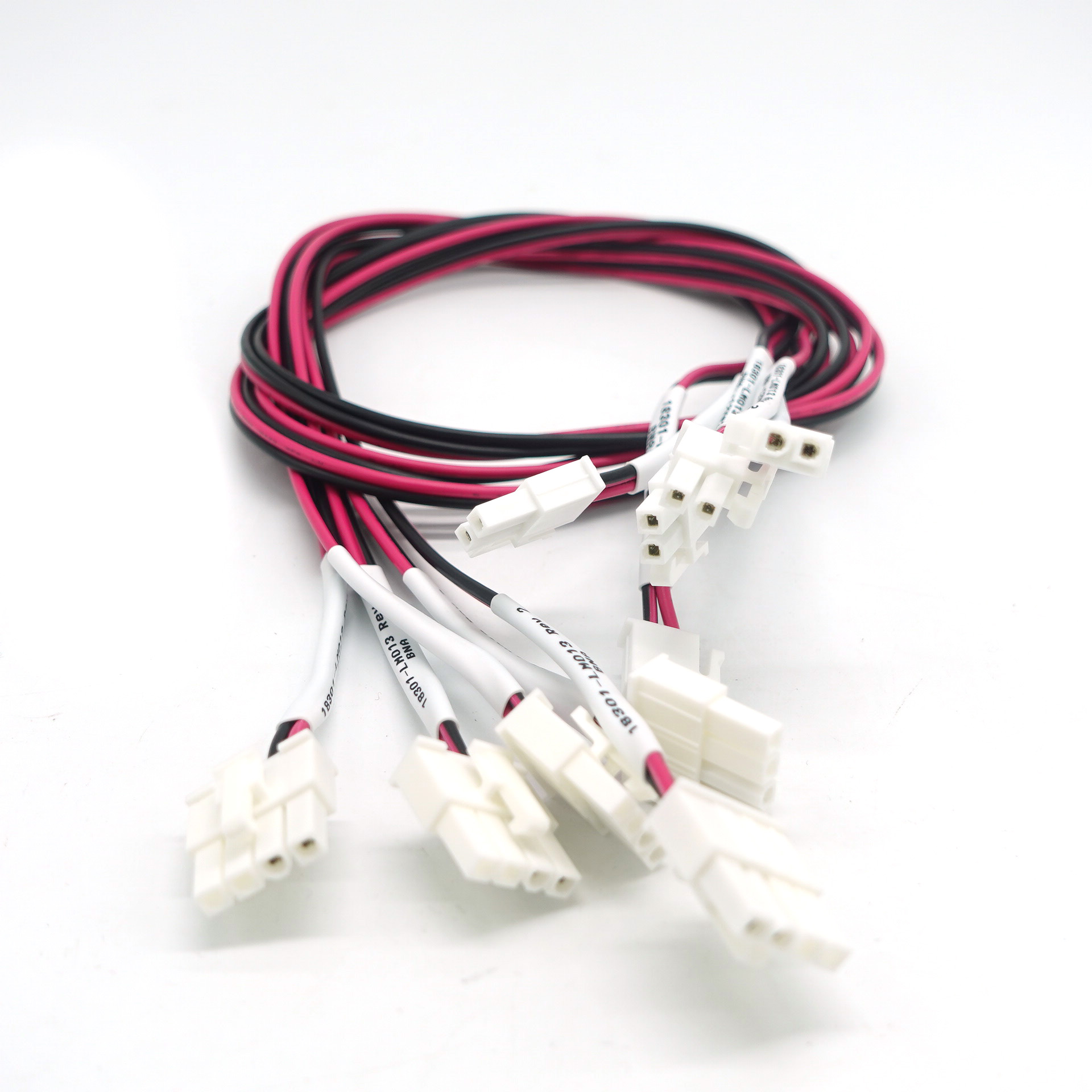
JST vs Molex: Which One for Your Job
We build both every week, so people ask us this constantly. The honest answer is that neither brand is universally better. They were designed for different trade-offs.
| Criteria | JST | Molex |
|---|---|---|
| Current range sweet spot | 1-3 A per circuit (PH/XH) | 2.5-13 A per circuit (KK/Mini-Fit) |
| Pitch availability | 1.0 to 8.0 mm, very wide range | 1.25 to 5.7 mm, strong mid-to-large |
| Locking mechanism | Latch on housing side (some weak points at small pitches) | Positive lock with audible click on most series |
| Vibration resistance | Good for stationary PCB applications | Better for moving/vibrating environments |
| Cost per mated pair | Generally lower | Slightly higher, but stronger in power series |
| Secondary locking | Available on some series (e.g. VH, WL) | Common on power series (Micro-Fit, Mini-Fit) |
| Tooling ecosystem | Mature, low entry cost | Mature, applicator cost higher |
| Best fit | Signal, battery, low-cost consumer | Power distribution, vibration-heavy industrial |
Three rules of thumb we hand to customers:
Under 3 A per circuit and tight on board space: JST PH/XH. It is cheaper and the tooling is everywhere.
Over 5 A per circuit, or a lot of vibration: Molex Mini-Fit/Micro-Fit. The positive lock pays for itself in fewer field returns.
Mixed signal and power on one harness: use both. We do it every day. Nobody said a cable assembly has to stay loyal to one brand.
How a Custom JST Harness Gets Built
Here is exactly what happens when you send us a drawing for a custom JST wire harness. Nothing fancy, just process control.
Step 1: DFM review (free, 1-2 days). Our engineers check wire size against current draw, stripping length against the terminal crimp spec, and housing selection against your mating header. We flag problems before tooling starts. Roughly 30% of the drawings we get have at least one issue worth fixing, usually undersized wire for the current or the wrong stripping length for the terminal.
Step 2: Sample build (3-7 days). We hand-build 5-20 samples using the exact wire, terminal, and housing you specified. Samples go through continuity, pull-force, and dimensional checks. Want photos of the crimp cross-sections? We can send those too.
Step 3: Approval and tooling setup. Once you sign off, we mount the dedicated applicator for your terminal size, program the semi-auto cutting and stripping machine, and run first-article inspection (FAI).
Step 4: Production. A mid-size order (1,000-5,000 pcs) usually ships in 10-15 days. During production we run in-process QC every 2 hours: crimp height, pull force, and visual inspection per IPC/WHMA-A-620 Class 2.
Step 5: Final inspection and packaging. Every single harness gets a continuity test and a 100% visual check before packing. Yes, 100%. We do not sample-inspect the finished product. We check it all.
How a Custom Molex Harness Differs
The process for a custom Molex wire harness is basically the same, with two extra precautions:
Crimp height discipline. Molex terminals have tighter crimp-height tolerances than most JST series. We measure every batch with a micrometer and record the distribution, not just a single average.
Locking verification. For Mini-Fit and Micro-Fit, we check the terminal retention force after seating. A terminal that clicks into the housing but backs out at 2 kgf will fail your customer's harness at the worst possible moment. We test retention on every lot.
For higher-current Molex builds (16-12 AWG), we also confirm the wire seal and strain relief match the housing. Over-torquing a strain-relief screw on a thick Mini-Fit cable is a classic cause of intermittent failures, and those are brutal to diagnose in the field.
Picking the Right Wire: Where Most Failures Live
The connector is only half the story. The wire is where most of the cost and most of the failures live.
| Wire Type | Common Sizes | Temperature Rating | Best For |
|---|---|---|---|
| UL1007 (PVC) | 30-16 AWG | 80°C | General internal wiring, low cost |
| UL1015 (PVC) | 24-10 AWG | 105°C | Higher current, appliances |
| UL1571 (PVC, thin) | 30-22 AWG | 80°C | Dense harnesses, small pitch connectors |
| UL1061 (PVC) | 30-20 AWG | 80°C | Compact internal signal wiring |
| UL1332 (XLPE) | 26-10 AWG | 125°C | High-temp environments, LED drivers |
| UL2464 (shielded multi-core) | 28-16 AWG | 80°C | Signal integrity, EMI-sensitive runs |
| Silicone (high-flex) | 26-14 AWG | -60 to 200°C | Robotic, moving, high-temp applications |
Strand count matters more than people think. A 24 AWG wire with 7 strands is fine for static use. The same wire with 19 strands survives repeated flexing. If your harness routes through a hinge or a cable chain, tell us the flex cycle requirement. We have built harnesses for 3D printers and kiosk drawer slides that needed 5 million+ flex cycles; ordinary PVC would have cracked within weeks.
Wire size rule: size the wire for the connector's max current, not your average current. A JST PH harness rated at 2 A should not carry a 24 AWG wire if your peak current hits 1.8 A for extended periods. And derate by 20-30% for enclosed harnesses with no airflow.
QC and Testing: What We Run on Every Batch
If you are sourcing a custom JST Molex cable assembly, QC is where a real factory separates from a workshop. Here is the test matrix we run.
| Test | Method | Pass Criteria (typical) |
|---|---|---|
| Continuity test | Automated tester, 100% of pieces | No open or short circuits; correct pin-to-pin mapping |
| Crimp pull-force | Digital pull tester, sampled per batch | Meets terminal datasheet spec (e.g. PH 24 AWG ≥ 3.0 kgf) |
| Crimp height | Micrometer, in-process every 2 hours | Within terminal manufacturer tolerance ±0.02 mm |
| Visual inspection | 100% of pieces, IPC/WHMA-A-620 Class 2 | No nicked strands, no solder wicking, no housing damage |
| Terminal retention | Push-out test on samples | Terminal stays seated at datasheet retention force |
| Hi-pot test (optional) | 500-1500 VAC, sample or 100% | No breakdown or leakage above spec |
| Dimension check | Calipers against drawing, samples per lot | Length ±5 mm or tighter per your drawing |
Two QC failures we see constantly from other suppliers, and how we avoid them:
Nicked strands from improper stripping. We use blade-depth-adjustable stripping machines and verify the blade setting under a microscope at every tool change. One nicked strand can turn a 3 A circuit into a fuse that burns at 2 A.
Solder wicking at the crimp. If your harness gets soldered to a PCB later, flux can wick up the stranded wire into the crimp barrel and harden it, causing brittle fractures. We flag this in DFM and recommend ferrules or solder-sleeve termination when we see it coming.
Where These Harnesses Actually Show Up
We ship custom JST and Molex harnesses into more industries than most people realize. Here is where they show up, based on our actual order history.
Kiosk and POS terminals: JST PH for fans and card readers, Molex Micro-Fit for power distribution inside the chassis. These machines run 24/7, and the harnesses are usually the cheapest part in them, which is exactly why they fail when done badly.
Battery packs and BMS: JST XH dominates the sense-wire market, and Molex Mini-Fit handles main power output on larger packs. The balance wires have to be crimped to ±0.05 mm crimp height, or the BMS reads phantom voltage differences.
Energy storage and solar: Molex Mini-Fit/Micro-Fit for cabinet-level interconnect, JST GH for BMS control boards. Vibration and thermal cycling are the enemies here, so secondary locking and high-temp wire matter.
3D printers and CNC: JST GH and XH for hotend thermistors and fans, Molex for motor power. The harnesses move with the print head, so flex life is what decides whether the machine dies at month 3 or year 3.
Medical devices: JST SH and Molex PicoBlade for compact patient-monitoring modules. These get cleaned with aggressive chemicals, so the housing material and wire jacket resistance to isopropyl alcohol matter more than the datasheet suggests.
Industrial control panels: Molex KK and Mini-Fit for PLC I/O and power rails. Panels get reworked constantly, so connectors that survive 50+ mate/unmate cycles without loosening win in the long run.
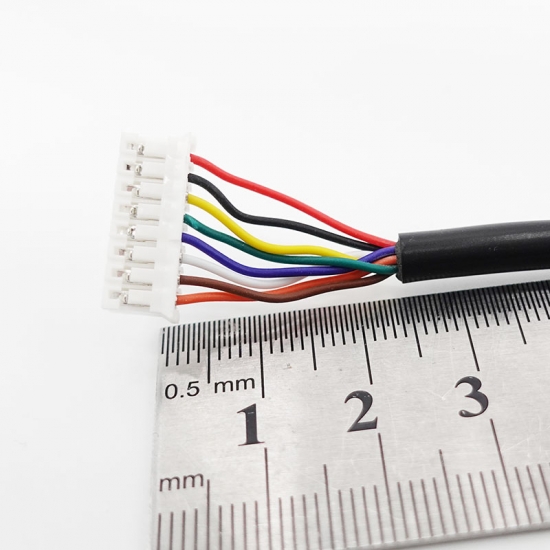
Five Assembly Problems We Fix All the Time
After a decade of building these, here are the five problems that generate the most customer pain, and our fixes.
1. Reverse polarity on hand-assembled harnesses. Small-pitch housings like JST SH look symmetrical under a bench light. Our fix: polarized housings with visible keying features, plus a 100% continuity test that verifies pin-to-pin mapping against a golden sample.
2. Intermittent contact in vibrating equipment. The classic "worked on the bench, fails in the field" problem. Fix: Molex series with positive locks, secondary locking for power circuits, and strain relief so the terminal is never the mechanical anchor.
3. Crimp height drift over long runs. Applicators wear. By hour 8 of a 20,000-piece run, the crimp height can drift out of spec without anyone noticing. Fix: we measure crimp height every 2 hours and plot the trend. We adjust before the parts go bad, not after.
4. Wire size mismatches in mixed-gauge harnesses. A harness with 22 AWG power wires and 30 AWG signals looks simple, but the stripping machine settings differ for each gauge, and one missed tool change ruins a whole batch. Fix: batch separation by gauge with clear kanban labels, plus first-article verification after every tool change.
5. Customers changing revisions mid-production. We handle this by locking the drawing at order confirmation, then issuing ECOs with a 5-day response window. If a change comes in mid-batch, we quarantine the affected lot, re-qualify, and only ship parts that match the final revision.
A Spec Template for Your Next RFQ
You can save yourself two rounds of email back-and-forth by sending a complete spec the first time. Copy this template into your RFQ.
| Parameter | What to Specify | Example |
|---|---|---|
| Connector end 1 | Series, pitch, circuit count, housing part number, terminal part number | JST XH 4-pin, housing XHP-4, terminal SXH-001T-P0.6 |
| Connector end 2 | Same as above, or bare wire / tinned end | Bare tinned 5 mm |
| Wire | AWG, strand count, jacket material, temp rating, color(s) | 24 AWG, 7/0.2, UL1007, 80°C, red/black |
| Length | Overall length, and which ends it is measured between | 150 mm ±5 mm between housing shoulders |
| Pin mapping | Pin-to-pin wiring table or drawing | 1-1, 2-2, 3-3, 4-4 straight |
| Environmental | Operating temp, humidity, vibration, chemical exposure | -20 to +60°C, indoor, no washdown |
| Flex requirement | Static or dynamic, flex cycles if dynamic | Dynamic, ≥1M cycles |
| Standards | UL, RoHS, REACH, IPC class | RoHS, REACH, IPC/WHMA-A-620 Class 2 |
| Quantity | Initial order + expected annual volume | 2,000 pcs, ~50,000/yr |
| Target price | Optional, but it saves everyone time | Budget < $1.20/pc |
If you only have a sample and no drawing, that works too. We reverse-engineer from the sample, measure the pitch and keying, identify the exact JST or Molex series, and send you a drawing for confirmation before we build anything.
Why Work With Us
There are hundreds of factories that can crimp a JST connector onto a wire. What we offer is different.
Dedicated tooling, not universal dies. We run series-specific applicators and semi-auto crimping machines. That is the difference between a crimp that passes pull tests at 99% and one that fails at 12%. It is also the difference between 0.01 mm crimp-height consistency and luck.
100% final inspection on every piece. Not 10% sampling, not "trust us." Every harness passes a continuity test and a visual inspection before packing. Our QC records are yours on request.
Free DFM review within 48 hours. Send us your drawing or sample and our engineers will tell you what will fail in the field before you spend money on tooling.
Flexible batch sizes. We quote 500-piece runs and 500,000-piece runs with the same process discipline. Startups get the same crimp quality as tier-1 OEMs.
Fast prototyping. Samples ship in 3-7 days. If you are in the middle of a design freeze, that timing matters.
We are a wire harness factory in Xiamen, China, specializing in custom JST and Molex cable assemblies for kiosk, battery, energy storage, 3D printer, and industrial customers in the US and Europe. Every harness we ship is built to IPC/WHMA-A-620 Class 2 standards, with full traceability from wire spool to final test.
Send us your drawing or your sample. You will get a DFM report, a quotation, and a sample lead time within 48 hours. That is how a partnership starts.
Request Your Free DFM Review
Email your drawing, sample photos, or BOM to our engineering team. We will confirm the JST or Molex series, flag any design risks, and send a quotation with sample lead time within 48 hours.
Email: [sales5@xmkehan.com ]
Frequently Asked Questions
Q1: Can you make a custom JST wire harness with mixed JST and Molex connectors?
Yes. Mixed-brand harnesses are common, especially for power + signal combinations. We verify the pin mapping and crimp specs for each brand separately, and test the complete assembly as one unit.
Q2: What is the minimum order quantity for a custom Molex wire harness?
We start at 500 pieces for standard builds. Prototype quantities of 5-50 pieces are available at sample pricing, and we credit sample costs against the first production order.
Q3: Do you supply genuine JST and Molex parts or compatible parts?
Both. We can use genuine JST/Molex parts, or licensed compatible brands if your application allows. For UL-listed end products, we strongly recommend genuine parts and will confirm the sourcing choice in the DFM.
Q4: What is your typical lead time for production orders?
Samples ship in 3-7 days. Production orders of 1,000-5,000 pieces typically ship in 10-15 days after sample approval. Larger orders are scheduled and confirmed in writing before you pay.
Q5: How do you verify crimp quality?
Crimp height is measured in-process every 2 hours. Pull-force tests run on samples from every batch against the terminal datasheet values. Plus, every piece passes a 100% continuity test and visual inspection before packing.
Q6: Can you help if I only have a sample and no drawing?
Yes. We identify the exact JST or Molex series from the sample, measure pitch, keying, and wire specs, then send you a dimensioned drawing for approval before building.
Q7: Do you support UL, RoHS, and REACH compliance?
Yes. We build to IPC/WHMA-A-620 Class 2 as standard. Materials can be sourced with UL/CSA certification and RoHS/REACH declarations, and we provide test reports for compliance documentation.