

- Home
- >
News
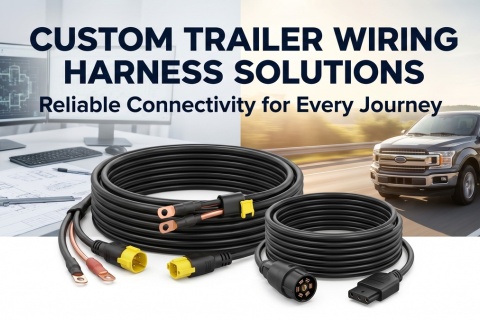
1. Why Trailer Wiring Harnesses Demand a Specialist Supplier A trailer wiring harness operates in one of the most electrically hostile environments imaginable: constant vibration, wide temperature swings (−40 °C to +85 °C), road salt, water immersion, UV exposure, and repeated mechanical flexing at every coupling cycle. A failed harness on a highway-bound tow combination is not just an inconvenience — it is a safety event. Running lights, brake lights, turn signals, and electric brake actuators all depend on a harness that survives tens of thousands of connection cycles without degradation.
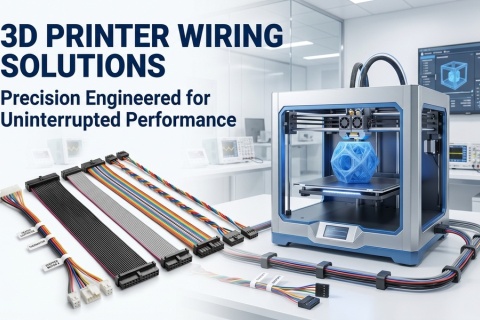
Precision-engineered wiring harnesses for desktop 3D printers, industrial FDM systems, SLA/MSLA resin printers, and large-format additive manufacturing platforms — built to your exact specs, from prototype to mass production.
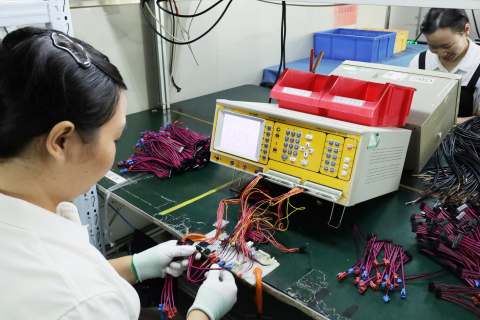
Wire Harness Testing & Inspection: How We Ensure Every Harness Ships Flawless A behind-the-scenes look at our testing equipment, inspection workflow, and why 100% manual inspection is non-negotiable for custom wire harnesses ✔ 100% Electrical Test on Every Unit | ✔ Full Manual Visual Inspection | ✔ Crimp Pull-Force Verified | ✔ ISO 9001:2015 Certified Lab
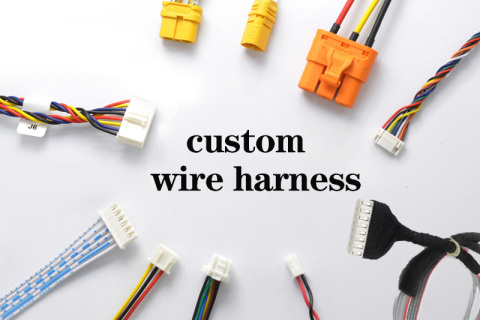
How We Go From Your Drawing to Delivered Harnesses — Transparently, Efficiently, and Without Surprises ✓ ISO 9001:2015 Certified | ✓ Free DFM Review | ✓ Prototype in 7–10 Days | ✓ MOQ from 100 pcs
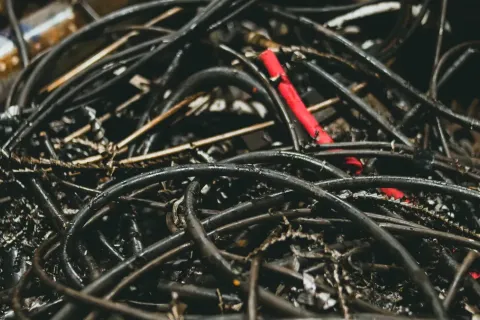
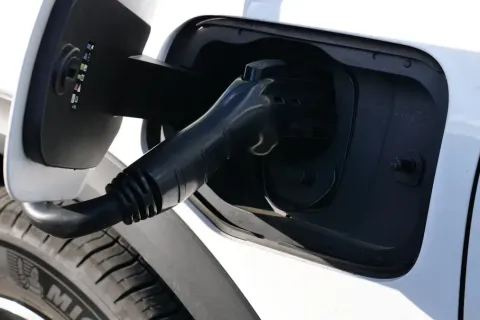
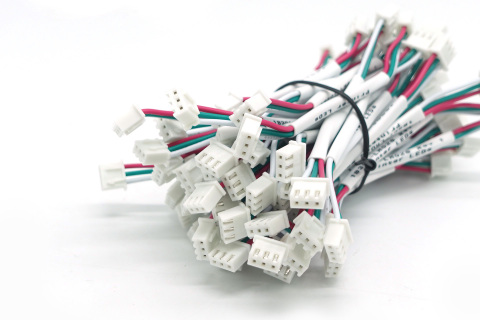
1. What Is a Wire Harness? A wire harness — also known as a wiring harness, cable harness, or wiring loom — is an organized set of wires, cables, and connectors that transmit electrical power and signals throughout a machine, vehicle, or electronic system. By bundling multiple wires into a single assembly, a wire harness dramatically reduces installation time, minimizes the risk of short circuits, and ensures consistent, reliable electrical performance. Modern wire harnesses are engineered to precise specifications. Every conductor gauge, insulation material, terminal type, and routing path is determined during the design phase to meet the exact electrical and mechanical requirements of the end application — whether that's a passenger vehicle, an industrial robot, a piece of medical equipment, or a commercial aircraft.
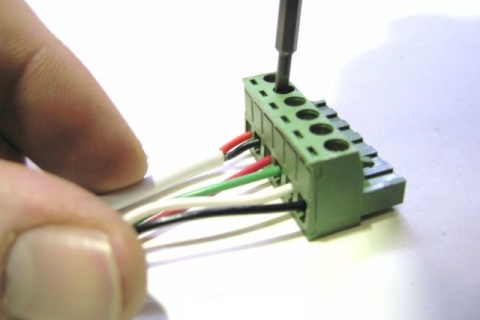
Definition and Overview Multi-port connectors integrate multiple coaxial contacts into a single connector module, enabling higher interconnection density while reducing installation time. These connectors also reduce overall system footprint and complexity. When selecting a multi-port connector, factors such as required frequency range, signal integrity, and space constraints must be considered – these are key elements for application-specific selection.
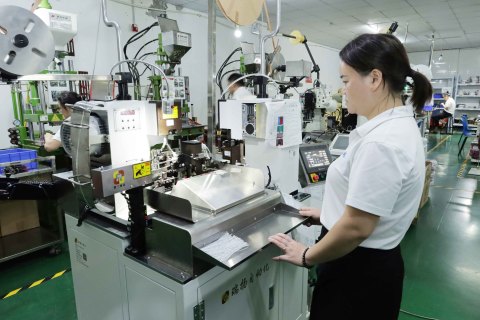
In the wire and cable processing industry, stripping is the "throat" of all operations. If this step is not done right, subsequent processes like crimping, soldering, and assembly become impossible. If we compare stripping to "undressing," then the conductor is the delicate "skin." Many times, a difference of just 0.01 mm in cutting depth can turn a perfect wire into a damaged reject — with nicked strands, broken wires, necking, and more. So, how do you strip insulation cleanly without damaging the copper underneath? This is not just about adjusting machine parameters — it is an art of micro-manipulation involving mechanics, geometry, and materials.
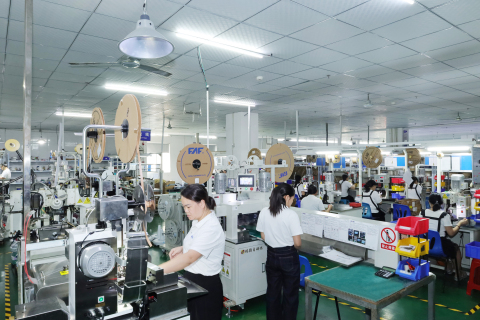
In a professional wire harness manufacturing factory, every custom wire harness is produced following a rigorous, standardized manufacturing process. From raw material receiving to finished product shipping, each step is carefully designed and strictly controlled to ensure that the final wire harness assembly meets the highest quality and reliability standards. Below is our detailed manufacturing process guide as a professional wire harness assembly supplier.