


- Home
- >
News
Definition and Overview Multi-port connectors integrate multiple coaxial contacts into a single connector module, enabling higher interconnection density while reducing installation time. These connectors also reduce overall system footprint and complexity. When selecting a multi-port connector, factors such as required frequency range, signal integrity, and space constraints must be considered – these are key elements for application-specific selection.
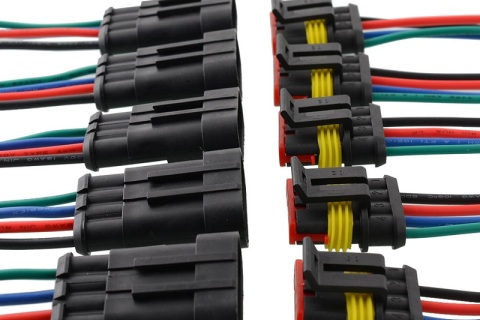
In modern electronic devices, connectors play an indispensable role. They are responsible for transmitting power or signals between different circuits or devices. Do you understand the basic structure of a connector, the function of each part, and the principles behind these designs?
Abstract: Electrical connectors serve as the critical bridges for signal transmission, power delivery, and subsystem interconnection within electronic and electrical systems. Their widespread application across aerospace, defense, maritime, automotive, and industrial sectors makes long-term reliability a paramount concern for end-users. Industry studies indicate that up to 70% of electronic system failures originate from component-level issues, with connectors being responsible for nearly 40% of these component-related failures. This underscores the critical importance of connector reliability. This paper provides a systematic analysis of prevalent electrical connector failure modes, drawing on field data and failure analysis reports. It details underlying mechanisms and proposes a comprehensive framework of mitigation strategies and best practices to enhance connector performance and system integrity.
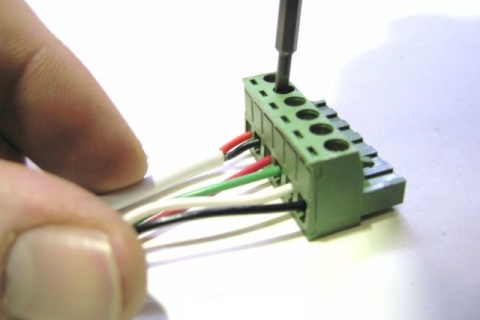
Terminals serve as the critical components within wire harnesses, enabling electrical connections and transmitting current and signals. The quality of their crimp joints directly determines the harness's overall reliability, durability, and safety. Based on structural design, terminals are primarily classified into two categories: open-barrel (or open-style) and closed-barrel (tubular). Open-barrel terminals are predominantly used in conventional low-voltage harnesses, where the crimping process is well-established and mature. In contrast, closed-barrel terminals, benefiting from their fully enclosed structure which provides superior mechanical strength, enhanced sealing, and improved vibration resistance, have become the mainstream choice for high-voltage harnesses in new energy vehicles. Concurrently, to meet the stringent electromagnetic compatibility (EMC) requirements of high-voltage systems, the crimping of shield rings has also emerged as an essential manufacturing process for high-voltage harnesses. This article aims to provide a detailed examination of the predominant crimping methods for tubular terminals and shield rings in high-voltage harnesses, offering professional guidance for process selection and quality control.
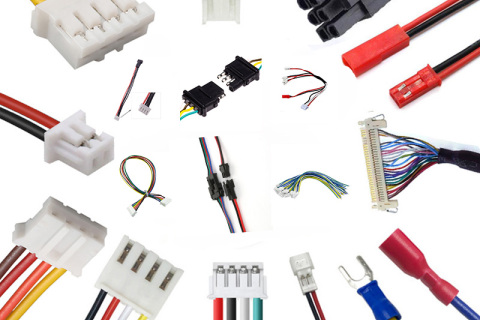
Wire harness connectors are ubiquitous yet often overlooked, serving as the indispensable "joints" and "bridges" within modern electrical systems. They prevent damage from incorrect wiring and ensure the orderly transmission of complex signals, such as data buses.