

Getting to Know Connectors from Scratch: Function Analysis and Design Principles
2026-03-13 13:50Getting to Know Connectors from Scratch: Function Analysis and Design Principles
In modern electronic devices, connectors play an indispensable role. They are responsible for transmitting power or signals between different circuits or devices.
Do you understand the basic structure of a connector, the function of each part, and the principles behind these designs?
Basic Structure of a Connector
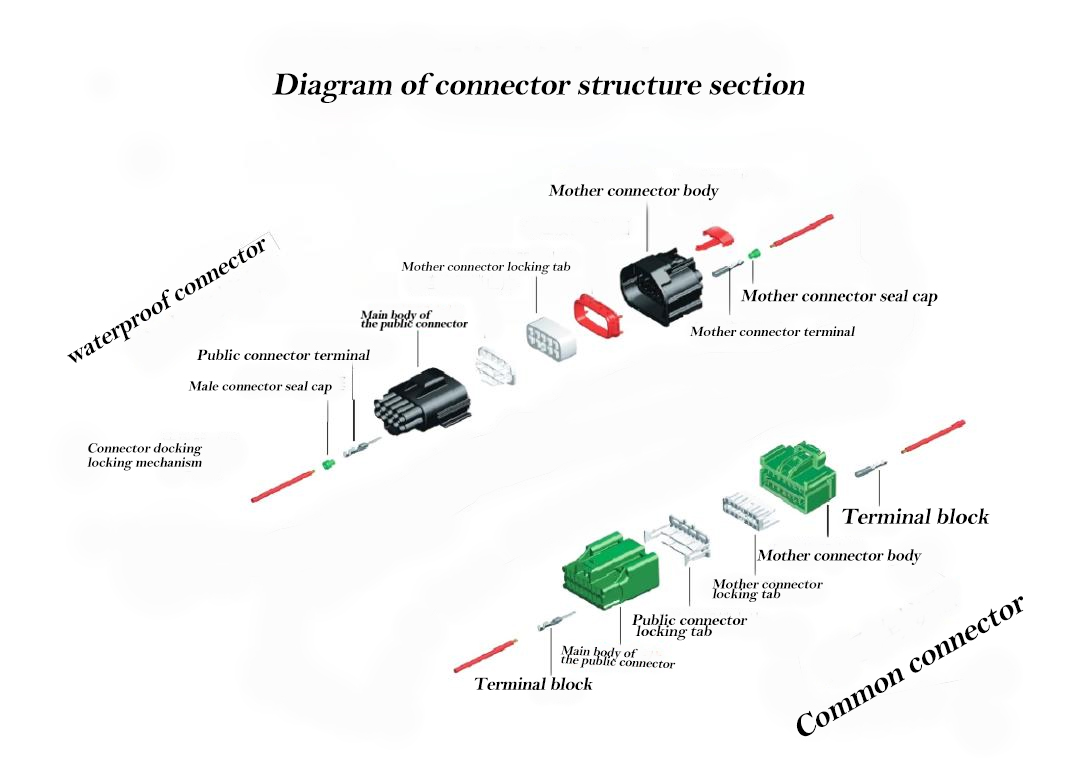
Connectors are typically composed of the following main parts:
Locking Lance / Secondary Lock Retainer: Used to ensure the terminal is securely fixed in place within the cavity.
Seal / Grommet: In waterproof connectors, the seal prevents moisture from entering the connector housing.
Connector Position Assurance (CPA) / Locking Mechanism: Ensures the connector halves are correctly aligned and securely mated.
Mounting Bracket / Lever / Bolt: Assists in the installation and fixation of the connector to a panel or device.
Cover / Backshell: Protects the internal wires from dust, dirt, and physical damage.
Positioning Rib / Key / Latch: Ensures the connector is correctly oriented and seated during device installation.
Shorting Bar / Shorting Contact: Ensures specific circuit functions (like safety interlock) are maintained when the connector is disengaged.
Waterproof connector diagram
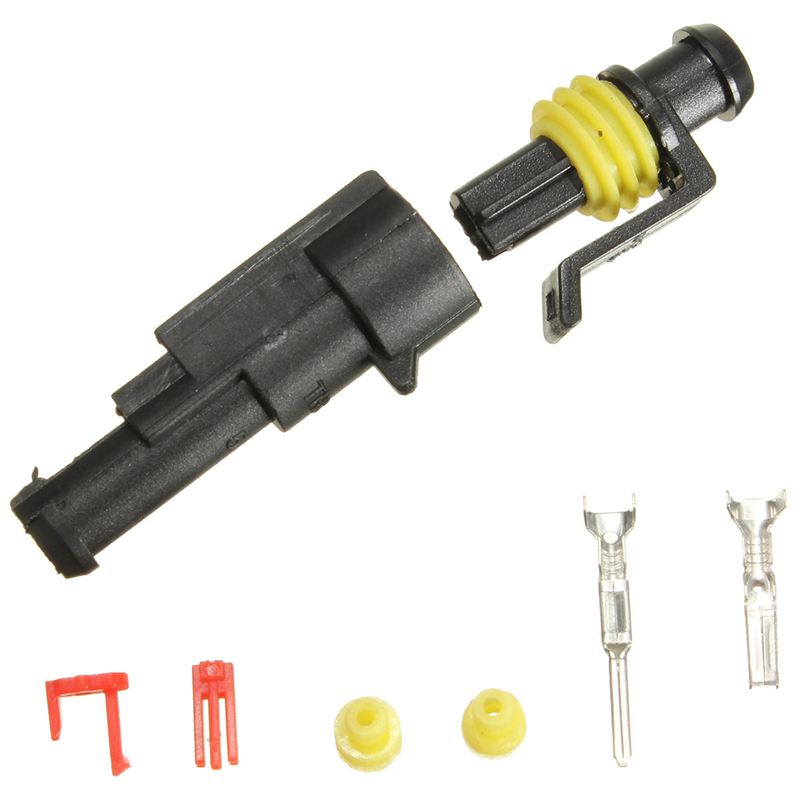
Function of Each Connector Component
Locking Lance / Secondary Lock Retainer
Function: The primary function of a locking lance (often integrated into the housing) or a secondary lock retainer (a separate piece) is to secure the terminal within the connector chamber. While the primary lance holds the terminal after the initial insertion, the secondary lock provides an additional layer of retention, often by moving into a position that blocks the terminal's backward movement.
Design Rationale: This redundant design is critical to prevent terminals from vibrating loose or being pulled out of the housing due to wire tension, especially in high-vibration environments like automobiles or industrial machinery. It ensures a reliable and continuous electrical connection by physically locking the terminal in place.
Seal / Grommet (Wire Seal & Housing Seal)
Function: Seals are used to create a watertight and dustproof barrier. There are typically two types: wire seals (individual seals that fit tightly around each wire as it enters the back of the connector) and housing seals (a peripheral gasket that seals the mating interface between the two connector halves).
Design Rationale: In outdoor, automotive, or industrial applications, electronics are constantly threatened by moisture, salt spray, and contaminants. Water ingress can cause corrosion on terminals, leading to signal degradation or short circuits. The seal's design, often using compressible materials like silicone or fluorosilicone, creates a physical barrier that protects the integrity of the electrical connection, thereby extending the lifespan and reliability of the device.
Positioning Rib / Key / Latch
Function: These mechanical features guide the connector into its correct mounting position on a device, panel, or bracket. They prevent the connector from being installed backward (keying) or from being dislodged (latching).
Design Rationale: Forcing a connector into an incorrect position can bend terminals, damage the housing, or place undue stress on solder joints and wires. Positioning features act as a foolproofing mechanism. By ensuring the connector is properly seated before final fixation, they protect the internal connections from mechanical stress and guarantee correct mating orientation.
Mounting Bracket / Lever / Bolt (Assist Features)
Function: These components provide mechanical advantage and aid in the secure attachment of the connector to a structure. For example, a flange with bolt holes allows for a rigid mount, while a lever helps overcome the high insertion forces of large, multi-pin connectors.
Design Rationale: In complex assembly environments, such as an automotive assembly line or a server rack, these features make installation easier and more ergonomic for the operator. By providing a clear and assisted method of fixation, they reduce the risk of incomplete mating or installation errors, ensuring a robust and reliable physical connection to the system.
Cover / Backshell
Function: The cover or backshell encloses the rear of the connector where wires enter. It provides strain relief, protects the wire-to-terminal crimp or solder points from physical damage, and often shields the internal connections from electromagnetic interference (EMI) or environmental contaminants. It can also serve as a visual indicator for correct orientation.
Design Rationale: Exposed wire termination points are fragile and susceptible to damage. The backshell acts as a protective shield, absorbing mechanical forces from cable movement. In some designs, it also incorporates keying features to ensure the entire cable assembly is installed in the correct orientation relative to the mating device, preventing miswiring.
Connector Position Assurance (CPA) / Mating Lock
Function: The mating lock is the primary mechanism that holds two connector halves together. The CPA is an additional device that checks and locks this primary mechanism into place, visually or tactilely confirming that the connectors are fully mated and locked.
Design Rationale: An incomplete connection can lead to intermittent signals, arcing, or power loss. The primary lock ensures the connectors stay together under normal conditions. The CPA provides a final, foolproof verification. It prevents the primary lock from being accidentally depressed or released, making the connection highly resistant to accidental disconnection due to vibration or snagging, which is crucial for safety-critical systems like airbags or braking systems.
Shorting Bar / Shorting Contact
Function: A shorting bar is a conductive component inside a connector that automatically creates an electrical connection between two or more circuits when the connector is disengaged (unmated). When the mating connector is inserted, it physically breaks this short, allowing the normal circuit path to be established.
Design Rationale: This design serves specific safety or diagnostic functions. A common example is in automotive airbag systems: when the connector to the airbag is unplugged, the shorting bar connects the two pins going to the airbag initiator. This prevents a static discharge or stray voltage from accidentally deploying the airbag during service. It ensures circuit continuity for specific functions only when the connection is safely and correctly made, preventing unintended system behavior or electrical hazards.
The design of a connector may appear simple on the surface, but each component is the result of careful engineering with a specific purpose. From the locking lances that secure terminals to the seals that keep out moisture, and the positioning ribs to the covers, every part is meticulously designed to ensure the connector's stability, safety, and functional reliability.
Understanding these functions and the principles behind their design helps us better appreciate, select, and use connectors correctly, whether in everyday consumer electronics or in the maintenance of sophisticated professional equipment.