


Custom Wire Harness Solutions for Metro X-Ray Inspection & Railway Detection Equipment
2026-07-16 15:44Custom Wire Harness Solutions for Metro X-Ray Inspection & Railway Detection Equipment
High-Reliability Industrial Cable Assemblies for Subway Security Screening, Rail Transit Signal Systems, and Rolling Stock Diagnostic Equipment
✓ ISO 9001:2015 Certified | ✓ Heavy-Duty Connector Expert (Harting, TE, Amphenol) | ✓ 100% Electrical + Hi-Pot Tested | ✓ Full Custom & OEM/ODM | ✓ IP54/IP65/IP67 Rated Options
 Table of Contents
Why Metro X-Ray & Railway Detection Systems Demand Industrial-Grade Harnesses
Types of Wire Harnesses Inside a Metro X-Ray Inspection System
Application Scenarios: 6 Rail Transit Equipment Categories We Support
Technical Specifications & Standards for Rail Transit Harnesses
Our Custom Wire Harness Capabilities for Rail Equipment OEMs
Common Field Failures & How We Prevent Them in Rail Applications
Quality Testing & 100% Manual Inspection for Mission-Critical Transit Harnesses
1. Why Metro X-Ray & Railway Detection Systems Demand Industrial-Grade Harnesses
Metro X-ray inspection systems, baggage screening machines, and railway detection equipment operate in some of the most challenging environments in modern infrastructure: 24/7 continuous operation, severe electromagnetic interference from traction motors and overhead catenary systems, wide temperature swings from platform-level cold to machine-level heat, and constant vibration from passing trains. A single harness failure in a security screening system can mean hours of passenger queue delays, regulatory non-compliance, and compromised public safety.
These systems are not consumer electronics. They are industrial-grade machines that integrate high-voltage X-ray generators (80–160 kV), precision photodetector arrays, conveyor motor drives, computerized tomography (CT) reconstruction modules, biometric verification interfaces, and networked data transmission — all communicating through a dense web of power, signal, and data harnesses inside a metal chassis subject to shock, vibration, and electromagnetic noise.
What makes rail transit harnesses different? Unlike standard industrial cables, metro equipment harnesses must survive vibration levels per IEC 61373 Category 1 Class B, operate across temperature ranges from -25°C to +70°C, maintain signal integrity in high-EMI zones, and remain serviceable for 10+ year design lifecycles with minimal downtime. This requires heavy-duty connector systems, shielded cable architectures, and disciplined manufacturing processes that catalog suppliers cannot deliver.
We supply custom wire harness assemblies to manufacturers of metro security screening equipment, railway signal detection systems, rolling stock diagnostic tools, and trackside monitoring devices across Asia, Europe, and North America. Our customers operate in markets where failure is not an option — which is why they choose a partner who engineers every harness for the specific environment it will face.
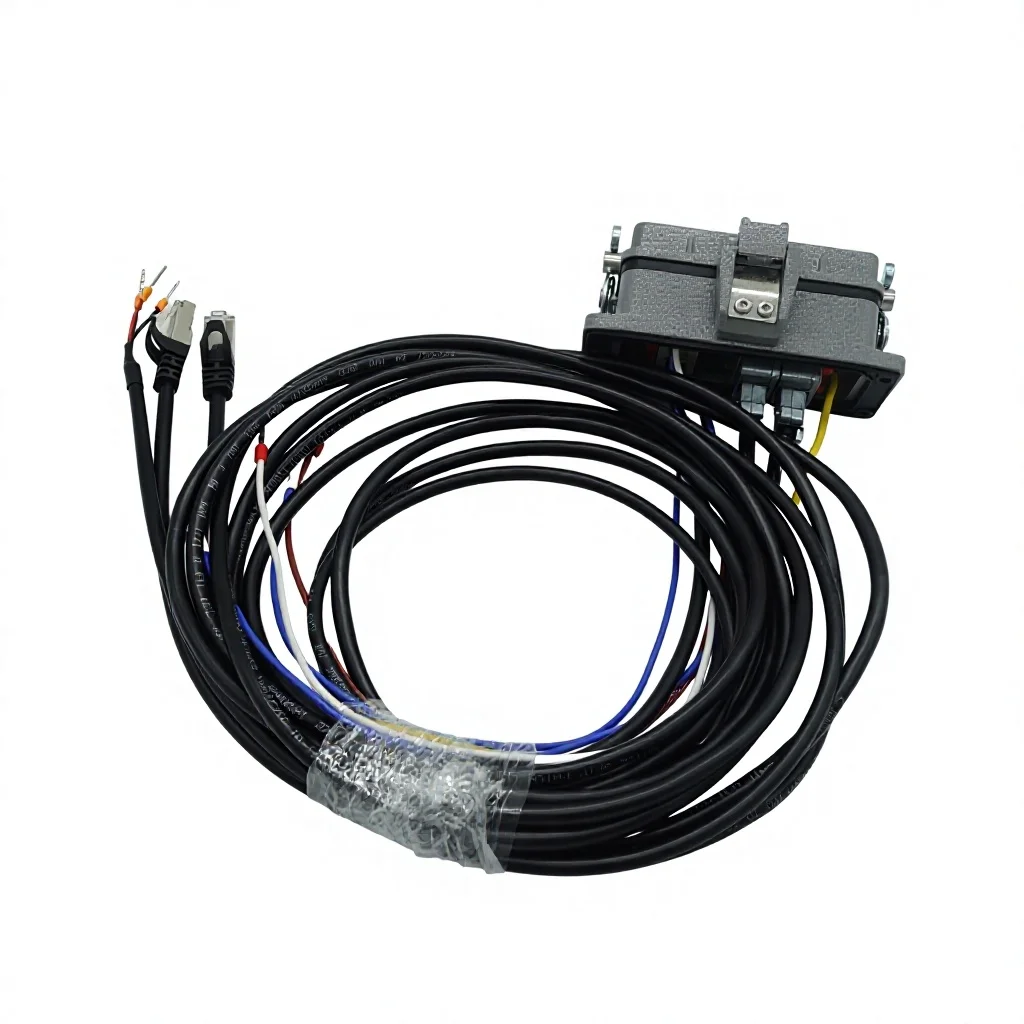
Figure 1: Custom heavy-duty connector harness assembly with multi-circuit power and signal distribution for metro X-ray detection system
2. Types of Wire Harnesses Inside a Metro X-Ray Inspection System
A typical metro baggage screening X-ray machine contains 8–15 distinct harness assemblies, each serving a different subsystem with unique electrical and environmental requirements. Here is the complete breakdown:
| Harness Type | Connects To | Key Requirements |
|---|---|---|
| X-Ray Generator High-Voltage Harness | HV power supply → X-ray tube | High-voltage insulation (80–160 kV), silicone or XLPE cable, shielded grounding, double-insulated construction, safety interlock circuit |
| Detector Array Signal Harness | Photodetector array → Data acquisition board | Low-noise shielded cable, AWG 24–28, impedance-matched for high-speed data, EMI shielding 85%+ coverage, minimal crosstalk |
| Conveyor Motor Drive Harness | Variable-frequency drive (VFD) → Conveyor motor | 3-phase power + encoder feedback, vibration-resistant crimps, shielded encoder cable for noise immunity, AWG 16–20 |
| Control Panel / HMI Harness | Touch screen / operator panel → Main controller | Multi-conductor ribbon or discrete wire, USB/Ethernet data lines, flex-rated for door/panel movement, ESD protection |
| Network / Communication Harness | Inspection PC → Central server / network switch | Cat5e/Cat6 Ethernet with RJ45 or M12 industrial connectors, shielded twisted pair, IP65 rated for connector housing |
| Power Distribution Harness (AC Mains) | AC input terminal → Power supply / UPS / subsystems | UL/CE rated wire, AWG 14–18, 300/600V rated, terminal block or Harting connector interface, EMI filter integration |
| Sensor & Safety Interlock Harness | Entry/exit sensors, emergency stop, door switches → Safety PLC | Low-voltage signal (12–24V), shielded for noise immunity, safety-rated terminals, quick-disconnect for service access |
| Cooling System Harness | Cooling fans / pumps / thermal sensors → Controller | IP54/IP65 sealed connectors, temperature-rated for heat exhaust zones, PWM fan control signals, thermal sensor (NTC) wiring |
| Internal Backbone / Junction Harness | Central distribution junction connecting all subsystems | Heavy-duty multi-pin connector (Harting Han, TE HDC, Amphenol C091), color-coded wire, labeled at every branch, corrugated conduit |
Common mistake: Many suppliers use standard PVC-insulated wire throughout the entire system — including near the X-ray tube housing where surface temperatures can exceed 90°C during continuous operation. PVC begins to soften at 80°C and degrades rapidly. We specify silicone or XLPE insulation for all high-temperature zones, matched to measured thermal profiles.
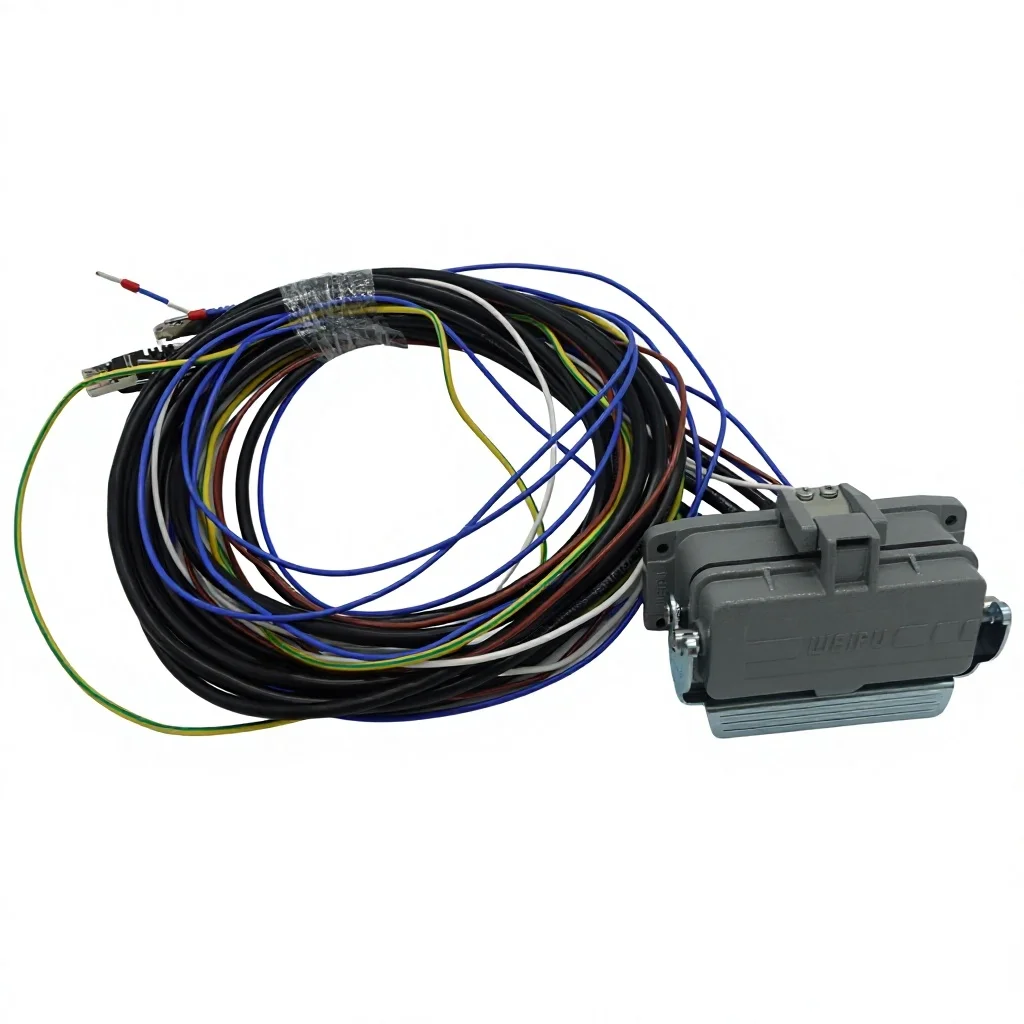
Figure 2: Multi-circuit industrial harness with color-coded wiring and heavy-duty connector for railway detection and signal systems
3. Application Scenarios: 6 Rail Transit Equipment Categories We Support
Our harness solutions extend beyond X-ray screening to the full spectrum of rail transit and metro infrastructure equipment:
| Equipment Category | Typical Harness Count | Key Design Challenge | Our Solution |
|---|---|---|---|
| Metro X-Ray Baggage Screening | 8–15 harnesses | High-voltage safety, detector array signal integrity, EMI from HV generator, 24/7 duty cycle | Double-insulated HV cable, shielded detector signal lines, EMI ferrite cores, silicone insulation at hot zones |
| Railway Trackside Detection ( axle counters, hot-box detectors ) | 4–8 harnesses | Outdoor exposure, extreme temperature (-40°C to +70°C), lightning surge, UV degradation | UV-resistant PUR jacket, surge protection inline, IP67 sealed M12/Deutsch connectors, cold-bend rated cable |
| Train Carriage Diagnostic Systems | 6–12 harnesses | Vibration per IEC 61373, fire safety (EN 45545), space constraints under floor/ceiling panels | Low-smoke zero-halogen (LSZH) wire, EN 45545 HL2/HL3 compliant, vibration-resistant crimping, compact routing |
| Platform Screen Door (PSD) Control | 5–10 harnesses | High-cycle flex (100,000+ open/close), safety interlock logic, integration with train signaling | High-flex cable at door hinge zone, redundant safety interlock circuits, IP65 sealed quick-disconnects |
| Station Signage & Passenger Information (PIS) | 4–8 harnesses | Long cable runs (50–200m), Ethernet/video signal integrity, daisy-chain topology | Shielded Cat6/Cat7 with M12 X-coded or RJ45 industrial connectors, signal boosters for long runs, labeled at every junction |
| Metro Power & Traction Substation Monitoring | 6–10 harnesses | High-voltage proximity (up to 750V DC / 25kV AC), severe EMI, explosive atmosphere in battery rooms | High-voltage rated cable (1kV+), double shielding (foil + braid), flame-retardant LSZH, ATEX-compatible where required |
4. Technical Specifications & Standards for Rail Transit Harnesses
Every metro and railway harness we produce meets or exceeds the following technical standards — many of which are mandatory for rail transit projects:
| Parameter | Standard | Notes |
|---|---|---|
| Wire Gauge Range | AWG 30 (data/signal) to AWG 10 (power distribution) | De-rated to 125% of continuous load per IEC 60364 or NEC |
| Insulation Material | PVC (general), XLPE (high temp), Silicone (extreme temp), PUR (flex/outdoor), LSZH (fire safety) | Selected per zone: PVC for ambient, XLPE for X-ray tube zone, PUR for outdoor trackside, LSZH for carriage interior |
| Temperature Rating | -40°C to +105°C (standard) / -40°C to +150°C (silicone/PTFE) | Continuous operating temperature; short-term peaks handled by material spec |
| Voltage Rating | 300V / 600V / 1000V depending on application | Hi-pot tested at 2x rated voltage + 1000V for 1–3 seconds (100% of units) |
| Connector Types | Harting Han series, TE HDC, Amphenol C091, M12/M8 industrial, Deutsch DT, JST, Molex, custom | Heavy-duty connectors for vibration resistance; modular inserts for mixed signal/power/data |
| Vibration Resistance | IEC 61373 Category 1 Class B (railway applications) | Validated via sinusoidal/random vibration testing on prototype samples |
| Fire Safety | EN 45545-2 HL2/HL3 (railway fire protection), UL 94 V-0/VW-1 | LSZH wire and flame-retardant connectors for carriage interior and tunnel applications |
| EMC Shielding | Foil + braid shield, 85%+ coverage; ferrite cores at connector entries | Critical for detector signal and Ethernet data in high-EMI traction zones |
| Regulatory Compliance | RoHS 3, REACH, UL/CE options, EN 50155 (rolling stock), IEC 61373 | Full material declarations and compliance reports provided with every shipment |
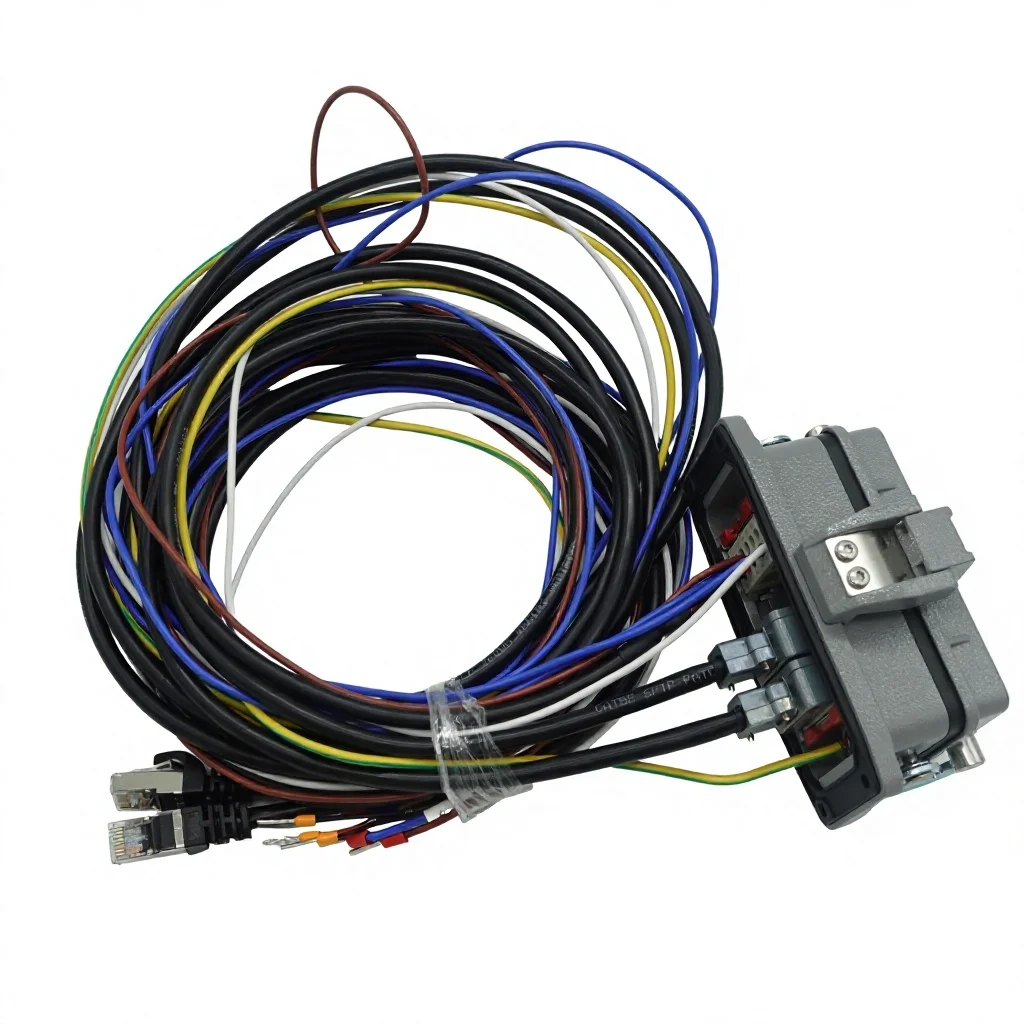
Figure 3: Industrial harness integrating Ethernet communication (RJ45) and heavy-duty power connector for metro X-ray inspection and communication systems
5. Our Custom Wire Harness Capabilities for Rail Equipment OEMs
We are not a catalog supplier. Every harness is engineered and built to your exact specification, with value-added services that reduce your engineering burden and compress lead time:
| Capability | What It Means for Your Rail Transit Project |
|---|---|
| Free DFM & Engineering Review | Our engineers review your system drawing or sample harness and flag any thermal, vibration, EMC, waterproofing, or safety concerns before production — no charge, no commitment. Turnaround: 24–48 hours. For a recent metro X-ray OEM, we identified a chafe point against a sheet metal edge that would have caused insulation failure within 2 years. |
| ECO Response ≤ 5 Business Days | When your X-ray system revision changes a detector pinout or adds a new safety interlock circuit, we update tooling, re-qualify, and deliver first-article samples within 5 working days. No production delays, no excuses. This is the level of responsiveness that keeps our rail customers on schedule. |
| Heavy-Duty Connector Integration | We are experienced with Harting Han series, TE HDC, Amphenol C091, and other industrial connector families. We handle insert configuration, pin assignment, crimp tooling, and mating verification — ensuring your harness plugs into your chassis with zero field surprises. |
| Multi-Variant BOM Management | Running multiple metro equipment models? We manage your entire harness BOM under a single purchase order, with model-specific labeling, kitting, and packaging. Mix-and-match SKU management at no extra charge. This simplifies your procurement and reduces assembly floor picking errors. |
| Custom Color Coding & Labeling | We implement your specified wire color scheme and labeling protocol across all harness assemblies. Every connector labeled with subsystem name and connector ID (e.g., "DETECTOR-ARRAY-J3", "HV-TUBE-PWR-IN"). Supports your assembly team and field service technicians. |
| Pre-Terminated & Kitted Delivery | Every connector is fully terminated, crimped, tested, and labeled before shipment. We can kit all harnesses for one machine into a single labeled package. Your assembly team plugs in — no stripping, no crimping, no guesswork. This saves 2–4 hours per machine on complex X-ray systems. |
| Protective Sleeving & Conduit | Corrugated conduit (impact/abrasion), braided PET (flexibility + abrasion), heat-shrink tubing (sealing/identification), aluminum foil + braid (EMI shielding). Specified per harness zone, not blanket-applied. We know which zones need what protection. |
| Traceability to Lot & Operator Level | Every harness is traceable to raw material batch, production date, operator, and test results. Records retained for 5 years. Supports your ISO audit, regulatory compliance, and recall management requirements. |
| Buffer Stock / Safety Stock Program | We hold 4–6 weeks of finished inventory for production customers. Ship within 3–5 business days of your release order. Eliminates lead time risk from your project schedule — critical for rail infrastructure projects with fixed commissioning deadlines. |
6. Common Field Failures & How We Prevent Them in Rail Applications
Harness failures in rail transit equipment are expensive: they mean system downtime, passenger delays, safety incidents, and regulatory penalties. Here are the 7 most common failure modes we've encountered in metro and railway applications — and how our engineering eliminates them:
| Failure Mode | Root Cause | Our Prevention Strategy |
|---|---|---|
| Connector Vibration Loosening | Railway vibration per IEC 61373 causes standard screw-terminal connectors to back out over 6–12 months; intermittent contact triggers system faults | Heavy-duty locking connectors (Harting Han with locking lever, TE HDC with metal latch); vibration-tested crimp terminals; thread-locking compound on all screw connections; pull-force validation per IPC/WHMA-A-620 |
| Detector Signal Degradation from EMI | X-ray generator HV switching and traction motor PWM create broadband EMI that couples onto unshielded detector signal cables, causing image artifacts | Double-shielded signal cable (foil + braid, 85%+ coverage); shield grounded at both ends via drain wire; ferrite cores at DAQ board entry; physical separation from HV power harnesses |
| Wire Insulation Thermal Degradation | PVC insulation near X-ray tube housing or power supply exposed to 85–100°C continuous heat becomes brittle and cracks; vibration completes the failure | Silicone or XLPE insulation rated for 125°C+ in all hot zones; thermal imaging verification during prototype testing; heat-reflective sleeving at extreme hot spots |
| Water Ingress at Outdoor Trackside Connectors | Unsealed or improperly mated connectors on trackside detection equipment allow rainwater/condensation; corrosion increases contact resistance and causes false detection | IP67 sealed M12 or Deutsch connectors at all outdoor interfaces; pressure-decay seal test on 100% of sealed assemblies; dielectric grease fill; cable entry glands with IP65 rating |
| Chafing Against Metal Edges in Enclosure | Wire bundle routes across a stamped sheet metal chassis edge without protection; train vibration wears through insulation over 1–2 years | DFM review identifies every chafe risk in routing path; corrugated conduit or edge guard at all metal contact points; revised routing where possible to eliminate contact |
| High-Voltage Arcing at Terminals | Thermal cycling and vibration loosen HV terminal connections; loose connection arcs under 80–160 kV load, creating ozone and carbon tracks | High-retention crimp terminals with pull-force test on every tooling setup; hi-pot test at 2x rated voltage catches weak connections; thread-locking compound on HV terminal screws |
| Incorrect Assembly Due to Poor Labeling | Unlabeled or poorly labeled connectors cause assembly errors during field maintenance; wrong harness plugged into wrong port damages subsystem | Every connector labeled with heat-shrink marker or laser-printed label: subsystem name + connector ID + mating partner ID; color-coded wire scheme per customer spec; assembly instruction sheet included with every shipment |
7. Quality Testing & 100% Manual Inspection for Mission-Critical Transit Harnesses
In rail transit applications, a harness failure is not a warranty claim — it is a service disruption, a safety incident, or a regulatory violation. Every single harness that ships from our factory undergoes comprehensive testing and 100% manual visual inspection:
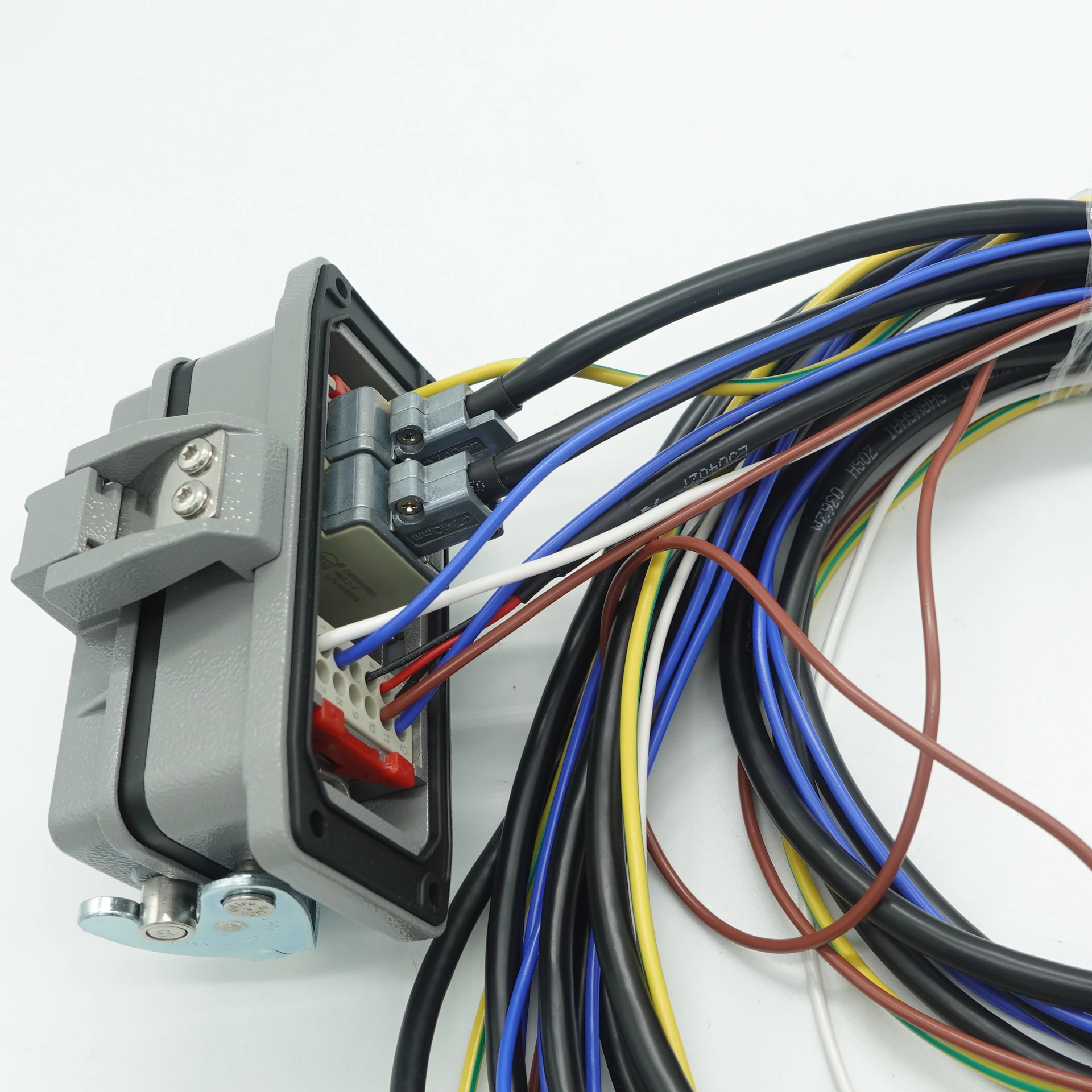
Figure 4: Close-up view of precision terminal crimping and multi-color wire routing inside a heavy-duty industrial connector for metro X-ray inspection equipment
| Test / Inspection | Method | Coverage | What We Catch |
|---|---|---|---|
| Continuity Test | Automated test fixture (Cirris / DIT-MCO equivalent) | 100% of units | Open circuits, short circuits, miswires, cross-wires, intermittent connections |
| Hi-Pot (Dielectric Withstand) | Programmable hi-pot tester, 2x rated + 1000V for 1–3 sec | 100% of units | Insulation breakdown, creepage failures, weak spots in HV zones |
| Insulation Resistance | Megohmmeter at 500V/1000V | 100% of units | Insulation degradation, moisture contamination, manufacturing defects |
| Crimp Pull-Force Test | Digital force gauge per IPC/WHMA-A-620 / UL 486A | Every tooling setup + hourly in-process sampling | Under-crimped or over-crimped terminals that would fail under vibration |
| Manual Visual Inspection (100%) | QC technician with magnification lamp + 9-point inspection checklist | 100% of units | Incorrect wire color/gauges, damaged insulation, misaligned terminals, missing labels, improper sleeving, loose connector locks, cut strands, wrong orientation, foreign material |
| Connector Mating Verification | Go/no-go mating fixture with customer mating connector | First article + random in-process | Incorrect pin assignment, damaged connector housings, interference fits |
| First Article Inspection Report (FAIR) | Full dimensional, crimp cross-section micrograph, pull-force data, electrical test log, photos, connector mating verification | Every new SKU or ECO revision | Any deviation from customer specification before production release |
Our quality data for rail transit harness production: First-pass electrical test yield: 99.97% | Customer incoming inspection reject rate: < 0.03% | Field failure rate (harness-related): < 0.01% across 800,000+ industrial units delivered
8. How We Work: From Drawing to Delivery
Our process is designed to minimize your engineering overhead while ensuring every harness meets the exacting standards of rail transit equipment:
Technical Intake & DFM Review (Day 1–2)
Send us your system drawing, BOM, or a sample harness. Our engineering team reviews your design within 24–48 hours and returns a DFM report covering thermal, vibration, EMC, waterproofing, safety, and manufacturability concerns. No charge. No commitment. For a recent metro X-ray OEM project, our DFM review identified 3 routing issues that would have caused field failures within 18 months.Quotation (Day 2–3)
We deliver a detailed quote including: unit price at your target volume, NRE/tooling costs (if any), sample lead time, and production lead time. For standard industrial harnesses, quotes are typically returned within 48 hours of receiving complete documentation.Prototype & First Article (Week 2–3)
5–20 prototype units, 100% tested, delivered with a complete FAIR package (crimp cross-section micrographs, pull-force data, dimensional report, electrical test log, photos, connector mating verification). Design iterations incorporated at no additional tooling charge within the agreed design envelope.Customer Approval & Qualification (Week 3–5)
You test prototypes in your system, confirm fit/function, and sign off. We run a qualification batch (100–500 pcs) to validate process parameters and catch any variation before full production release.Mass Production (Week 5+)
Standard lead time: 15–25 days for orders up to 50,000 pcs. We ship via sea freight (FOB Xiamen) or air freight (DHL/FedEx, 5–7 days). Shipments include full traceability documentation, lot records, and test reports.Ongoing Support & ECO Management
A dedicated account engineer is assigned for the life of your project. ECOs are processed with ≤ 5-day response on first-article samples. Quarterly business reviews are available for key accounts. Buffer stock program available for JIT delivery.
9. Frequently Asked Questions
Q1: We are building a metro X-ray baggage screening system with 12 distinct harnesses. Can you consolidate all of them?
Yes — this is one of our core strengths. We have consolidated harness sourcing for multiple rail transit OEMs, standardizing wire specs, connector families, and quality requirements across the entire system. The result: fewer suppliers to manage, consistent quality, and typically 10–20% cost savings from volume consolidation. We manage multi-SKU BOMs under a single PO with model-specific labeling and kitting.
Q2: What is the minimum order quantity for rail transit harness prototypes?
Prototype phase: 5–20 pcs. Small batch / pilot production: 500–2,000 pcs. Mass production MOQ: typically 2,000–5,000 pcs per SKU, negotiable for customers with multiple SKUs or a defined ramp plan. We understand that new rail equipment models start with small volumes and scale up — we structure pricing to support that growth path.
Q3: Our system needs to pass EN 50155 and EN 45545-2 certification. Can your harnesses support that?
Absolutely. We can source EN 45545-2 HL2/HL3 compliant LSZH wire and EN 50155 rated components for your harness BOM. We provide full material traceability documentation, component compliance certificates, and test reports to support your rolling stock certification submission. We have supported customers through successful EN 50155 and EN 45545 compliance.
Q4: What if our drawing has a routing issue or a connector compatibility problem?
Our DFM review is specifically designed to catch these issues. We flag routing paths that create chafe points, connectors that are not vibration-rated for rail applications, wire gauges undersized for load current, insulation types mismatched to temperature zones, and shielding gaps that would fail EMC tests. You decide what to implement, but at least you know before tooling is cut. This review has saved our rail customers from serious field problems.
Q5: Can you handle quick-turn ECOs when our X-ray system design is revised?
Yes. For existing, qualified harness designs where the change is within the same connector family or wire spec, we can re-tool and deliver first-article samples within 5 business days. This is critical for rail equipment OEMs doing rapid hardware iteration. Rush production for approved ECOs typically ships within 10–12 business days.
Q6: Do you offer harness kitting — all harnesses for one machine in a single package?
Yes, this is a standard service for our rail transit customers. We kit all harness SKUs for one machine into a single labeled package, with machine model number and production batch. This eliminates picking errors on your assembly floor and supports line-side delivery. Kitting is available at a modest per-set charge, typically $0.20–0.50 depending on harness count and packaging complexity.
Q7: We are a European rail equipment manufacturer. How do you handle shipping, lead times, and CE documentation?
We ship from Xiamen, China via sea freight (25–35 days to European ports) or air freight (5–7 days door-to-door via DHL/FedEx). For CE compliance, we provide RoHS/REACH declarations, material test reports, and EN 50155 / EN 45545-2 compliance documentation where applicable. We also offer a buffer stock program: we hold 4–6 weeks of inventory in our warehouse and ship on your release order within 3–5 business days.
Ready to Partner With a Harness Supplier Who Understands Rail Transit?
Whether you manufacture metro X-ray baggage screening systems, railway trackside detection equipment, rolling stock diagnostic tools, platform screen doors, or traction substation monitoring devices — if it has wiring inside a metal chassis that must survive vibration, EMI, and 10+ years of service, we can build it to your spec, test it to the highest standard, and deliver it on time.
Send us your drawing or sample and get a full quote + DFM review within 24–48 hours. No charge. No commitment. Just honest engineering feedback from a partner who understands what your rail transit equipment needs to survive.
 Contact Us — Free Quote & Engineering Review
© 2026 Kehan Wire Harness | Custom Metro X-Ray Inspection Harness | Railway Detection Equipment Wire Harness | Rail Transit Cable Assembly | Heavy-Duty Connector Harness | ISO 9001 Certified | EN 50155 / EN 45545 Compatible
Keywords: metro X-ray inspection harness · railway detection equipment wire harness · subway equipment harness · rail transit cable assembly · Harting connector harness · heavy-duty industrial harness · X-ray scanner wire harness manufacturer · rail signal harness supplier · EN 50155 wire harness · custom industrial cable assembly