


Not very familiar with the cable industry? These 19 common knowledge, at least you need to know
2026-07-15 10:05Have you ever thought about what you should know about the cable industry? You do not have to be an expert to make good choices about cable services and technology. Xiamen Kehan Electronics Co., Ltd. is a trusted place for information. > Stay curious and keep learning. These basics help you understand the world around you.
Key Takeaways
Learn the basics of the cable industry. This industry has companies that design, make, and sell cables. These cables are used for power and communication.
Know how coaxial and fiber optic cables are different. Coaxial cables cost less and work well for short distances. Fiber optic cables are faster and handle more data.
Look for safety certifications like UL or CE when you buy cables. These marks show the cables are safe to use. They help protect you and your devices.
Think about why you need the cable and how long it should be. Picking the right type and size stops signal loss and device damage.
Keep up with new trends in the industry. New technology and eco-friendly choices are changing how cables are made and used.
1. Cable Industry Overview
Definition
You might ask what the cable industry is. This industry has companies that design, make, and sell cables. Cables are used in many places. You see them at home, at work, and in public. Cables help bring electricity to devices. They connect you to the internet. They also support phone and TV services. The cable industry makes power cables, communication cables, and special cables for machines.
Scope
The cable industry is part of daily life and business. Its products are found in homes, offices, factories, and data centers. The main sectors are:
| Sector | Market Share Description |
|---|---|
| Power Cables | Has the biggest share because it helps deliver electricity to homes and factories. |
| Communication Cables | Comes next, as people need fast connections and data for phones and computers. |
| Control and Instrumentation Cables | Smaller market, used in special jobs in factories. |
| Energy and Power | Main segment, needed for new energy projects and electrification. |
| Telecommunications | Growing fast because of high-speed internet and 5G. |
| Copper | Most used material because it conducts electricity well. |
| Fiber Optic | Becoming popular for fast data and internet. |
| Residential | Biggest end-use, needed for wiring homes. |
| Commercial | Growing quickly as more offices and businesses are built. |
The cable industry is important for information technology. Data centers need lots of cables to store and process data. Telecommunications use cables for fast internet and 5G. Better cable management makes homes and offices safer and neater.
Tip: The cable industry now works on green data centers and eco-friendly solutions. Companies want to use less power and be more efficient.
You use cables every day, like when you turn on a light or watch a video. The cable industry connects people and keeps information moving.
2. History of Cable TV
Early Beginnings
Cable TV started in the late 1940s. People in the countryside could not get good TV signals. Mountains and long distances blocked the TV broadcasts. To fix this, people put big antennas on hills. These antennas caught TV signals from far away. The signals traveled to homes through cables. This system was called Community Antenna Television, or CATV. By 1962, there were almost 800 cable systems. About 850,000 people had cable TV by then. Cable TV grew fast in the early years.
In the 1940s, cable TV let people in far places watch TV.
By the early 1960s, cable TV reached many homes.
The first CATV systems started in Pennsylvania, Oregon, and Arkansas in 1948.
Note: Cable TV was first made to help people get better TV signals. It did not start to give extra channels.
Key Milestones
The cable industry changed a lot over time. Here are some big events that shaped cable TV:
| Year | Event | Significance |
|---|---|---|
| 1948 | First CATV systems established | Brought TV to remote areas |
| 1965-1966 | FCC issues first cable rules | Protected broadcasters and slowed cable growth in big cities |
| 1972 | FCC lifts restrictions and sets standards | Allowed cable to expand in cities and set new rules |
| 1972 | HBO launches | Introduced pay TV and satellite distribution |
HBO started in 1972 and changed cable TV. People could pay for special channels and watch movies at home.
Cable TV was in about 82–83% of homes around 2010–2011.
Now, only about 36% of adults in America have cable or satellite TV. Many people use streaming services instead.
Tip: The cable industry keeps changing as new technology and new ways to watch TV come out.
3. Types of Cables
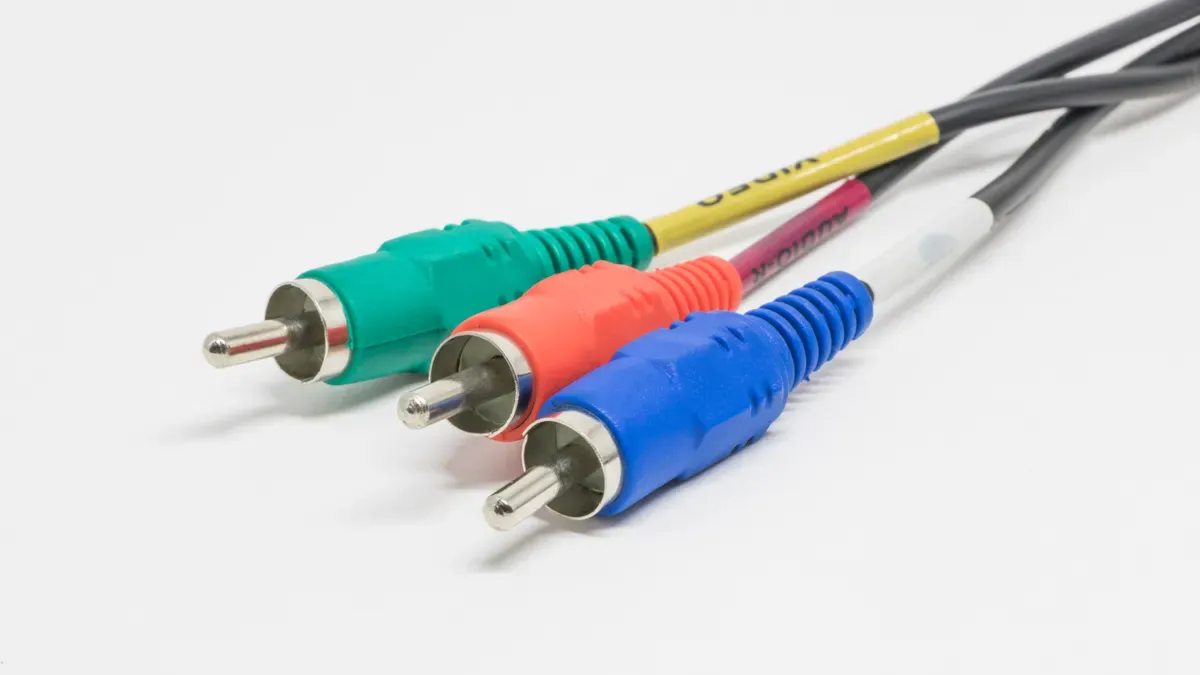
You use different cables every day. Each cable has its own job. The cable industry makes cables for many uses. Two main types are coaxial cables and fiber optic cables.
Coaxial
Coaxial cables send signals for TV, internet, and radio. You find them in homes and offices. These cables have a copper center. The copper sends electrical signals. Insulation covers the copper core. A metal shield protects the cable from outside noise. Coaxial cables work best for short distances. People use them for cable TV and older internet.
Coaxial cables are simple to set up.
They cost less than fiber optic cables.
You can use them for basic home networks.
Tip: Coaxial cables are good for simple TV or internet needs.
Fiber Optic
Fiber optic cables use glass strands to send light signals. You see these cables in new internet systems. Fiber optic cables move data much faster than coaxial cables. They support fast internet and lots of data. You get clearer signals and less interference. Fiber optic cables are best for long distances and heavy data use.
Fiber optic cables give faster speeds.
They support more devices at the same time.
You get strong connections with less signal loss.
Note: Fiber optic cables help you stream videos, play games, and work online without lag.
Here is a table that shows how coaxial and fiber optic cables are different:
| Feature | Coaxial Cable | Fiber Optic Cable |
|---|---|---|
| Transmission | Uses electrical signals | Uses light |
| Material | Made of copper | Made of glass strands |
| Speed | Slower internet speeds | Significantly faster speeds |
| Bandwidth | Limited bandwidth | Supports much higher bandwidth |
| Interference | More susceptible to interference | Less susceptible to interference |
| Latency | Higher latency | Very low latency |
| Scalability | Capped shared bandwidth | Virtually unlimited bandwidth potential |
If you need a special cable for your project, you can check out Custom Wire Harness. Custom cables help you get what you need.
The cable industry gives you many options. You can choose the best cable for your home, office, or factory.
4. Key Materials
Many materials are used in cables. Copper and aluminum are the most important. These metals help cables carry electricity and signals well.
Copper
Copper is used most in the cable industry. You see copper in power lines and internet cables. It is also in phone chargers. Copper lets electricity flow easily. This means less energy is lost. Copper works better than other metals. It bends without breaking. This makes it good for wiring in homes and factories.
Some reasons copper is the top choice are:
It conducts electricity very well.
It bends easily.
It lasts a long time.
It carries more current than aluminum.
It saves energy over time.
Copper cables cost more at first. They save money because they use less energy and last longer. You often see copper in Home Appliance Wire Harness. These wires need to be strong and flexible.
Aluminum
Aluminum is also important for cables. It is lighter than copper. It costs less money. You see aluminum in power lines and building wires. Aluminum works well for short distances. It is good for big cables. Aluminum does not conduct as well as copper. You need thicker wires to carry the same electricity.
Here is a quick comparison:
| Property | Copper | Aluminum |
|---|---|---|
| Conductivity | Higher | Lower |
| Weight | Heavier | Lighter |
| Cost | More expensive | Less expensive |
| Flexibility | Very flexible | Less flexible |
| Durability | More durable | Less durable |
You pick aluminum to save money on materials. Copper is better for long distances and high efficiency. Both metals are important in the cable industry. They help power things you use every day.
5. Manufacturing Process
Steps Involved
Cables are everywhere, but how are they made? Factories follow steps to make cables strong and safe. First, workers use metals like copper or aluminum to make conductors. Machines twist conductors together to form the cable core. Next, workers cover the conductors with insulation. They use materials like polyethylene or PVC. This keeps electricity from escaping.
Some cables need extra protection. Workers add layers to block interference from other devices. The outer jacket makes the cable tough and shields it from weather and damage. Before sending cables out, factories test each one. They check if it meets industry standards. Special products like New energy wire harness use these steps for advanced uses.
Tip: Every step helps cables last longer and work better in homes, offices, and factories.
Quality Control
Quality control keeps cables safe and reliable. Factories check cables at every stage. Monitoring systems find problems early. Labs test materials and finished cables for strength and performance.
Here is a table showing common quality control steps:
| Quality Control Measure | Description |
|---|---|
| Formal Quality Management System | Uses ISO 9001:2015 and IPC/WHMA-A-620 standards to keep quality high. |
| Training and Experience | Staff join training programs to improve skills and knowledge. |
| Robust Maintenance Program | Preventive maintenance keeps machines working and calibrated. |
| Standardized Documentation | Clear records help repeat production and avoid mistakes. |
| Inspection of Incoming Materials | Checks all components before use to meet specifications. |
| First Crimp and First Article Testing | Automated pull tests and thorough checks of the first harness. |
| Ongoing Quality Checks During Manufacturing | Regular checks reduce errors and rework. |
| Final Testing | Tests finished cables for function and continuity. |
Factories also check BOM, RoHS compliance, and drawing revision levels. These steps help keep production accurate and consistent.
Note: Quality control stops bad cables and makes sure you get safe products every time.
6. Major Applications
Cables are important in your life. You see them everywhere you go. The two main uses are for power and communication. Each use needs special cables to work right and keep you connected.
Power
You use power cables every day. These cables bring electricity to your home, school, and office. They help lights turn on and machines work. Power cables must handle high voltage and last a long time. You find them in cities, factories, and green energy places like wind farms and solar panels.
Here is a table that shows what is important for power and communication cables:
| Application Area | Key Features |
|---|---|
| Renewable Energy | Stand up to bad weather, handle high voltage, last 25+ years |
| Power Industry | Needed for electricity, always in demand |
Power cables must be strong in bad weather. They need to work safely for many years. Companies use special products like Industry equipment Wire Harness to connect machines and keep things working.
Tip: Good power cables stop blackouts and keep your devices safe.
Communication
Communication cables help you talk, send messages, and use the internet. These cables move data fast with little signal loss. You see them in phones, computers, and TVs. People want faster connections, so the need for these cables grows quickly.
Here is a table that compares the need for power and communication cables:
| Industry | Demand Type | Description |
|---|---|---|
| Power Industry | Most Needed | Power cables are needed everywhere for electricity. |
| Communication Industry | Fastest Growing | Communication cables are growing fast as digital tech spreads. |
The cable industry works to make cables that last and keep your data safe. Weatherproof cables protect signals from rain and wind. Some cables can carry both power and data at once.
Note: Strong communication cables help you watch videos, play games, and talk to friends.
You use cables for power and communication every day. They help keep your world bright and connected.
7. Industry Standards
Safety
Safety standards help keep people safe when using cables. These rules make sure cables work right and do not hurt anyone. Every country has its own set of rules. Some rules tell you how to put cables in place. Other rules check what cables are made of and how strong they are. Here are some important safety standards:
| Standard | Description |
|---|---|
| BS7671 | UK’s national standard for electrical wiring systems installation |
| CE Marking | EU standards for safety, health, and environmental protection |
| BSI | British standards for cable management |
| IPC/WHMA-A-620 | Guidelines for wire harness assemblies and cable testing |
| UL 2237 | Safety rules for wire harnesses and cable assemblies |
| ISO 13485 | Quality management for medical cables |
| MIL-STD-202G | Tests for electronic components |
| RoHS | Limits hazardous substances in electrical equipment |
| NEC | Rules for safe installation of electrical wiring |
| IEC | International standards for electrical technologies |
| UL | Certifies safety and performance of industrial building cables |
You can find these rules in homes, offices, and factories. They help stop fires and shocks. These rules also keep people and things safe. When you buy cables, look for marks or labels. These marks show the cable follows the rules.
Tip: Cables that follow safety rules last longer and keep your devices safe.
Certifications
Certifications prove that cables follow strict rules. Different places need different certifications. If you want to sell cables in North America, you need UL certification. In Canada, CSA certification is needed. Europe uses CE certification. IEEE certification checks special technical needs.
UL certification means the cable is safe and works well.
CSA certification is needed for cables in Canada.
CE certification lets you sell cables in Europe.
IEEE certification checks if cables meet special technical rules.
UL certification checks if cables can stop flames and have good insulation. You can see UL marks on many cables. These certifications help you trust the cables you use.
Note: Certified cables keep you and your things safe. Always look for certification marks before you buy.
The cable industry uses these rules and certifications to make sure products are safe. You can feel sure when you see these marks on your cables.
8. Leading Companies
Global Brands
There are some very big companies in the cable industry. These companies make cables for homes, offices, and big projects. They are known for new technology and good quality. Here are the top five cable makers in the world by how much money they make:
| Country | Company | Revenue in billion USD (approx.) | Year |
|---|---|---|---|
| USA | Southwire | 5.5 | 2020 |
| France | Nexans | 6.4 | 2020 |
| South Korea | LS Cable & System | 16.1 | 2021 |
| Italy | Prysmian Group | 17.1 | 2022 |
| Japan | Furukawa Electric | 4.6 | N/A |
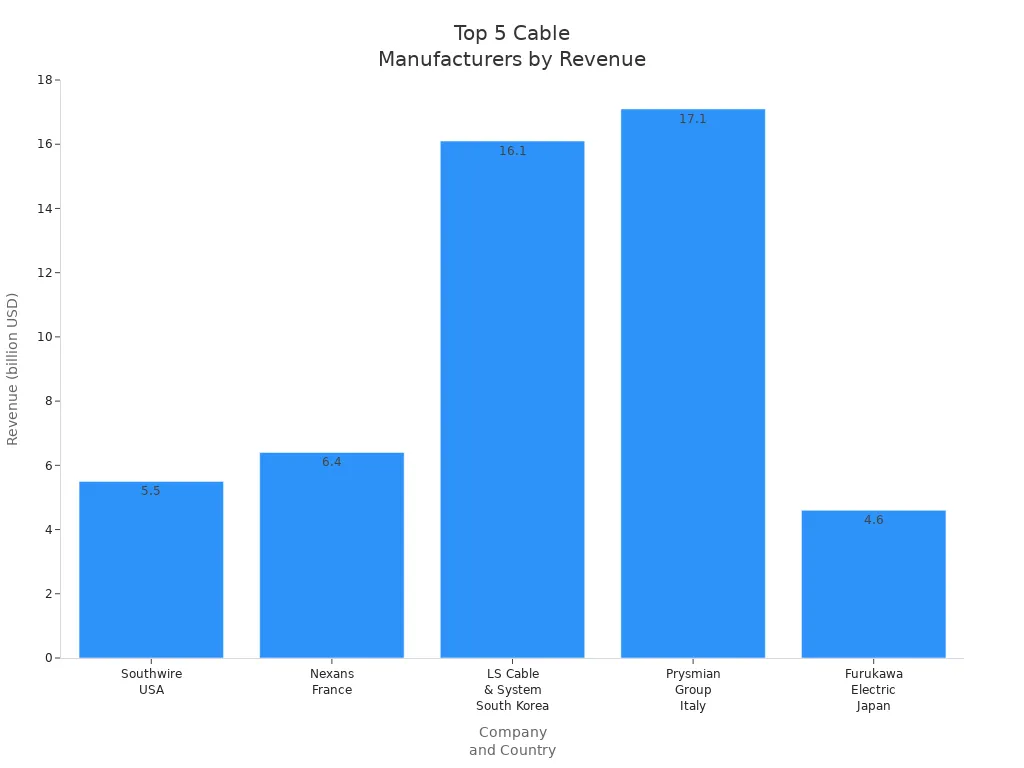
These companies make cables for power, communication, and special jobs. You can find their cables in many places around the world. They set high rules for safety and new ideas.
Xiamen Kehan Electronics Co., Ltd.
Sometimes you need more than just regular cables. Xiamen Kehan Electronics Co., Ltd. is special because it makes custom cables and gives fast help. Here is how it is different from other companies:
| Feature | Xiamen Kehan Electronics Co., Ltd. | Other Manufacturers |
|---|---|---|
| Custom Manufacturing | Yes | Varies |
| Minor Customization | Yes | Limited |
| Drawing-based Customization | Yes | Rarely |
| Response Time | < 6 hours | Varies |
| On-time Delivery Rate | 35% | Varies |
| Quality Certifications | UL Listed, ISO9001, RoHS | Varies |
You get answers quickly and can pick what you want with Xiamen Kehan Electronics Co., Ltd. The company has important safety certificates like UL, ISO9001, and RoHS. You can trust their cables to be safe and work well. Many people pick them for custom wire harnesses and special needs.
Tip: If you need a cable made just for you, choose a company that makes custom cables and answers fast.
9. Cable Installation
Basics
It is important to know how to install cables. This keeps your home or office safe and working. The cable industry has simple steps for every project. You can use these steps for homes or businesses:
Pick a spot for your main equipment or server.
Decide where you want network points and measure the cable length.
Get the right tools and strong hardware.
Put wall plates in place and cut neat holes for cables.
Pull cables through walls, ceilings, or floors.
Test the cables to make sure they work well.
Set up your network and change settings for the best speed.
These steps are used in new buildings and when making upgrades. Each step helps stop mistakes and keeps things working right. If you do not plan or test, you might have trouble later.
Tip: Always use good hardware and measure before you begin. This helps you save time and avoid mistakes that cost money.
Maintenance
Taking care of cables helps them last longer. You can follow easy steps to keep your cables safe and working. Here are the most important things to do:
Do not bend cables too much or they might break.
Be gentle with cables before you put them in. Use a pay-off stand so they do not twist.
Check trolleys and tracks often. Clean and oil them so they move well.
Use tension relief grips so cables do not get pulled too hard.
Checking cables often helps you find problems early. Clean tracks and grips stop cables from snapping. These habits help cables last longer and cost less to fix.
Note: Good care keeps cables safe and your devices working. You help the cable industry by using these smart habits.
10. Common Issues
Wear and Damage
Cables do not last forever. Many things can make cables wear out or break. In the cable industry, these problems happen a lot. Here is a table that lists the main reasons cables get damaged:
| Cause of Damage | Description |
|---|---|
| Jacket Abrasion and Outer Sheath Rupture | Cables rub on frames or other cables. This happens if clamps are wrong or cables are not lined up. |
| Corkscrew Effect (Torsional Deformation) | Wires twist inside and bend. This is from bad installation. |
| Conductor Fatigue and Internal Breakage | Bending cables too much breaks copper strands. Tight loops make this worse. |
| Insulation Degradation from Environmental Exposure | Heat, cold, sunlight, or chemicals hurt the insulation. |
| Tangling and Interference | Cables get tangled. This causes snags or too much pulling. |
Animals and bugs can also hurt cables:
Rodents chew cables. This can cause big power loss.
Birds, like woodpeckers, peck or tangle cables.
Insects, such as termites and ants, eat supports or damage materials.
You can stop many problems by checking cables often. Keep cables clean and away from animals.
Troubleshooting
If something is wrong, you need to find the problem fast. You can use testers to check cables. Here is a table that shows what test results mean and how to fix them:
| Tester result | Likely cause | Solution |
|---|---|---|
| Split pair | Wires are untwisted or crossed | Fix the jack with the right pairs |
| Open circuit | Wire is not connected or is broken | Repunch or fix the wire ends |
| Short | Two wires touch each other | Check, trim, and fix the wires |
| Miswire | Wiring is different on each end | Make both ends match the same way |
| Shield fault | Shield is not grounded | Check the shield and ground at the panel |
You can fix many cable problems with these steps:
Look for damage or sharp bends.
Use a tester to find faults.
Fix or change broken parts right away.
Tip: Check cables often and fix problems fast. This keeps your cables and devices safe.
11. Testing and Inspection
Methods
You must check cables to keep them safe. The cable industry uses different ways to test cables. Each way helps you find problems early. This stops bigger issues later. Here are the most common ways to test cables:
Continuity Testing: You make sure each circuit is complete. This test finds breaks in the wire.
Insulation Resistance Testing: You measure resistance between conductors. This shows if insulation works and stops leaks.
Hi-Pot (High Potential) Testing: You use high voltage on the cable. This checks if insulation can handle strong electricity.
Pull Testing: You test how strong the cable is at the ends. This shows if it can handle pulling or stretching.
Visual Inspection: You look for cracks, wrong labels, or tangled wires. You also check for correct labels and neat routing.
Tip: Use these tests before you install cables or during checkups. Early testing helps you save money and avoid repairs.
Importance
Checking cables often keeps your equipment safe. You protect workers by finding dangers early. Inspections help you stop equipment from breaking when lifting heavy things. When you check cables a lot, you work faster and avoid slowdowns. You can change old cables before they break.
You keep workers safe by finding dangers early.
You protect important loads and stop failures.
You work better by avoiding delays.
You change old cables before they cause problems.
Note: You help keep your workplace safe and running well. The cable industry needs careful testing and inspection to give you good products.
12. Environmental Impact
Sustainability
Cables can hurt the planet in many ways. Making cables uses lots of resources. Here are some ways cable production affects nature:
Companies need copper, plastic, and aluminum for cables. Mining these materials can ruin animal homes and dirty the land.
Factories use much energy to melt metals and make plastics. This energy often comes from burning fossil fuels. Burning fuels puts pollution in the air.
Some cables have dangerous chemicals like lead or cadmium. If these chemicals leak, they can harm plants, animals, and people.
You can help by picking cables with safer materials. Some companies use recycled metals and plastics. They also try to use less energy in their factories. Choosing eco-friendly cables helps keep the planet clean.
Tip: Find cables with green labels or eco-certifications. These labels show the company cares about nature.
Recycling
Old cables do not break down fast. Most cables end up in landfills. They can stay there for hundreds of years. This makes lots of waste and pollution. If cables are not recycled, bad chemicals can leak into the soil and water.
Recycling cables is hard. Cables have many layers. Special machines are needed to separate metals from plastic. Many cables get thrown away instead of recycled. You can help by taking old cables to recycling centers for electronics.
Here is a quick look at what happens when you recycle cables:
| Step | What Happens |
|---|---|
| Collection | You bring cables to a recycling site |
| Sorting | Workers separate metals and plastics |
| Processing | Machines break cables into pieces |
| Material Recovery | Metals and plastics get reused |
You can help by recycling cables the right way. This keeps bad materials out of nature. It also saves resources for the future.
13. Technology Advances
Digital Transition
Cables have changed a lot in recent years. The switch from analog to digital made TV and internet better. Many companies swapped old coaxial cables for fiber optic lines. Fiber optic cables move data faster and hold more info. This means you see clearer pictures and hear better sound.
Some big changes you should know are:
Factories use new materials to make cables last longer.
New ways to build cables help them bend without breaking.
Cables now have safety features to stop accidents.
Companies save energy and recycle more to help the planet.
Digital tech lets you check cable health right away.
Switching to digital meant cable systems needed upgrades. Companies changed transmitters and used digital signals. Fiber optics became key for sending good video and fast internet. TV stations worked with cable companies to give you HD channels.
Tip: Digital cables help you get faster internet and more TV channels.
High-Definition & On-Demand
You can now watch HD TV and on-demand shows because of new cable tech. HD uses more data, so companies had to improve their networks. They replaced old wires with fiber optics and added better gear. This helps you watch clear videos and stream movies without waiting.
Here are some ways HD and on-demand made things better:
Cable companies made their networks bigger for more data.
They used digital signals instead of old analog ones.
Many worked with TV stations to give you HD channels.
Hybrid networks like FTTA and FTTN made things more flexible.
Power over Ethernet (PoE) lets cables power devices easily.
You have more choices and better quality because of these changes. The cable industry keeps working to make your experience better.
Note: You can watch what you want, when you want, because of these new technologies.
14. Cable Industry Regulations
Government Rules
Government rules are important for the cable industry. These rules tell companies how to keep things safe. They also say who can own cable systems and how they must treat you. Over time, new laws changed what cable companies can do. Here is a table with some big rules in the United States:
| Year | Regulation | Key Points |
|---|---|---|
| 1972 | Cable Television Rules | Operators needed a certificate. Rules set how franchises work, how signals are sent, and how good the signal is. |
| 1984 | Cable Communications Policy Act | Set rules for who owns cable systems, how channels are used, and what you pay. Decided who controls the rules. |
| 1992 | Cable Television Consumer Protection and Competition Act | Protected you as a customer. Stopped cable companies from having too much power. Helped give you more choices. |
| 1996 | Telecommunications Act | Helped new technology grow. Made it easier for new services to reach you. |
These rules help keep things fair for everyone. They stop prices from getting too high. They also make sure you get good service. Each law tries to balance what companies want and what you need.
Market Dynamics
Market forces also change cable industry rules. Here are some things you should know:
Government rules can change how companies act.
More competition means better service for you.
Some rules make it hard for new companies to start. This helps big companies stay in charge.
When governments sell part of their cable systems but keep some rules, big companies often win. This can make prices go up for you.
Sometimes, strict rules help big businesses more than they help you.
You should watch how these rules and market changes affect you. Knowing these basics helps you see why prices and service change over time.
15. Pricing Factors
It is good to know how cable prices work. This helps you make smart choices. Cable prices change for many reasons. Two main reasons are material costs and market demand.
Material Costs
Materials are a big part of cable prices. Copper and aluminum are the main metals used. When copper costs more, cables cost more too. Aluminum is cheaper, but its price can also change. Plastic and insulation add to the total price. Factories must buy these before making cables.
Here is a simple table that shows how materials affect cable prices:
| Material | Impact on Price | Reason |
|---|---|---|
| Copper | High | Good conductor, expensive |
| Aluminum | Medium | Lighter, cheaper |
| Plastic | Low | Used for insulation |
If materials cost more, you pay more for cables. Special cables for certain jobs may cost extra. This is because they use better materials.
Tip: Watch copper prices if you want to buy cables. Prices can change quickly.
Market Demand
Market demand also changes cable prices. When more people need cables, prices go up. Big projects like new buildings or data centers increase demand. If fewer people buy cables, prices drop. Companies may also change prices during different seasons or when new technology comes out.
Here are some things that make demand go up:
New homes and offices need many cables.
Upgrades to internet and TV systems raise demand.
Special events or disasters can make prices spike.
When demand is high, prices rise. When demand is low, you can get better deals.
Note: Ask about discounts when business is slow. You might save money.
Knowing these pricing factors helps you plan your budget. You can pick the best time to buy cables and get a good deal.
16. Distribution & Supply Chain
Logistics
Cables are everywhere, but you might not know how they get to you. Logistics is how cables move from the factory to your house or business. Companies use trucks, ships, and trains to move cables. They put cables in reels or boxes so they do not get damaged. Warehouses keep cables safe until they are needed. Workers use barcodes and computers to track where cables are. This helps stop delays and mistakes.
Here are some steps for moving cables:
Factories make cables and pack them for shipping.
Warehouses hold cables until someone orders them.
Trucks or ships bring cables to stores or work sites.
Workers unload and check cables for any damage.
Companies use tracking to watch where cables go.
Tip: You can ask for a tracking number when you buy cables. This lets you know when your cables will come.
Public Rights of Way
Cables often go under roads, sidewalks, or public land. You need special permission to put cables in these places. Cities and towns give cable companies the right to use public land. This lets workers dig, lay cables, and fix them if needed. You might see signs or cones when crews are working.
Here is a table that shows what public rights of way mean:
| Task | Who Gives Permission | Why It Matters |
|---|---|---|
| Digging trenches | City or town | Keeps roads safe |
| Laying cables | Local government | Stops accidents |
| Repairs and upgrades | Public authority | Keeps service working |
These rules help keep roads safe and make sure you have power and internet. Companies must follow the laws and fix the land when they finish.
Note: Public rights of way help connect your home and business to power and internet.
17. Cable Industry Challenges
Streaming Competition
You see more people choosing streaming services like Netflix, Disney+, and YouTube. These services let you watch shows and movies anytime. You do not need a cable box or a long contract. This change creates a big challenge for the cable industry. Many families "cut the cord" and use only the internet for TV. Cable companies must find new ways to keep you interested.
Here are some reasons why streaming is tough competition:
You can watch on phones, tablets, or smart TVs.
You pay only for what you want.
You get new shows and movies faster.
Tip: If you want live sports or local news, cable TV still offers these. Some streaming services do not have them.
Cable companies now offer their own streaming apps. They also bundle internet and TV to give you more value.
Customer Service
You want help when you have a problem with your cable or internet. Good customer service matters a lot. Many people say cable companies do not answer fast or fix issues quickly. This can make you feel frustrated.
Here is a table that shows what you expect and what often happens:
| What You Expect | What Often Happens |
|---|---|
| Fast answers | Long wait times |
| Clear bills | Confusing charges |
| Quick repairs | Delays in fixing problems |
Cable companies try to improve by offering online chat, better phone support, and easy-to-read bills. You can also find help on company websites or through mobile apps.
Note: If you have a problem, write down your questions before you call. This helps you get answers faster.
The cable industry faces many challenges. You will see more changes as companies try to keep you happy and connected.
18. Safety Precautions
Handling
You need to handle cables with care to stay safe and keep them working well. Always check cables for cuts or cracks before you use them. If you see damage, do not use the cable. Use gloves when you move heavy or sharp cables. Gloves protect your hands from cuts and electric shock. Never pull a cable by its cord. Hold the plug or connector instead. This stops the wires inside from breaking.
Here are some important tips for safe cable handling:
Store cables in a dry place. Wet cables can cause shocks or fires.
Keep cables away from heat sources. High heat can melt the insulation.
Do not twist or bend cables too much. Sharp bends can break the wires inside.
Use cable ties or reels to keep cables neat and untangled.
Tip: Always unplug cables by holding the plug, not the wire. This keeps the cable strong and safe.
Installation
You must follow safety steps when you install cables. Turn off the power before you start any work. This stops electric shocks. Use the right tools for cutting and stripping cables. Tools made for the job help you avoid accidents. Wear safety glasses to protect your eyes from flying bits of wire.
Follow these steps for safe cable installation:
Plan the cable path before you start. Avoid sharp edges and heavy foot traffic.
Use cable clips or trays to hold cables in place.
Label each cable so you know what it connects to.
Check that all connections are tight and secure.
Test the cable after installation to make sure it works.
The cable industry sets rules to keep you safe. Always follow local codes and guidelines. If you feel unsure, ask a professional for help.
Note: Safe handling and installation protect you and your equipment from harm.
19. Choosing the Right Cable
Selection Tips
You want the right cable for your needs. The wrong cable can cause problems or even damage your devices. Here are some tips to help you choose:
Check the Purpose
Decide what you need the cable for. Power cables, internet cables, and TV cables all have different jobs.Look at the Length
Measure the distance between your devices. Pick a cable that is long enough but not too long. Extra length can cause signal loss.Know the Type
Choose between coaxial, fiber optic, or other types. Fiber optic cables work best for fast internet. Coaxial cables are good for basic TV.Check Compatibility
Make sure the cable fits your devices. Look at the connectors and match them to your equipment.Review Safety Labels
Look for safety marks like UL or CE. These labels show the cable meets safety standards.Think About the Environment
If you use the cable outside, pick one that resists water and sunlight.
Tip: Ask a professional if you feel unsure. The right choice keeps your devices safe and working well.
Bundled Services
Many companies offer bundled services. You can get TV, internet, and phone in one package. Bundles can save you money and make bills easier to manage.
| Service | What You Get | Benefit |
|---|---|---|
| TV + Internet | TV channels and fast internet | One bill, lower price |
| Internet + Phone | Internet and phone service | Easy setup |
| Triple Play | TV, internet, and phone | Best value, less hassle |
You see bundles often in the cable industry. Bundled services give you more options and can help you save time. Always compare bundles before you choose. Some bundles include extra features like streaming apps or faster speeds.
Note: Bundles work best if you use all the services. If you only need one, a single service may cost less.
You have learned 19 key facts about the cable industry. This information helps you choose cables at home or work. You can use these tips to fix cable problems. If you want to know more, look for new trends and ask questions.
Use what you learned to make smart choices.
Keep asking about new technology.
Get advice from Xiamen Kehan Electronics Co., Ltd.
Good information helps you get better results.
FAQ
What is the difference between coaxial and fiber optic cables?
| Feature | Coaxial | Fiber Optic |
|---|---|---|
| Speed | Slower | Faster |
| Material | Copper | Glass |
Coaxial cables are used for regular TV. Fiber optic cables are used for fast internet. Coaxial uses copper inside. Fiber optic uses glass to send signals. Fiber optic moves data much faster than coaxial.
How do you know if a cable is safe?
Check for safety marks like UL or CE on the cable. These marks mean the cable follows safety rules. Certified cables help keep your devices and you safe.
Why do cable prices change?
Cable prices go up and down for a few reasons. The cost of copper and aluminum changes often. When more people want cables, prices rise. If fewer people need them, prices can drop.
Can you recycle old cables?
Yes, you can recycle old cables at special centers. Workers take out the metal and plastic parts. Recycling cables helps protect the earth.