


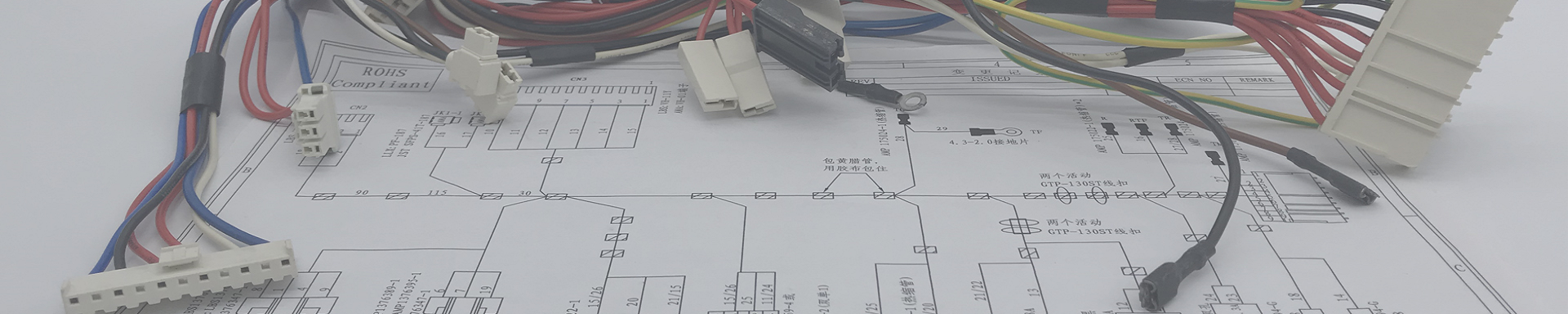
Can Custom OEM Utility Trailer Wire Harness Reduce Electrical Faults for Trailers?
2026-10-14 10:53Yes. Can Custom OEM Utility Trailer Wire Harness Reduce Electrical Faults for Trailers? Absolutely—a custom OEM utility trailer wire harness can reduce electrical faults for trailers. Three main things make this happen: a precise fit, quality materials, and built-in protection. Most trailer "electrical" failures are not really electrical at all. They start with rust, broken wires, and bad grounds. A harness made for your exact trailer model removes much of that risk before you hit the road.
This post explains five specific ways a custom harness lowers fault risk. You will see how fit and routing, materials, circuit protection, installation, and environmental durability each play a part. Xiamen Kehan Electronics Co., Ltd. is an example of a trailer wire harness manufacturer that builds to OEM specifications.
Key Takeaways
A custom harness fits your trailer exactly. It gets rid of extra adapters and loose wires that cause problems.
Good wires and sealed connectors keep out water and rust. This stops many common electrical problems.
Built-in fuses and good grounding keep your trailer's lights and wiring safe from damage.
Plug-and-play connections make setup simple. You avoid mistakes that cause shorts or failures.
Strong materials and smart wire paths help the harness survive shaking, bad weather, and road debris.
1. Exact Fit And Routing
Cut-To-Length Wires Prevent Chafing
A custom OEM utility trailer wire harness matches the wiring of your towing vehicle. The builder reads your trailer model and your tow vehicle's connector layout. The harness then arrives with the right plugs and the right wire count. You avoid universal adapters, and you remove a common fault point. Every extra adapter adds a connection. Each connection can loosen, corrode, or fill with water. A direct-fit harness skips that chain entirely.
Cut-to-length wires also stop chafing. Loose excess wire swings against the frame. The insulation wears thin, and bare copper touches metal. A custom harness trims each run to the correct length. Split loom or corrugated loom wraps the wire and adds a tough outer layer. The loom takes the rub instead of the insulation. Wires stay quiet and protected on rough roads.
Frame And Conduit Routing
Good routing keeps wires out of harm's way. A custom harness follows a planned path along the trailer frame. The builder routes runs through the frame channel or inside conduit where the design allows. This path shields the wire from road debris, gravel spray, and standing water. Exposed wire under a trailer collects damage fast. Protected wire lasts far longer.
Zip ties and loom hold every run in place. You want wires away from moving parts like suspension arms and brake linkages. You also want them clear of hot surfaces such as the exhaust and axle hubs. Heat softens insulation, and movement saws through it. Proper tie placement keeps a safe gap. The harness stays fixed, and the insulation stays intact.
2. Quality Materials And Build
Automotive-Grade Wire And Insulation
Cheap wire breaks down fast on a trailer. Standard hookup wire has thin copper strands and basic plastic insulation. Road vibration makes the copper harden, and the strands crack. A good utility trailer wiring harness uses automotive-grade copper with more strands. More fine strands bend instead of breaking. The wire moves with the frame and lasts through years of vibration.
Insulation is just as important. Automotive-grade insulation stands up to oil, gasoline, salt, and sunlight. It also handles heat and cold without getting brittle. Generic insulation gets hard in winter and cracks. Once the jacket cracks, moisture gets to the copper, and rust starts. Choose cross-linked polyethylene or a similar automotive insulation, and you add a strong shield against the weather.
Crimped And Soldered Terminals
Most harness problems start at the terminals. A loose terminal causes resistance, and resistance causes heat. Heat melts insulation and can even start a fire. A good crimp presses the wire and terminal into one solid metal bond. The crimp must match the wire gauge and the terminal size. A bad crimp leaves air gaps, and air gaps let in rust.
Soldering adds a second layer of safety at key joints. Solder soaks into the stranded wire and seals the connection against vibration. Many builders use both methods: a correct crimp for strength, then solder for a steady electrical path. Heat-shrink tubing covers the joint and keeps out moisture. Ask your supplier how they connect the terminals. A builder who crimps, solders, and seals every joint gives you a harness that holds up on rough roads.
3. Integrated Circuit Protection
Fuses And Relays Sized For The Load
Correct-gauge wire carries your trailer's current without overheating. Thin wire adds resistance, and resistance drops voltage at the lights. Dim lights and hot insulation follow. A custom harness builder calculates your load first, then picks the gauge to match. This step alone removes a common cause of melted wire and flickering lamps.
Fuse sizing follows the same logic. Work out the real current draw before you choose a fuse:
Multiply bulb wattage by the number of bulbs, then divide by 12 volts to get amps.
All-LED trailer lights need very little: a 2A fuse works, 5A is plenty, and 10A is the ceiling.
Incandescent bulbs need the calculated load plus a couple of amps of safety margin.
Keep the trailer fuse in the 10–15A range so it fails before the vehicle's main fuses and protects the tow vehicle's wiring.
One real example shows the math. Six 2057 bulbs (26.9W brake, 6.7W running) plus small running lights drew about 14.7A, so a 15A fuse was the right call. Ask your trailer wire harness manufacturer for the recommended rating if you are unsure.
Sealed Connectors And Ground Wires
Bad grounds cause more trailer faults than any other single problem. Current needs a clean path back to the battery. A weak ground forces current to find another route, and lights dim or quit. A custom harness includes dedicated ground wires of adequate gauge for the full load. Each ground lands on clean bare metal, and the connection stays tight.
Moisture ruins connectors fast. Pack each connector with dielectric grease to block water and oxygen. Protected connector caps seal the plugs when you unhitch. Grease and caps together stop the corrosion that turns a good connection into a rusty one.
4. Simplified Installation
Plug-And-Play Connections
A custom harness arrives ready to connect. The plugs match your tow vehicle and your trailer, so you skip the splicing, taping, and guesswork of a universal kit. You plug in the main connector, route the runs, and test the lights. That short job removes many chances for a mistake.
Plug-and-play designs also cut the faults that come from hand-made joints. Fewer open splices mean fewer shorts and less downtime. The modular layout lets you swap one damaged section without rewiring the whole trailer. A supplier of China custom wire harness assemblies builds these connectors to match your model, so each plug seats correctly the first time.
Most "electrical" failures on a trailer aren't actually electrical. They're corrosion, broken wires, or a bad ground. About 70% of "dead trailer" calls end at the ground connection.
Clear Labeling And Instructions
Good labeling turns a confusing bundle of wires into an easy map. Each run carries a printed tag or a color code that matches the wiring diagram. You can trace the brake wire, the tail wire, and the turn signal wire without testing every strand. This step prevents the mixed-up connections that cause malfunctioning lights and safety hazards.
Clear instructions complete the package. A good guide shows the ground point, the fuse rating, and the route along the frame. It tells you to scrape the frame to bare metal and seal the ground bolt with dielectric grease. Follow the diagram, double-check each connection, and use crimp connectors or heat shrink for a secure, weather-resistant joint. A labeled harness with a solid guide lets you finish the install with confidence and fewer callbacks.
5. Environmental Durability
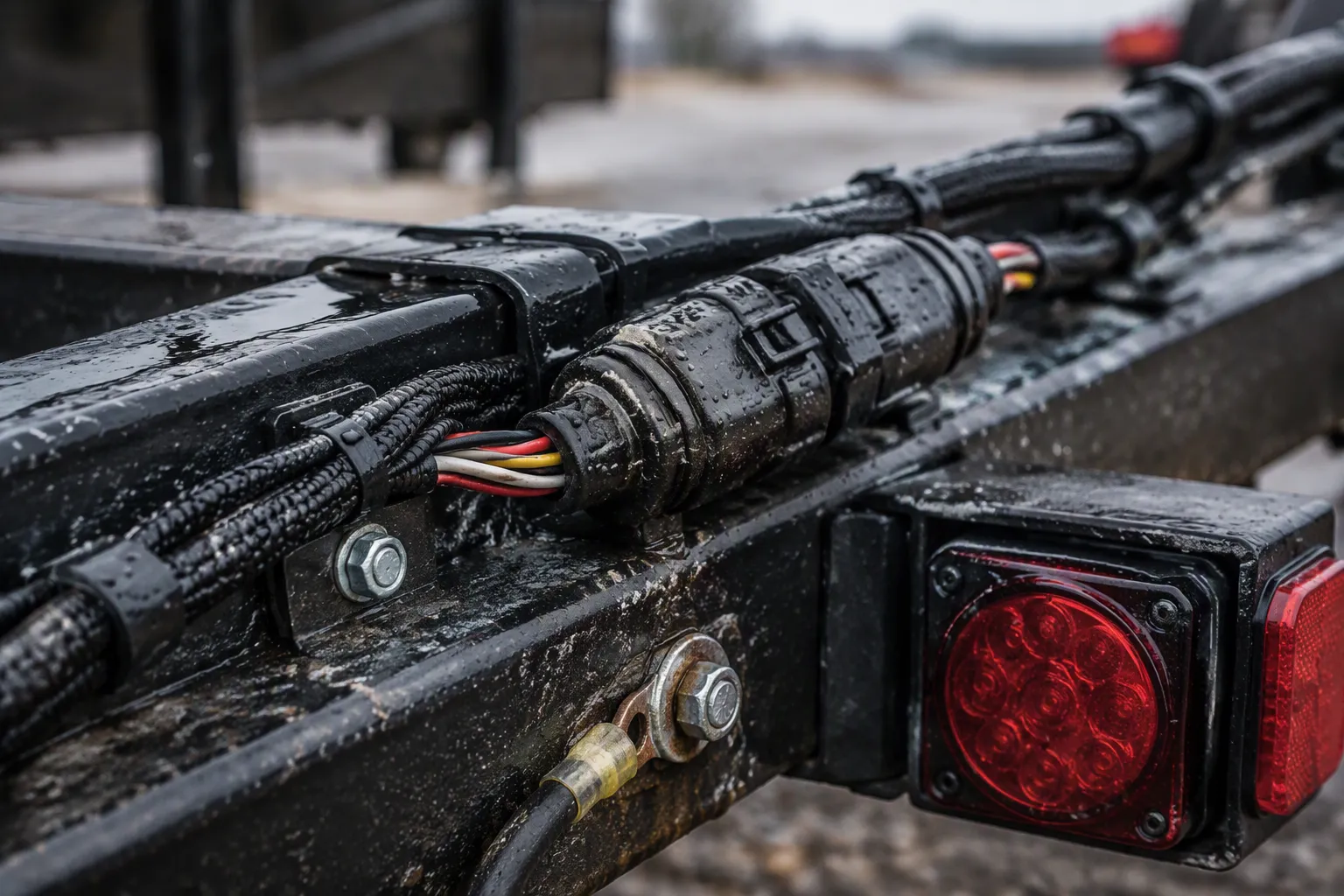
Moisture And Corrosion Defense
Water and salt attack a trailer harness from all sides. Watch for these common problems:
Water exposure rusts connections and wiring over time, which weakens the flow of power and causes shorts or total failure of key systems.
Road salt eats away at connectors and wiring, which weakens the flow of power.
Water getting into light housings causes shorts and makes the lights fail.
Moisture damages circuit breakers, which makes the electrical system even less stable.
Sealed connections, rust-resistant wiring, and tough LED lights keep the system strong against these problems. A custom harness builds that defense into the design. Over-molded connectors keep moisture out of each joint, and a built-in moisture barrier stops water from spreading through the system when a wire is damaged. Adhesive-filled heat-shrink ring terminals seal every connection. Put dielectric grease on bare metal terminals that are not sealed another way. Never poke insulation with a test probe, because the tiny hole lets moisture in. Use glue-filled heat-shrink crimp connectors for any splice. Check connectors for cracks, rust, or loose pins about every three months in harsh conditions, and tighten ground connections every six months. Builders of appliance wire harness manufacturers use the same sealing care on trailer assemblies.
Vibration And Road-Debris Resistance
Road shock shakes a harness thousands of times per mile. Reinforced sheathing, such as braided or spiral wrap, shields conductors from wear caused by road debris and rubbing. Strain reliefs absorb movement so connections never carry the stress of vibration. Locking connectors with screws, clamps, or snap-fit keep pins and sockets in steady contact, and firmly crimped terminals resist shaking loose. UV-stable, flame-retardant jackets protect the harness against sunlight and outdoor exposure. Builders choose high-strand conductors and durable components on purpose to withstand vibration, moisture, wear, road debris, and temperature changes. That choice of materials is what separates a harness that lasts from one that fails mid-season.
How Can Custom OEM Utility Trailer Wire Harness Reduce Electrical Faults for Trailers?
Reduce Electrical Faults for Trailers
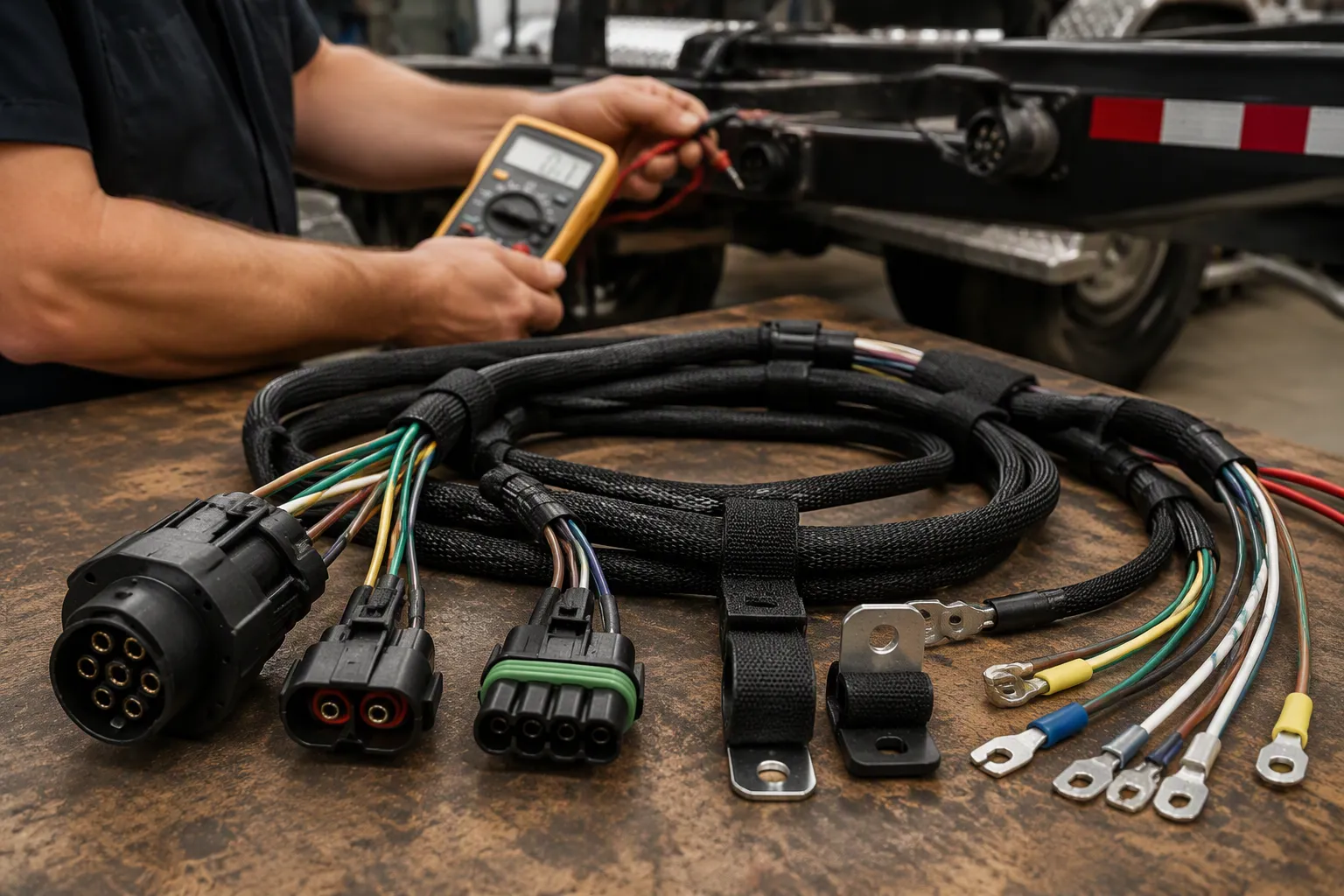
A custom OEM utility trailer wire harness cuts down on faults because the design gets rid of weak spots before they break. Sealed connectors, overmolding, and rust-resistant terminals keep moisture out in rain, snow, and off-road use. Cross-linked polyethylene insulation stands up to heat and handles vibration well. Tin-plated copper terminals fight rust at every joint. Ultrasonic welding makes a stronger branch connection than a crimped butt connector. Overmolded 2/3/4/5/7-pin and PL10 plugs fully seal in the terminals. Deutsch connectors stay sealed and resist vibration. A yarn braiding cover even holds up to high-pressure washing.
Vibration control matters just as much. Mechanical shock absorbers keep chassis shake away from the pins. Cushioned P-Clamps and Velcro straps take the place of over-tightened cable ties, and staggered clamp spacing stops harmonic resonance. TPU/TPE jackets resist rubbing, and locking connectors stop coming apart. Builders confirm the result with random vibration testing, flex testing, continuity testing under load, and pull testing.
Diagnosis also gets better. A technician who proves the circuit first finds the fault faster. The "shotgun" approach burns shop hours and replaces parts before the real fault shows up.
A fleet technician spent six months and roughly $1,800 replacing modules, ABS sensors, and a bumper harness on a Kenworth T680. Asking drivers when the fault happened solved it: every report came after rain or humidity. Water spray on the 7-way socket reproduced the fault in 30 seconds. Hidden ground-pin corrosion was the cause. The fix held for 14 months with zero reports.
Check each ground strap for rust, cracked lugs, or loose bolts. Wiggle every strap, then run a voltage-drop test under load. A strap can look perfect yet show 0.5–0.8V drop from hidden rust. Retest to confirm under 0.2V after the fix.
Matching The Harness To Your Model
Match functions, not wire colors. RV and SAE standards differ on 7-pin blade color coding, so a color-only match invites miswiring.
A 4-pin connector uses pins 1–4, a 5-pin adds pin 5, and a 7-pin adds pins 6–7. Unused pins stay blank. Give your trailer wire harness manufacturer the model, the tow vehicle's connector layout, and the load list. That information lets a China custom wire harness builder trim each run and seal each joint to your spec. The same care that appliance wire harness manufacturers apply to sealed assemblies applies here.
Five design choices lower your fault risk: exact fit and routing, quality materials, integrated circuit protection, simple installation, and environmental durability. Each one removes a weak point before it fails on the road. So yes, a custom OEM utility trailer wire harness can reduce electrical faults for trailers, and that answer should shape your buying decision. Xiamen Kehan Electronics Co., Ltd. builds harnesses to OEM specifications as one example of a trailer wire harness manufacturer you can trust. Match your harness to your trailer model. Skip the universal kit, and give your trailer the wiring it was designed to use.
FAQ
What makes a custom OEM utility trailer wire harness different from a universal kit?
A custom OEM utility trailer wire harness fits your trailer model and your tow vehicle's plug. A universal kit needs adapters and extra splices. Every adapter adds a connection that can come loose or rust. A direct-fit harness skips that chain and lowers the chance of faults.
How do I pick the right utility trailer wiring harness for my load?
First, list your lights and their wattage. Add up the current draw, then pick a wire gauge and fuse that carry it safely. A good utility trailer wiring harness comes sized for that load, so the wire stays cool and the lights stay bright.
Can a trailer wire harness manufacturer build to my exact model?
Yes. Give a trailer wire harness manufacturer your trailer model, your tow vehicle's connector layout, and your load list. The builder then cuts each run and seals each joint to your spec. Xiamen Kehan Electronics Co., Ltd. builds harnesses to OEM specifications this way.
Why does a China custom wire harness cost more than a generic one?
You pay for exact fit, sealed joints, and correct gauge wire. A China custom wire harness removes adapters and bad grounds before they fail. That upfront cost often beats repeated roadside repairs and downtime.
Do appliance wire harness manufacturers use the same sealing methods on trailers?
Many do. Builders of appliance wire harness manufacturers assemblies use overmolded connectors, adhesive-lined heat-shrink, and dielectric grease. Trailer harness builders use the same sealing care, so moisture stays out of every joint.