


9 Custom Wire Harness Solutions That Deliver Reliability in Extreme Conditions
2026-09-30 10:24These nine custom wire harness solutions from Xiamen Kehan Electronics Co., Ltd. can handle extreme heat, cold, moisture, vibration, and chemicals. They range from high-temperature PTFE tapes to integrated sensing circuits. The lineup has silicone encapsulated connectors, 316L stainless steel braided shielding, conformal coating for circuit boards, custom strain relief boots, high-flexibility TPE jackets, epoxy-potted backshells, layered cross-linked polyethylene insulation, and integrated temperature and strain sensing circuits. Each option targets a specific failure mode. Together, they make a reliable toolkit for engine bays, marine decks, cold storage, oil and gas sites, farm equipment, and remote installations.
Key Takeaways
These nine solutions focus on specific ways wire harnesses fail, such as heat, moisture, vibration, and chemicals.
Engineers put several solutions into one harness to handle many extreme conditions at the same time.
Testing standards like MIL-STD-810 and IEC 60529 show that the harnesses work in real harsh conditions.
Integrated sensing circuits allow constant monitoring and predictive maintenance to cut downtime.
1. High-Temperature Resistant PTFE Tapes
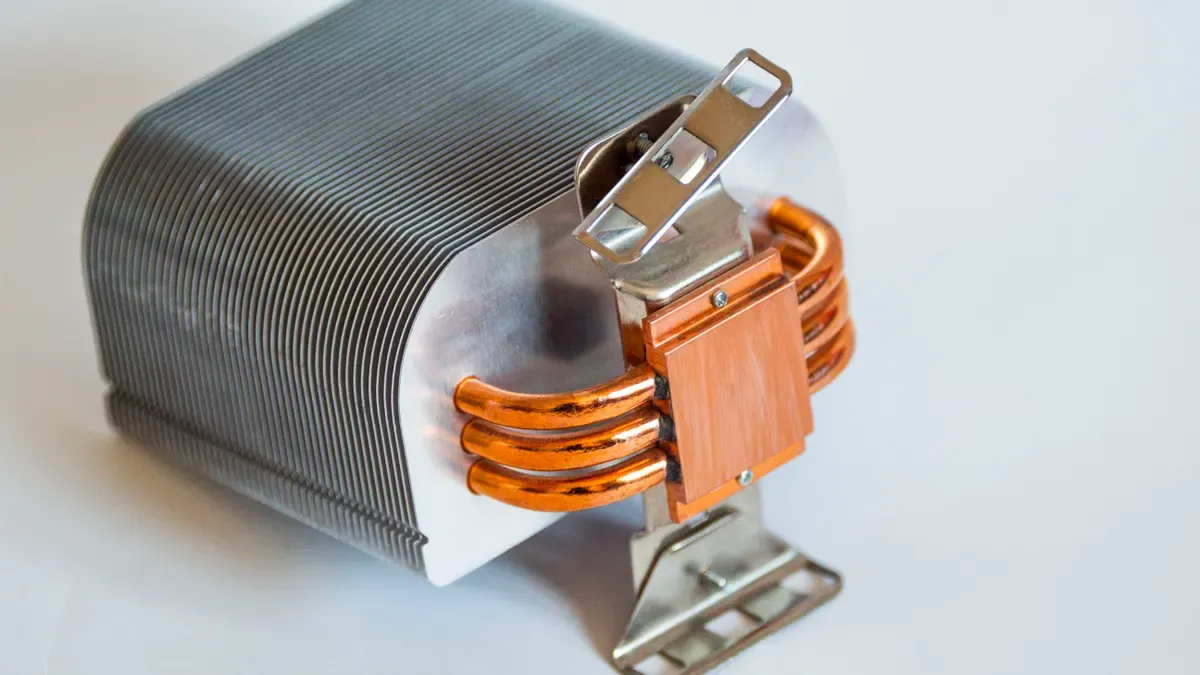
Custom Wire Harness Solutions for Extreme Heat
PTFE tape insulation works very well in very hot places. It can handle temperatures from -200°C to +260°C all the time. It can even take short bursts up to 300°C. This wide range makes PTFE the top pick when other materials fail.
| Material | Max Continuous Temp | Flammability Behavior |
|---|---|---|
| PTFE Film | +260°C | Non-flammable (LOI >95%) |
| Kapton (Polyimide) | +400°C | Self-extinguishing |
| PVC Tape | +105°C | Burns (not flame retardant) |
| Silicone Rubber | +200°C | Self-extinguishing |
Engineers pick PTFE over Kapton when they need chemical resistance, low dielectric constant, or moisture resistance. Kapton can handle higher heat above 260°C. PTFE works better than PVC for any job above 80°C or where oils, solvents, or fuels are around. It also has a dielectric strength of about 60 kV/mm. That makes it good for transformer coil insulation, motor winding protection, and battery pack barriers. For important systems in oil and gas sites or explosive areas, PTFE tape works as a protective sleeve that resists fire and chemical damage. These Custom Wire Harness Solutions solve the toughest heat problems in many industries.
Applications in Engine and Exhaust Systems
Wiring under the hood of vehicles must meet SAE J1128 standards. This rule requires insulation that can handle at least 125°C all the time. Wiring near exhaust manifolds, turbochargers, or EGR parts often needs ratings of 150°C or 200°C. PTFE tape at 260°C goes beyond these needs. It gives a safety margin that stops insulation failure under steady heat.
Thermal mapping of the actual setup checks temperature exposure. Testing follows temperature cycling per MIL-STD-810 or ISO 16750 to check heat fatigue resistance. Thermal aging tests per UL 1581 or SAE J1128 speed up long-term wear at high heat for 1,000 to 3,000 hours. To pass, insulation must keep 50% elongation after aging.
PTFE tape also works in battery pack assemblies for new energy vehicles. The non-flammable material resists battery electrolytes and gives reliable electrical insulation. Manufacturers use it as a barrier between cells and as a module wrapper in lithium-ion battery packs. For engineers designing New energy wire harness systems, PTFE tape offers proven reliability in high-heat and chemically harsh environments.
2. Silicone Encapsulated Connectors
Sealing Against Moisture and Salt Spray
Silicone encapsulation forms a rubber barrier around the connector body and contact cavities. This barrier stops liquid and airborne contaminants from getting in. The material stands up to saltwater, hydraulic fluid, and industrial cleaning agents. Connectors rated to IP67 or IP68 under IEC 60529 can survive temporary immersion and high-pressure spray. Marine and offshore installations depend on this protection. Deck equipment, bilge pumps, and navigation systems face constant salt fog exposure. ASTM B117 salt spray testing checks coating performance over hundreds of hours.
Chemical plants and food processing lines expose connectors to caustic washdowns and acidic vapors. Silicone encapsulation handles these agents without cracking or swelling. Routing optimization matters here. Engineers should keep sealed connectors away from heat sources and sharp edges. Proper strain relief stops seal deformation. For home appliances used in humid or coastal environments, a Home Appliance Wire Harness with silicone-sealed connectors stops corrosion at terminal junctions. This approach extends service life in washers, dryers, and refrigeration units.
Maintaining Flexibility in Sub-Zero Temperatures
Silicone rubber keeps its elastic properties at temperatures as low as -60°C. Other elastomers like nitrile or neoprene turn brittle and crack under the same conditions. This flexibility matters for cables that move during operation. Arctic drilling rigs, cold storage warehouses, and winter road equipment all depend on this trait. A frozen connector that shatters during maintenance creates a dangerous failure point.
| Material | Low-Temp Flexibility Limit |
|---|---|
| Silicone Rubber | -60°C |
| Nitrile (NBR) | -40°C |
| Neoprene | -35°C |
| EPDM | -50°C |
Testing follows cold bend procedures per MIL-STD-810 Method 502. The connector must survive a set number of flex cycles without insulation cracking. Silicone encapsulation passes these tests every time. Designers should check that the cable jacket material matches the connector's temperature range. A mismatched assembly fails at the weakest link. Proper material pairing ensures reliable performance from the coldest storage room to the hottest engine compartment.
3. 316L Stainless Steel Braided Shielding
Protecting Conductors from Physical Abrasion
A braided shield made of 316L stainless steel creates a strong layer of armor around wire bundles. This armor protects against cuts, scrapes, and wear caused by vibration against metal surfaces. Aerospace engineers require this protection under SAE AS22759 when wires might get rubbed or scraped. The standard covers wire abrasion and cut-through resistance, along with high temperature performance, low weight, low outgassing, and resistance to flame spread. Testing follows AS4373 Method 301 or EN3475 procedures. A weighted fixture scrapes back and forth across the sample until the fixture touches the conductor and creates a complete circuit. Technicians turn the sample 90 degrees and repeat the test for 6 to 10 trials. Things that can change include weight, stroke length, enclosure temperature, and detection voltage.
Scrape abrasion results give a general idea of wire durability, not an exact prediction of when it will fail. Differences in wire construction affect how each sample performs. The design goal is to remove all abrasion points from the entire wiring system. Where contact cannot be avoided, barriers like 316L braiding help the harness survive between maintenance checks. Vibration, shock, and sharp edges in engine compartments and machinery frames can damage standard insulation. The stainless steel braid keeps the system intact in these tough locations. For protection against both physical wear and electromagnetic interference, an Industry equipment Wire Harness with 316L braided shielding offers a complete solution.
Achieving High EMI/RFI Attenuation
The same braid that blocks abrasion also blocks electromagnetic interference. 316L stainless steel conducts electricity very well. It sends radiated energy away from signal wires. This reduction matters in explosive environments where a spark from caused current can ignite flammable vapors. Oil refineries, chemical plants, and fuel depots need wiring that reduces EMI to prevent ignition sources. Data signal quality also depends on proper shielding. Sensor signals in industrial control systems and telemetry lines in remote installations stay clear when braided shielding blocks outside noise.
The percentage of braid coverage determines how much attenuation you get. Dense braids with tight weave angles reach 60 dB or more of shielding effectiveness. Engineers match braid density to the frequency range of expected interference. High-frequency digital signals need tighter braid than low-frequency analog lines. Proper grounding completes the shielding system. A ground strap with low impedance to earth gives conducted noise a path away from sensitive circuits. The mix of physical armor and electrical shielding makes 316L braiding a flexible choice for harsh environments that demand both mechanical protection and signal integrity.
4. Conformal Coating for Printed Circuit Boards
Preventing Corrosion from Chemicals and Humidity
Conformal coating puts a thin protective layer over PCB surfaces. This layer keeps moisture vapor and ionic contamination away from sensitive traces and solder joints. The barrier stops dendritic growth and electrochemical corrosion. These failure modes make PCB life shorter in humid industrial settings. A coated board fights off these threats and gives a longer mean time between failures.
Chemical processing plants put control boards in touch with harsh substances. Cutting fluids, industrial cleaners, and acidic fumes eat away at uncoated solder joints and component leads. Conformal coating stands up to these agents and stops material breakdown. The coating also blocks electrolytic corrosion caused by moisture getting in and chemical contact. This protection lowers field failure rates and reduces maintenance needs. Engineers get a dependable board that lasts through years of rough service.
Custom Wire Harness Solutions for Agricultural Equipment
Farm machines work in dirt, moisture, and big temperature changes. Planters, combines, and sprayers roll through dust clouds and chemical sprays all season long. Utility equipment faces the same exposure on roads and in fields. Conformal coating shields the PCB assemblies inside these machines. The coating keeps out grit, water, and crop chemicals that would otherwise corrode exposed circuitry.
A complete Wire Harness & Cable Assembly has to match this level of protection. Connectors, wire jackets, and board coatings work as one system. A weak link at any point lets moisture or chemicals reach critical circuits. Manufacturers need partners who can scale from rapid prototyping to full-scale production. This scalability ensures consistent coating quality across every unit. For engineers specifying custom wire harness solutions for farm and utility equipment, conformal coating offers proven defense against the toughest field conditions.
5. Custom Strain Relief Boots
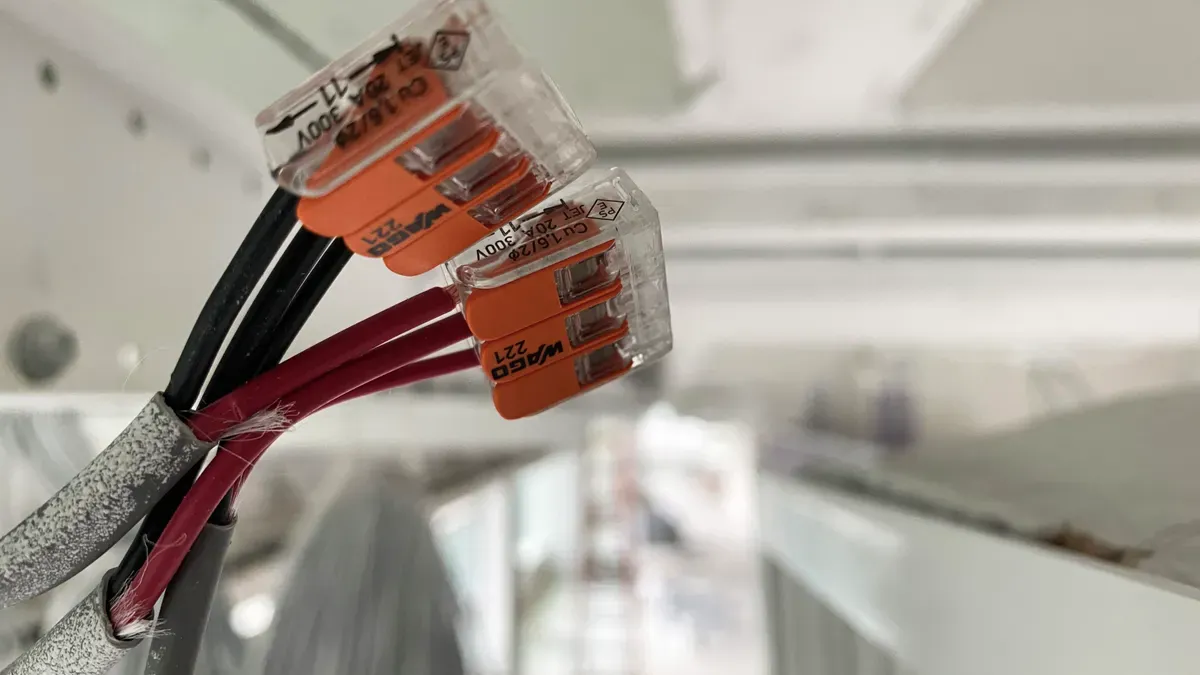
Vibration harms wire connections. Copper strands get hard and break when they move back and forth. A broken wire stops the flow of signals or power. Custom Wire Harness solutions fix this problem head-on. Custom strain relief boots hold the cable jacket tightly. They move mechanical stress away from the connection point. This small part stops a big failure mode in tough places.
Eliminating Conductor Fatigue from Vibration
The boot makes a smooth shift from flexible cable to stiff connector. This shift spreads bending forces over a wide area. Without the boot, all bending gathers right where the wire meets the contact pin. That one spot takes the full force of every vibration cycle. The material you pick decides how well it works. Thermoplastic elastomers give good flexibility and stand up to chemicals. Silicone rubber works great in very cold temperatures. A boot made of the wrong material cracks or comes loose over time. Industrial equipment deals with nonstop motor and pump vibration. An Industry equipment Wire Harness with custom strain relief boots lasts through years of these conditions. The boots stop downtime caused by on-and-off failures at the connector junction.
Extending Connector Interface Life
A loose cable puts pulling force on the connector housing. This force strains the locking mechanism and the pins inside. Strain relief boots block these forces well. They hold the cable in line with the connector axis. This straight alignment takes leverage out of the picture. The connector interface feels only the normal push-in force it was made for. Home appliances need a long service life with little upkeep. A Home Appliance Wire Harness uses strain relief boots to guard the connection through thousands of use cycles. Engineers match boot design to the exact connector shape. Right-angle boots save space in tight enclosures. Straight boots give the most direct load path. A New energy wire harness counts on strong strain relief to keep electrical contact in high-vibration places. The complete Wire Harness & Cable Assembly gains from care at every stress point. Strain relief boots are a low-cost, high-impact way to boost overall system reliability.
6. High-Flexibility TPE Jackets
Robotic arms bend millions of times over their working life. Standard PVC jackets crack and break within a year under these conditions. Thermoplastic elastomer jackets fix this problem. They mix the easy shaping of plastic with the stretch of rubber. Engineers pick TPE for jobs with nonstop bending, where every minute of downtime costs thousands.
Withstanding Millions of Bending Cycles
TPE compounds made for robotic cables often reach 10 to 20 million flex cycles. This result makes TPE the flex-life winner among common jacket materials.
| Jacket Material | Flex Life (cycles) |
|---|---|
| PVC | 0.5 - 1M |
| PUR | 5 - 15M |
| TPE | 10 - 20M |
| Silicone | 2 - 5M |
IEC 60227-2 gives a standard flex test at a set bend radius. This test works as a shared baseline for comparing materials. It does not cover twisting or bending on more than one axis. Real robot motion includes twisting, side loads, and mixed angles. A Custom Wire Harness with TPE jackets must pass cycle testing built for the actual motion. This extra check makes sure the harness lasts the full machine life without conductor fatigue or insulation breaks.
Maintaining Integrity in Cold Storage Environments
Cold storage warehouses run at temperatures well below freezing. Arctic drilling rigs face long exposure to extreme cold. PVC jackets turn brittle in these conditions. They crack when bumped or flexed during maintenance. TPE keeps its flexibility in the same setting. The material does not shatter on impact or split under bending stress.
Installers work with harnesses in unheated buildings during winter setup. A jacket that stiffens too much makes routing hard and adds assembly time. TPE stays soft enough for easy handling at very low temperatures. This softness protects the conductors inside. A stiff jacket sends bending force straight to the wire strands. A flexible jacket takes in and spreads out that force. This action stops strand breakage and signal loss. Robotics makers and cold-chain logistics providers ask for TPE jackets for this reason. The material keeps critical control signals flowing through every pick cycle and every frozen storage day.
7. Epoxy-Potted Backshells
Creating a Hermetic Seal Against Gas and Liquid
Epoxy potting fills the backshell cavity with a solid resin block. This block sticks to the connector body, the contacts, and the cable jacket. The result is a hermetic seal that stops gas and liquid from reaching the contact interface. Oil and gas platforms need this level of sealing. A single leak path can expose live circuits to flammable vapors. Refineries, fuel depots, and chemical plants face the same risk. A spark from a corroded contact can ignite the surrounding atmosphere.
Standard connectors work fine in mild environments. They break down when moisture, dust, chemicals, and extreme temperatures wear down the seal over time. A potted backshell removes that weak spot. The resin hardens into a gap-free barrier that resists gas movement and liquid entry. For a Custom Wire Harness headed to an explosive atmosphere, this complete seal often means the difference between safe operation and a hazard. An Industry equipment Wire Harness in a washdown plant gets the same benefit. Caustic cleaners and process fluids cannot reach the conductors.
Providing Structural Rigidity for Connectors
The cured epoxy turns the backshell into a stiff structure. This stiffness supports the connector interface and holds the contacts in place. The solid block of potting material absorbs vibrations and spreads out shock forces applied to the cable. That action greatly lowers the chance of fatigue failure in wires or terminals. In cases involving heavy machinery or mobile platforms, this built-in toughness is a big plus.
Military ground vehicles prove the point. Engine control units, navigation systems, and communication radios depend on potted backshell connectors. These systems must work under combat conditions in harsh, dusty, and wet environments. Potted backshell connectors offer big mechanical strength advantages over standard connectors, especially in applications hit by vibration, shock, or heavy physical stress. A Wire Harness & Cable Assembly built with potted backshells keeps its electrical contact through years of punishment. A Home Appliance Wire Harness in a vibrating motor housing gains from the same stability. A New energy wire harness in a battery pack gets protection from road shock and constant chassis vibration.
8. Layered Cross-Linked Polyethylene Insulation
Cross-linked polyethylene, or XLPE, begins as a type of plastic. Then it goes through a chemical or radiation step. That step links the polymer chains into a three-dimensional network. The result is a thermoset material. It will not melt or flow when it gets hot. This feature sets XLPE apart from standard polyethylene and PVC. Utility crews and industrial electricians depend on it for power distribution, motor leads, and control circuits that handle rough use and wet conditions.
Offering Superior Cut-Through Resistance
XLPE resists cuts, scrapes, and crushing much better than other plastic jackets. The cross-linked network spreads mechanical stress across the polymer. A sharp edge cannot slice straight through. Cable pullers drag wires through pipes and around corners. Rocks, metal edges, and rough ground press against the jacket. A Custom Wire Harness with XLPE insulation survives this abuse without exposing live conductors.
| Insulation Material | Relative Cut-Through Resistance |
|---|---|
| PVC | Low |
| Polyethylene (uncross-linked) | Moderate |
| XLPE | High |
Testing follows procedures such as UL 44 and ICEA standards. These tests measure the force needed to poke through the insulation wall. XLPE always beats PVC in these trials. An Industry equipment Wire Harness used in mining, crane, and conveyor systems benefits from this toughness. The jacket holds up under constant flexing against steel frames and rollers.
Handling Sustained High Voltage in Wet Locations
XLPE keeps its dielectric strength when water is present. Moisture does not break down the cross-linked network like it does with paper-insulated or PVC cables. Utilities specify XLPE for underground distribution and submerged pump feeds. The material resists treeing, a failure mode where water and electrical stress combine to grow branch-like channels through insulation. Standards such as AEIC CS8 and ICEA S-94-649 cover these cables and their wet-aged performance.
Voltage safety depends on more than the insulation alone. Proper grounding, correct bend radius, and sealed terminations all matter. A Wire Harness & Cable Assembly built with XLPE handles sustained high voltage in wet vaults, tunnels, and treatment plants. Simplified installation is another advantage. XLPE cables are lighter and easier to route than many legacy alternatives. Manufacturers can move from rapid prototyping to full-scale production quickly. A New energy wire harness and a Home Appliance Wire Harness both gain from XLPE where heat, moisture, and voltage stress combine.
9. Integrated Temperature and Strain Sensing Circuits
Real-Time Health Monitoring of Harnesses
A sensing circuit puts tiny sensors along the harness path. Thermocouples or thermistors check temperature at each important point. Strain gauges measure how much the cable stretches or bends. These sensors send data back to a controller right away. The controller compares each reading to a set limit. A Custom Wire Harness with this built-in feedback stops small faults from turning into failures.
Operators see the harness condition on a dashboard. A hot spot near a connector shows up before insulation breaks down. A strain reading that climbs over time points to a loose mount or a worn boot. Maintenance crews then fix the exact problem instead of replacing the whole bundle. This approach saves labor and parts. It also keeps critical systems running without surprise shutdowns.
Predictive Maintenance for Remote Installations
Remote sites create the hardest maintenance problem. Wind farms, pipeline compressor stations, and offshore platforms sit far from service teams. A failed harness means a long trip and lost production. Sensing circuits change this math. They report condition data over a network link. Engineers watch trends and plan repairs before a fault occurs.
An Industry equipment Wire Harness with embedded sensors supports this model well. The data shows which circuits age faster and why. Teams then adjust routing, add strain relief, or swap materials at the next service window. A Wire Harness & Cable Assembly built for condition monitoring turns maintenance from reactive to planned. A New energy wire harness in a remote solar farm gains the same benefit. So does a Home Appliance Wire Harness in a fleet of connected machines. The harness becomes a source of information, not just a path for power.
From PTFE tapes to built-in sensing circuits, these nine custom wire harness solutions from Xiamen Kehan Electronics Co., Ltd. give proven reliability in the toughest places. It takes the right mix of these custom wire harness solutions—not just one product—to ensure long-term performance. A Wire Harness & Cable Assembly that pairs silicone connectors with strain relief boots, for example, handles both moisture and vibration. Engineers should match materials to their specific threats. Readers facing extreme heat, cold, chemicals, or remote installations should ask Xiamen Kehan Electronics Co., Ltd. for guidance made for their exact needs.
FAQ
How do engineers pick the right mix of solutions for a harsh environment?
Engineers match each solution to a certain way it might fail. Very hot places need PTFE tape. Wet places need silicone connectors. Shaking and vibration call for strain relief boots. A Custom Wire Harness design aims at the exact dangers that are there.
Can several extreme-condition solutions work together in one assembly?
Yes. A Wire Harness & Cable Assembly can mix PTFE tape, silicone encapsulation, and stainless steel braiding. The materials must work well together, and the design must fit them together so each solution does its job without causing problems.
What testing standards prove these harnesses work in extreme conditions?
MIL-STD-810 covers temperature and vibration. IEC 60529 sets the rules for keeping out water and dust. SAE J1128 applies to car wiring. Each Industry equipment Wire Harness goes through tests that match the place where it will actually be used.
Can these solutions grow from prototypes to full production?
Xiamen Kehan Electronics helps with fast prototyping and large-scale production. A New energy wire harness or Home Appliance Wire Harness grows smoothly from small batches to high volume.
How do built-in sensing circuits make harness maintenance better?
Sensing circuits watch temperature and strain in real time. They warn operators before something breaks. This early-warning method cuts downtime and makes equipment last longer in faraway places.