


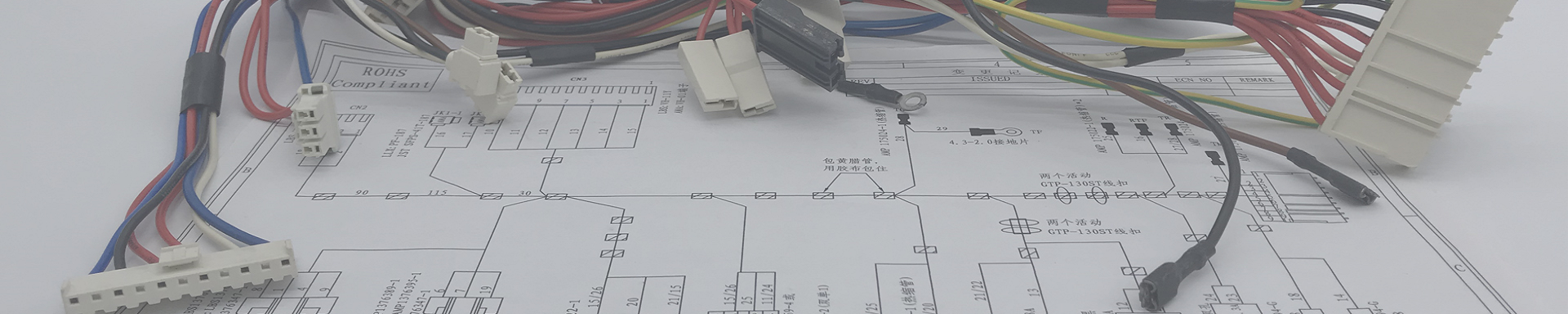
Core Standards for OEM Custom Headlight Loom & Automotive Wiring Loom in Modern Mass-Produced Vehicles
2026-08-12 10:22For OEM Purchasing Teams, Tier 1/Tier 2 Suppliers and Automotive Electrical Engineers
As passenger cars and conventional commercial vehicles continue to receive more LED lighting, electronic control functions and increasingly integrated electrical systems, the requirements for an OEM custom headlight loom are becoming more demanding.
For mass-produced vehicles, a headlight loom is not simply a group of wires connecting the lamp to the vehicle power supply. It is a production-critical electrical assembly that must maintain stable current transmission, mechanical integrity, environmental protection, connector compatibility and repeatable quality across thousands or millions of vehicle production cycles.
For automotive OEMs and Tier suppliers, selecting an automotive wiring loom supplier therefore requires more than checking conductor size and connector type. The supplier must demonstrate the ability to translate vehicle drawings into a controlled manufacturing process and deliver consistent, traceable products for series production.
Kehan provides OEM-customized automotive wiring harness and cable loom manufacturing services for vehicle electrical applications, supporting drawing-based customization, production-standard assembly and electrical inspection.
1. What Is an OEM Custom Headlight Loom?
An OEM custom headlight loom is a vehicle-specific wiring assembly designed according to the original equipment manufacturer's electrical architecture, connector requirements, routing constraints and production specifications.
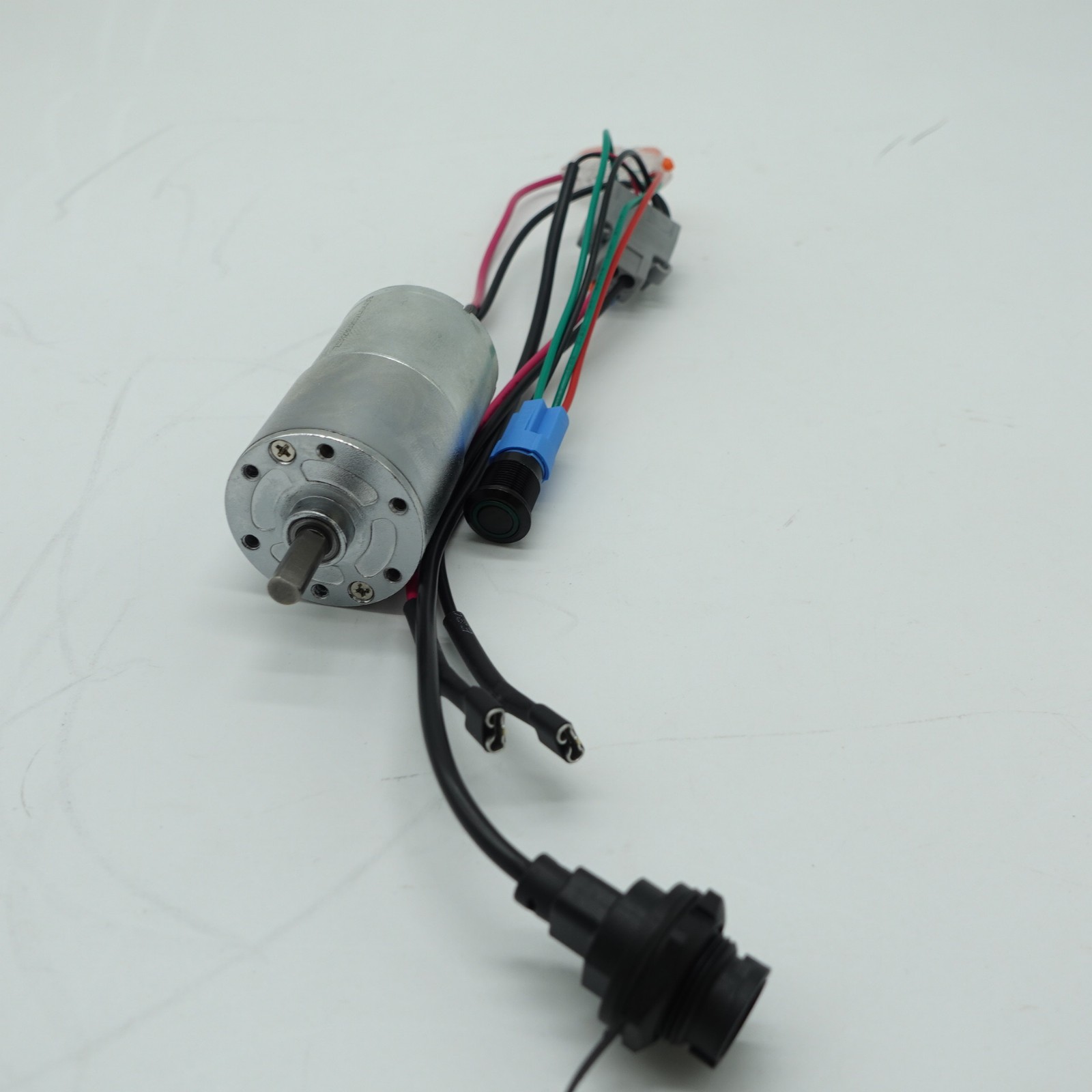
A typical automotive headlight cable assembly may include:
Automotive-grade wires and cables
Multi-core cable sections
OEM-specification terminals
Automotive connectors
Seals and waterproof plugs
Protective sleeves or corrugated tubing
Branches and junction points
Retainers and clips
Fuse, relay or control-related connection sections
Customized labels and identification components
Unlike a universal aftermarket harness, a factory OEM wiring loom is developed around the vehicle's actual electrical and mechanical interfaces.
The objective is not merely to make the lamp illuminate. The objective is to ensure that the complete electrical path performs consistently throughout the vehicle's intended service life.
This distinction becomes particularly important when the vehicle platform moves from conventional halogen lighting to LED, matrix LED, adaptive lighting or other electronically controlled headlight systems.
2. Why Mass-Produced Vehicles Need Higher Wiring Loom Standards
A production vehicle introduces a different set of requirements from a one-off repair or aftermarket application.
The harness must work repeatedly under:
Engine-compartment temperature cycles
Vibration and mechanical movement
Moisture and water splash
Dust and contamination
Chemical exposure
Connector mating and locking stresses
Current and voltage fluctuations
Long-term thermal aging
Vehicle assembly-line handling
ISO 16750-1:2023 defines environmental conditions and testing considerations for electrical and electronic equipment in road vehicles, while separate parts address electrical, mechanical, climatic and chemical loads.
For a headlight loom, this means cable selection and assembly design should be evaluated according to the actual installation environment rather than treated as a generic low-voltage cable application.
3. Six Core Standards for OEM Custom Automotive Wiring Looms
3.1 High-Temperature Resistance and Long-Term Aging
Headlight wiring is frequently installed close to heat sources, including lamps, radiators, engine components and other under-hood equipment.
Therefore, an automotive wiring loom should be specified according to:
Operating temperature range
Conductor material
Insulation material
Wall thickness
Thermal aging characteristics
Routing distance from heat sources
Protective sleeving requirements
Automotive cable standards provide different temperature classes and application requirements. The ISO 19642 series is now the key reference family for automotive cables; ISO 19642-1:2023 provides vocabulary and design guidance, and newer parts define cable requirements for different voltage classes and conductor constructions.
Engineering takeaway: do not select cable solely according to nominal current. The actual thermal environment and installation conditions must also be considered.
3.2 Stable Current-Carrying Capacity for LED and Smart Headlights
Modern lighting systems can place more demanding requirements on the electrical connection than a simple lamp circuit.
For an automotive headlight cable assembly, engineers should consider:
Required continuous current
Peak current conditions
Conductor cross-sectional area
Voltage drop
Contact resistance
Terminal crimp quality
Connector temperature rise
Cable routing and heat dissipation
ISO 16750-2:2023 specifically addresses electrical loads for road-vehicle electrical and electronic systems and notes that electrical behavior can vary with the impedance of the vehicle wiring harness and connection system.
This is why conductor selection, terminal crimping and connector matching should be treated as one electrical system.
A larger wire does not automatically produce a better harness if the terminal, crimp or connector is improperly selected.
3.3 Waterproof and Dust-Resistant Sealing
Headlight harnesses can be exposed to water splash, condensation, road contamination and temperature cycling.
For this reason, the sealing strategy should be designed around the actual connector and installation location.
Typical measures include:
Connector seals
Wire seals
Waterproof terminals
Sealed splice protection
Protective tubing
Correct cable-entry geometry
Controlled crimping
Appropriate branch protection
The objective is to prevent environmental exposure from gradually increasing contact resistance, degrading insulation or creating intermittent electrical faults.
ISO 16750-4:2023 addresses climatic loads for road-vehicle electrical and electronic equipment, while ISO 16750-5:2023 addresses chemical loads.
For OEM projects, the required environmental test profile should ultimately follow the vehicle platform specification and the customer's validation plan.
3.4 Original-Interface Compatibility
One of the most important requirements for a factory OEM wiring loom is interface accuracy.
A production harness should match the customer's approved design for:
Connector family
Terminal type
Pin assignment
Wire color
Terminal orientation
Connector locking structure
Branch position
Harness length
Clip and retainer position
ISO 8092 covers connections for on-board electrical wiring harnesses, including dimensions and performance requirements for automotive harness connections. ISO 8092-2:2023 and ISO 8092-5:2021 provide general performance and test-method references for vehicle harness connector systems.
For OEM production, “plug-and-play” should mean approved interface compatibility, not simply that a connector physically fits.
3.5 Electrical Compatibility Across the Vehicle
A headlight loom does not operate independently.
Its electrical characteristics interact with:
Body control modules
Lighting control modules
Fuses and relays
Sensors
Grounding systems
Other vehicle harness branches
Electronic control units
Therefore, engineers should evaluate the harness as part of the complete electrical architecture.
Important verification items may include:
| Item | What Should Be Verified |
|---|---|
| Conductor size | Required current and thermal conditions |
| Voltage drop | Acceptable loss under specified load |
| Terminal crimp | Mechanical and electrical integrity |
| Contact resistance | Stable connection performance |
| Pin assignment | Correct circuit routing |
| Insulation | No unintended conduction |
| Continuity | Complete circuit path |
| Short-circuit detection | No unintended connection |
| Polarity | Correct electrical orientation |
| Connector locking | Secure mechanical engagement |
For an OEM custom headlight loom, these checks should be incorporated into the production control plan rather than treated only as final inspection activities.
4. Standardized Manufacturing Is the Key to Mass Production
For Tier 1 and Tier 2 purchasing teams, one of the most important questions is:
Can the supplier repeatedly manufacture the same harness to the same specification?
That is the real difference between prototype customization and OEM production capability.
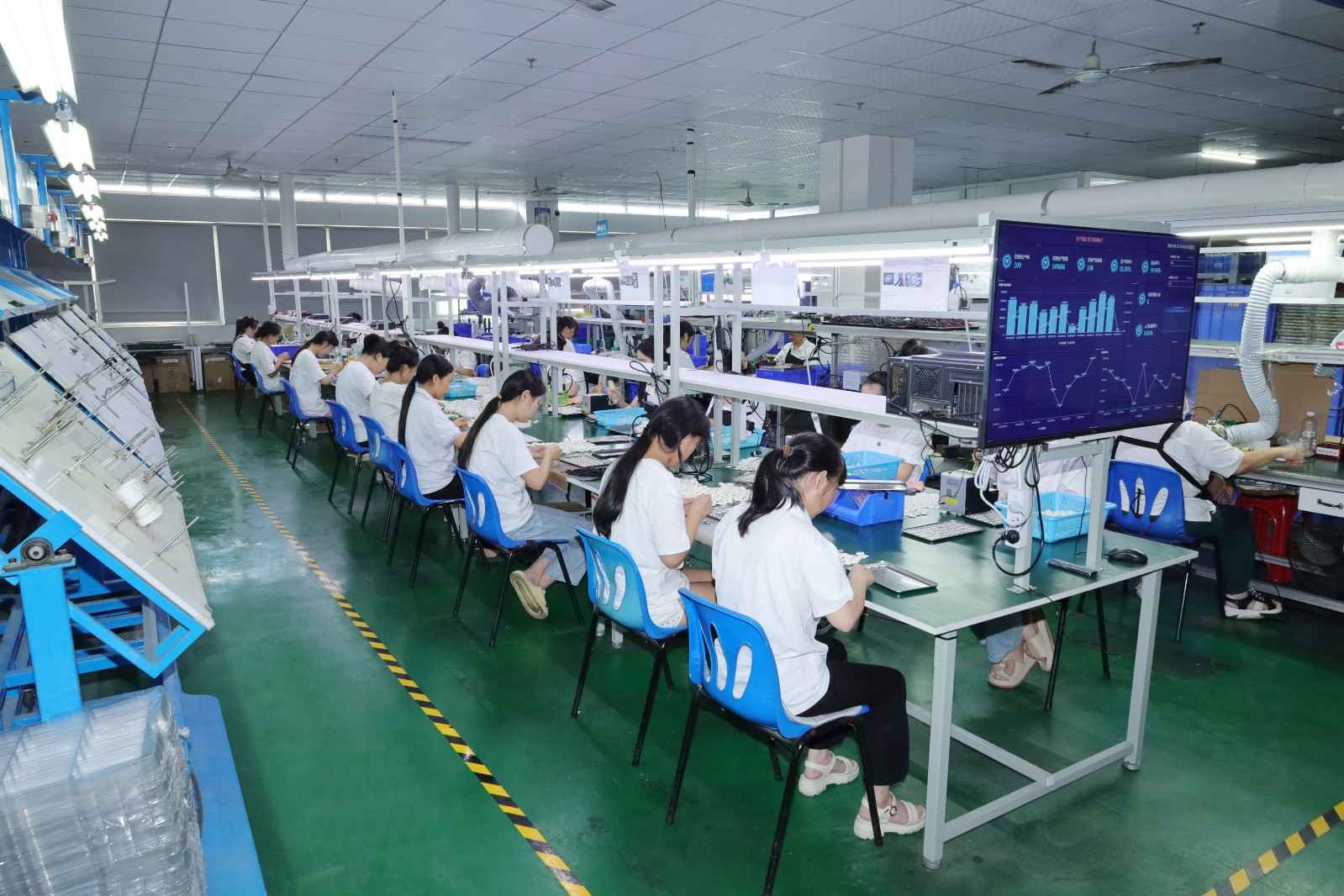
A reliable mass-produced vehicle cable loom manufacturing process normally includes controlled stages such as:
Drawing Review → BOM Confirmation → Material Incoming Inspection → Cutting → Stripping → Terminal Crimping → Connector Assembly → Branching & Protection → Harness Forming → Electrical Testing → Final Inspection → Packing & Traceability
Each process introduces potential quality risks.
For example:
Incorrect wire length can affect vehicle routing.
Incorrect stripping can damage conductors.
Poor crimping can increase resistance.
Incorrect terminal insertion can cause intermittent connections.
Missing seals can compromise environmental protection.
Incorrect branch geometry can create installation problems.
This is why production engineering and process control are as important as the component itself.
The automotive quality framework also emphasizes control plans, standardized work, setup verification, preventive maintenance, identification and traceability.
5. What Technical Parameters Should Engineers Provide?
When sourcing an OEM custom headlight loom, providing only a sample photo is usually insufficient for efficient engineering evaluation.
A professional RFQ package should ideally include:
Electrical Parameters
Rated voltage
Continuous operating current
Peak current if applicable
Required conductor cross-section
Voltage-drop requirements
Circuit quantity
Grounding requirements
Mechanical Parameters
Overall harness length
Branch lengths
Branch locations
Connector orientation
Clip positions
Minimum bend radius
Protective sleeve requirements
Connector Parameters
Connector manufacturer or approved equivalent
Part number
Terminal specification
Pin configuration
Locking mechanism
Sealing requirement
Environmental Parameters
Operating temperature
Installation location
Water exposure
Dust exposure
Chemical exposure
Vibration requirements
Thermal cycling requirements
Quality Documentation
Drawing revision
BOM
Inspection standard
Control plan
Testing requirements
Traceability requirements
Customer-specific requirements
Providing these details at the beginning can significantly reduce engineering iterations and sample approval time.
6. Common Procurement Questions Before Selecting a Supplier
Can the supplier manufacture according to OEM drawings?
For OEM projects, drawing-based production is essential.
Kehan can work from customer-provided drawings, specifications, BOMs and connector requirements to develop customized automotive cable loom assemblies.
Can the supplier support mass production?
A prototype supplier and an OEM production supplier are not necessarily the same.
Purchasing teams should evaluate:
Production capacity
Process stability
Inspection equipment
Material traceability
Change-control procedures
Quality records
Delivery consistency
Can every harness be electrically tested?
For production automotive harnesses, 100% electrical testing can be an important quality-control measure depending on the customer's specification.
Typical tests can include:
Continuity
Open-circuit detection
Short-circuit detection
Pin-to-pin verification
Resistance checks
Polarity verification
The exact test program should be defined according to the customer's product specification.
Can the supplier support engineering changes?
Vehicle programs frequently undergo engineering changes during development and production.
A capable OEM harness supplier should therefore have a controlled process for:
Drawing Revision → BOM Update → Process Update → Sample Verification → Customer Approval → Production Release
This helps prevent old-revision components from entering a new production batch.
7. Data and Standards Behind OEM Harness Selection
Several current international standards are particularly relevant when engineers evaluate automotive wiring and connections.
| Standard | Relevance to Automotive Loom Projects |
|---|---|
| ISO 19642-1:2023 | Automotive cable terminology and design guidance |
| ISO 19642 series | Automotive cable dimensions and requirements |
| ISO 16750-1:2023 | General environmental conditions |
| ISO 16750-2:2023 | Electrical loads |
| ISO 16750-3:2023 | Mechanical loads |
| ISO 16750-4:2023 | Climatic loads |
| ISO 16750-5:2023 | Chemical loads |
| ISO 8092-2:2023 | Automotive harness connector performance |
| ISO 8092-5:2021 | Harness connector operation and performance testing |
| IATF 16949 framework | Automotive quality-management requirements |
It is important to distinguish between an international standard and a customer's specific specification. OEM programs may impose additional requirements through customer-specific requirements, drawings, PPAP documentation, validation plans and supplier quality agreements.
The IATF Global Oversight organization currently publishes OEM-specific requirements for manufacturers including Ford, GM, Stellantis, Mercedes-Benz, Volkswagen, Volvo and others.
For example, GM's 2025 customer-specific requirements update added requirements concerning CQI-35 Wire Harness assessments, demonstrating how OEM-specific quality expectations can extend beyond generic product standards.
8. How Kehan Supports OEM Custom Automotive Wiring Loom Projects
For vehicle manufacturers and automotive Tier suppliers, Kehan focuses on the requirements that matter in production programs:
Drawing-Based Customization
Harness dimensions, wire specifications, connector configuration, terminal selection and branch design can be developed according to customer drawings and technical requirements.
OEM-Style Production
Rather than positioning the product as an aftermarket modification harness, Kehan focuses on wiring assemblies intended for regular passenger vehicles and conventional commercial vehicle applications.
Standardized Batch Manufacturing
Once the design is approved, production can be organized around standardized processes and controlled assembly parameters to support repeatable batch production.
Electrical Inspection
Production harnesses can be subjected to defined electrical inspection procedures, helping identify continuity, short-circuit, wrong-pin and other assembly-related issues before shipment.
Project-Oriented Communication
For OEM and Tier suppliers, effective communication is critical. A harness supplier should be able to discuss drawings, BOMs, connector specifications, electrical requirements, production changes and inspection criteria—not simply quote a unit price.
9. A Practical OEM Selection Checklist
Before approving an OEM custom headlight loom supplier, automotive purchasing and engineering teams can evaluate the following:
Can the supplier manufacture from engineering drawings?
Can the supplier support customized wire and connector specifications?
Are conductor size and temperature class selected according to the application?
Has current-carrying capacity been evaluated?
Has voltage drop been considered?
Are connector and terminal specifications controlled?
Are waterproof sealing requirements clearly defined?
Can harness dimensions and branch locations be controlled?
Is the production process standardized?
Is electrical testing available?
Is material and production traceability available?
Can engineering revisions be controlled?
Can the supplier support prototype-to-mass-production transition?
Can customer-specific quality requirements be incorporated?
If the answer to several of these questions is “no,” the supplier may be suitable for general replacement parts but may not be the right partner for an OEM mass-production program.
10. From Headlight Loom to Complete Vehicle Wiring Supply
The demand for vehicle electrical integration is not limited to headlight circuits.
As new passenger cars and conventional commercial vehicles add more electronic functions, wiring assemblies increasingly need to integrate power distribution, sensors, control units, lighting, body electronics and other electrical systems.
This makes the automotive wiring loom an increasingly important engineering component rather than a low-value consumable.
For OEMs and Tier suppliers, the best sourcing strategy is therefore to evaluate the complete supply chain:
Engineering Capability + Material Selection + Connector Compatibility + Process Control + Electrical Testing + Traceability + Mass-Production Capacity
A supplier that can control these elements is better positioned to support stable vehicle production.
Conclusion: What Defines a Reliable Factory OEM Wiring Loom?
A reliable factory OEM wiring loom for modern mass-produced vehicles should meet six fundamental requirements:
Thermal durability.
Stable electrical performance.
Reliable environmental sealing.
Accurate OEM interface compatibility.
Vehicle-level electrical compatibility.
Repeatable mass-production quality.
For an automotive headlight cable assembly, these requirements become especially important because lighting is a safety-relevant vehicle function and the harness must perform consistently under real operating conditions.
The current ISO framework provides references covering automotive cables, electrical loads, mechanical loads, climatic loads, chemical loads and wiring-harness connector performance.
For automotive OEM purchasing teams, Tier 1/Tier 2 lighting suppliers and vehicle electrical engineers looking for an OEM custom headlight loom, the next step should be to evaluate the supplier against the actual vehicle drawing, BOM, electrical load, environmental conditions and production-quality requirements.
Kehan can support OEM custom automotive wiring loom projects from drawing review and sample development through standardized batch production and electrical inspection.
Looking for a factory OEM wiring loom supplier for a new passenger car or conventional commercial vehicle program? Contact Kehan with your drawing, BOM, connector specifications and annual demand to discuss a customized automotive cable loom solution.