


Table of Contents
What Is a Wire Harness?
Types of Wire Harnesses by Application
Key Components of a Wire Harness
Wire Harness Manufacturing Process
Quality Standards & Testing
How to Choose the Right Wire Harness Supplier
Custom Wire Harness: OEM/ODM Capabilities
Frequently Asked Questions
1. What Is a Wire Harness?
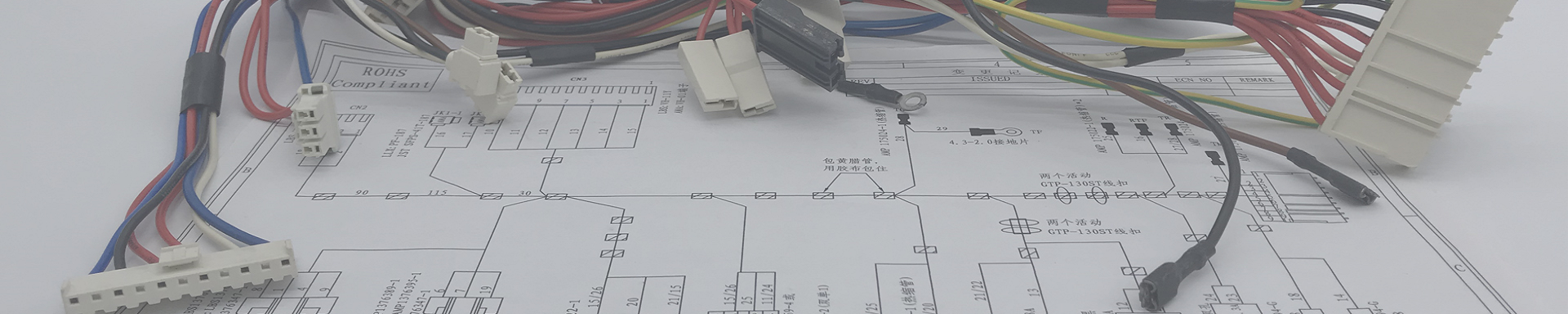
A wire harness — also known as a wiring harness, cable harness, or wiring loom — is an organized set of wires, cables, and connectors that transmit electrical power and signals throughout a machine, vehicle, or electronic system. By bundling multiple wires into a single assembly, a wire harness dramatically reduces installation time, minimizes the risk of short circuits, and ensures consistent, reliable electrical performance.
Modern wire harnesses are engineered to precise specifications. Every conductor gauge, insulation material, terminal type, and routing path is determined during the design phase to meet the exact electrical and mechanical requirements of the end application — whether that's a passenger vehicle, an industrial robot, a piece of medical equipment, or a commercial aircraft.
Industry Insight: The global wire harness market was valued at over USD 62 billion in 2024 and is projected to reach USD 90+ billion by 2030, driven by the rapid growth of electric vehicles (EVs), smart manufacturing, and the increasing electrification of industrial machinery.
2. Types of Wire Harnesses by Application
Wire harnesses are designed for a vast range of industries. Understanding which type suits your application is the first step toward a successful procurement decision.
| Type | Application | Key Features | Typical Standards |
|---|---|---|---|
| Automotive Wire Harness | Passenger cars, trucks, EVs | High vibration resistance, flame-retardant insulation, compact routing | USCAR-2, ISO 6722, LV112 |
| Industrial Wire Harness | CNC machines, robots, PLCs | High-flex, oil-resistant, EMI shielding | IEC 60204, UL 508 |
| Aerospace Wire Harness | Aircraft, UAVs, satellites | Ultra-lightweight, extreme temperature range, abrasion resistance | AS9100, MIL-W-22759 |
| Medical Wire Harness | Diagnostic equipment, surgical tools | Biocompatible materials, sterilization-compatible, precision assembly | ISO 13485, UL 2556 |
| Marine Wire Harness | Boats, offshore equipment | Waterproof connectors, salt-spray resistance, tinned copper | ABYC E-11, ISO 10133 |
| Agricultural Wire Harness | Tractors, harvesters | UV resistance, mud/dust protection, heavy-duty connectors | ISO 11783 (ISOBUS) |
| Consumer Electronics Harness | Home appliances, IoT devices | Miniaturized, cost-optimized, high-volume production | UL, CE, RoHS |
3. Key Components of a Wire Harness
Every wire harness is built from carefully selected components. Here are the primary building blocks:
① Conductors (Wires & Cables)
The conductor is the core of any wire harness. Most harnesses use tinned or bare copper conductors in gauges ranging from AWG 28 (signal) to AWG 4 (high-current power). For weight-sensitive applications such as EVs and aerospace, aluminum conductors are increasingly specified.
② Insulation & Jacketing
Insulation material is chosen based on operating temperature, chemical exposure, and flexibility requirements. Common options include:
PVC — Cost-effective, suitable for general applications up to 105°C
XLPE (Cross-linked Polyethylene) — Superior heat resistance up to 150°C, used in automotive and industrial
PTFE (Teflon) — Exceptional chemical resistance, ideal for aerospace and harsh environments
TPE/TPR — High flexibility, preferred for robotics and drag chain applications
Silicone — Wide temperature range (-60°C to +200°C), used in medical and food processing
③ Terminals & Connectors
Terminals are the mechanical and electrical interface between the wire and the mating connector. Leading connector families used in wire harnesses include Deutsch DT/DTM, TE Connectivity AMP, Molex Mini-Fit, Sumitomo HM, and JST. Connector selection impacts current capacity, contact resistance, vibration resistance, and IP sealing grade.
④ Protective Sleeving & Conduit
Protection materials guard the harness against abrasion, heat, and moisture:
Corrugated conduit — Standard abrasion and routing protection
Braided sleeving (PET/nylon) — Flexible, aesthetically clean, good abrasion resistance
Heat shrink tubing — Sealing, bundling, strain relief at termination points
Aluminum foil / EMI braid shielding — EMI/RFI suppression for signal cables
Foam/felt tape — Noise damping and surface protection
⑤ Identification & Labeling
Each wire is identified by color coding per IEC 60757 or customer-specific standards, supplemented by printed labels or heat-shrink markers on connectors and harness branches for traceability and field service.
4. Wire Harness Manufacturing Process
Producing a consistent, high-quality wire harness requires a tightly controlled multi-stage process. Below is the standard workflow used in our factory:
Design & Engineering Review — Customers provide schematics or samples. Our engineering team reviews BOM, routing, current ratings, and compliance requirements before generating a detailed production drawing.
Wire Cutting & Stripping — Automated CNC cutting machines (e.g., Komax, Schleuniger) cut conductors to precise lengths and strip insulation to specified dimensions, eliminating human variation.
Terminal Crimping — Each wire end is crimped to its terminal using servo-controlled crimping presses. Crimp cross-section (CSA) and pull-force tests are performed on every tooling setup changeover per IPC/WHMA-A-620.
Sub-Assembly & Connector Loading — Crimped wires are inserted into connector housings following cavity-assignment charts. Anti-backout checks confirm full seating of every terminal.
Harness Board Assembly — The full harness is laid out and assembled on a form board that mirrors the exact routing geometry of the end installation. Branches are taped, sleeved, or tied at defined intervals.
Electrical Testing — Every completed harness is tested on a dedicated continuity/hi-pot test fixture that verifies correct circuit-to-circuit connections, absence of shorts, and insulation integrity.
Visual & Dimensional Inspection — Trained QC inspectors verify labeling, sleeve coverage, connector locking, seal installation, and overall workmanship against the drawing.
Packaging & Shipping — Finished harnesses are coiled, protected with foam or poly bags, and packed in export cartons with full traceability documentation.
Our Capacity: With 6 dedicated production lines and 200+ skilled operators, we produce over 500,000 wire harness assemblies per month across automotive, industrial, and consumer electronics segments.
5. Quality Standards & Testing
Quality is non-negotiable in wire harness manufacturing. A single faulty connection can cause system failure, safety hazards, or costly recalls. Our factory adheres to the following standards and testing protocols:
Certifications
ISO 9001:2015 — Quality management system for consistent process control
IATF 16949 — Automotive-specific quality standard (for OEM automotive customers)
ISO 14001 — Environmental management, RoHS/REACH compliance
UL Listing — For harnesses sold in North American markets
Testing Capabilities
| Test Type | Purpose | Standard Reference |
|---|---|---|
| Continuity & Short Circuit Test | Verify all circuits are connected correctly with no unintended bridges | IPC/WHMA-A-620 |
| Hi-Pot (Dielectric Withstand) Test | Confirm insulation integrity at elevated voltage (typically 500V–2000V DC) | IEC 60664, UL 508 |
| Crimp Pull-Force Test | Ensure mechanical strength of terminal-to-wire crimp joints | USCAR-21, IPC/WHMA-A-620 |
| Crimp Cross-Section (Micrograph) | Verify crimp geometry and conductor fill percentage | IPC/WHMA-A-620 Class 3 |
| Salt Spray / Corrosion Test | Validate connector and terminal corrosion resistance for outdoor/marine use | ISO 9227, ASTM B117 |
| Temperature Cycling Test | Simulate thermal stress of real-world operating conditions | IEC 60068-2-14 |
| Vibration & Mechanical Shock Test | Ensure connector retention and structural integrity under vibration | IEC 60068-2-6, USCAR-2 |
| IP Sealing Test (IPX4–IP67) | Verify water and dust ingress protection for outdoor connectors | IEC 60529 |
6. How to Choose the Right Wire Harness Supplier
Selecting a wire harness manufacturer is a high-stakes decision. Here are the eight criteria that procurement managers at tier-1 OEMs consistently prioritize:
Certifications & Quality System — At minimum, ISO 9001. For automotive: IATF 16949. For medical: ISO 13485. Ask for certificates and verify them.
Engineering Capability — Can the supplier review your schematic and suggest design-for-manufacturability improvements? Strong engineering support reduces iterations and NRE cost.
Prototyping Speed — How quickly can they deliver a first-article sample? Leading factories deliver functional prototypes within 7–14 days.
Production Scalability — Confirm they can scale from prototype to mass production without compromising quality. Ask for monthly capacity data.
Component Sourcing — Verify they use original (not counterfeit) connectors and wires from recognized brands (TE, Molex, Sumitomo, Yazaki, Leoni, etc.).
Traceability & Documentation — Full traceability from raw material batch to finished harness is essential for warranty management and audits.
Lead Time & On-Time Delivery (OTD) — Industry benchmark for standard production runs is 15–30 days. Request historical OTD data (target: >95%).
Communication & Support — Can they handle your technical questions in English? Do they offer a dedicated account manager? Responsiveness during the quoting stage predicts responsiveness after the order.
Pro Tip for US & European Buyers: When sourcing wire harnesses from China, always request a Factory Audit Report (or conduct a remote/on-site audit) and ask for PPAP documentation if you are in automotive. This protects you from quality surprises and simplifies your own supplier qualification process.
7. Custom Wire Harness: OEM/ODM Capabilities
We specialize in custom wire harness manufacturing for OEM and ODM customers worldwide. Whether you have a detailed engineering drawing, a sample to replicate, or just a functional requirement, we have the capability to engineer and produce the right solution.
What We Can Customize
Wire type, gauge, insulation color, and conductor material (copper / tinned copper / aluminum)
Connector brand & series (TE, Molex, Deutsch, Amphenol, JST, Sumitomo, or equivalent)
Terminal type: open-barrel crimp, sealed (with individual wire seal), soldered, or IDC
Protective sleeving: corrugated conduit, braided PET, aluminum foil + drain wire, heat shrink
Branching geometry, branch lengths, and overall harness length
Label content, position, and format (barcode, QR code, text)
Packaging: coiled, bundled, flat-lay, foam-insert tray
Compliance markings: UL, CE, RoHS, REACH
Minimum Order Quantity (MOQ) & Lead Time
| Order Type | MOQ | Sample Lead Time | Production Lead Time |
|---|---|---|---|
| Standard Prototype | 5–10 pcs | 7–14 days | — |
| Small Batch Production | 50–500 pcs | — | 15–20 days |
| Mass Production | 500+ pcs | — | 20–30 days |
| Repeat Order (Blanket PO) | No minimum | — | 10–15 days |
8. Frequently Asked Questions
Ready to Source Your Custom Wire Harness?
Send us your drawings or samples and receive a detailed quote within 24 hours. Our engineering team is ready to help.
? Get a Free Quote Now