


What Should You Check Before Ordering a Custom 5-to-4 Wire Trailer Harness for Safe Towing?
2026-11-11 10:14Your tow vehicle has a 4-wire flat plug. Your trailer uses a 5-wire system. A custom harness connects the two, but only if you order it the right way. Before you buy, check five things: function mapping, connector and wire gauge, load capacity, regulatory compliance, and cost versus durability. A professional Customized 5 wire trailer harness to 4 wire from a manufacturer such as Xiamen Kehan Electronics Co., Ltd. can fit one specific vehicle-trailer pairing. That precision is exactly why you check these details first. Get them right, and the harness works on the first tow.
Key Takeaways
Match each wire to its job so you avoid safety problems like turn signals that are swapped.
Make sure the plugs and wire gauge match your vehicle and trailer so everything fits securely.
Check the lamp load against the harness rating. This helps stop overheating and dim lights.
Check your local lighting rules to make sure your trailer passes inspection.
Think about how good the material is compared to the price, so it lasts a long time and works reliably.
1. Map 5-Wire to 4-Wire Functions
Identify Each Circuit's Job
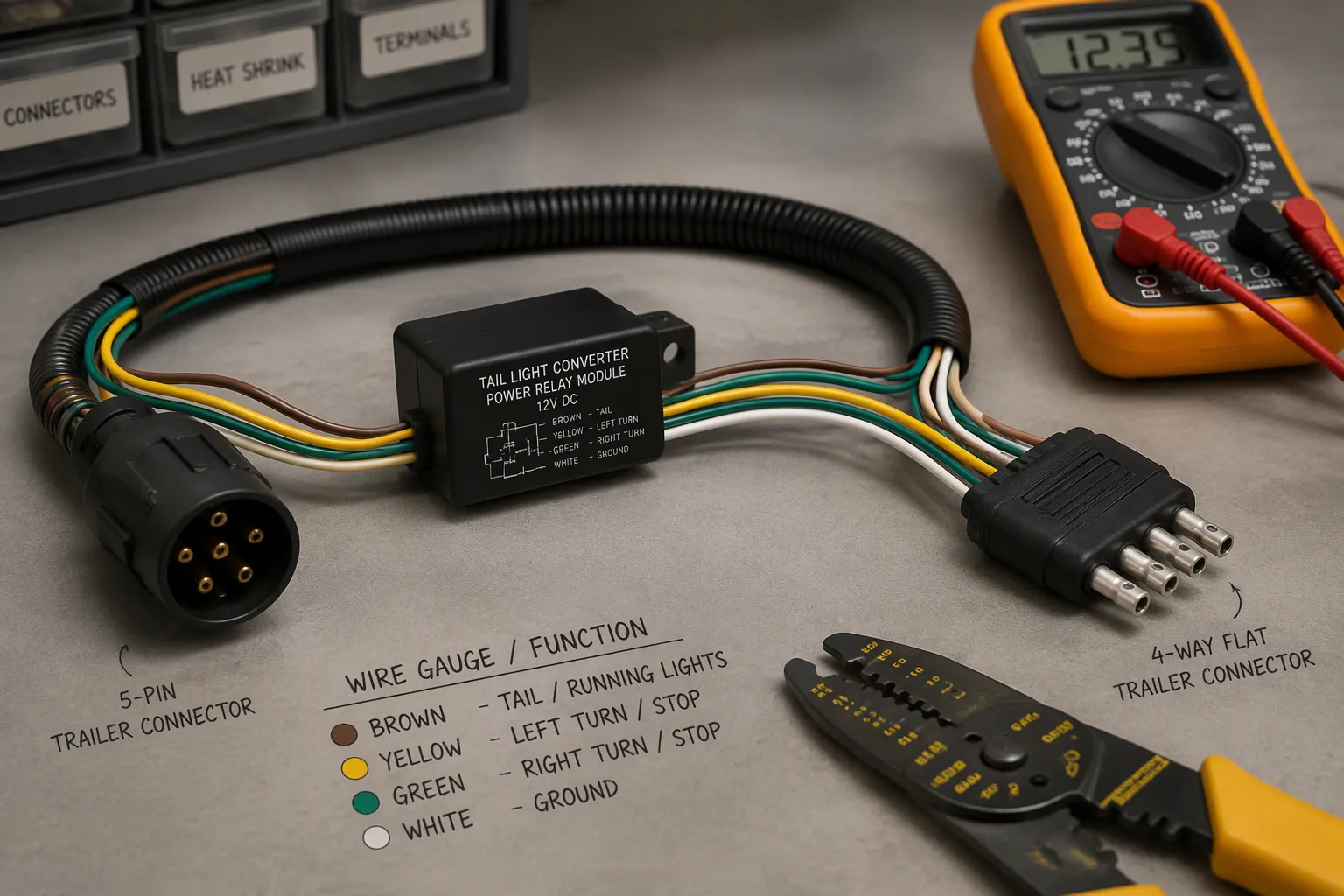
The 4-wire system on your tow vehicle carries four jobs: run lights, left turn/brake, right turn/brake, and ground. Your 5-wire trailer splits those same jobs across five conductors. Map each one before you order anything.
A typical 5-wire color set maps onto the 4-way side like this:
Confirm this mapping against your trailer's own wiring diagram. Color conventions vary between manufacturers, and a swapped turn signal is a safety problem, not a minor annoyance.
Handle the Auxiliary Fifth Wire
The fifth wire usually feeds a reverse light or another accessory circuit. Decide what it does before you order. A 5-to-4 converter leaves that circuit unused on the 4-way side, so the trailer's reverse lamp will not work through the adapter. If you need reverse lighting, plan for a separate feed.
You also need to know which plug your vehicle actually has. A 4-way flat carries the four basic circuits. A 5-way adds the auxiliary circuit. A 7-way adds electric brake and charge lines on top of that. Count the pins on your vehicle before you call anyone. A reliable custom 4 wire harness supplier can confirm the connector type from your vehicle details and build the harness to match.
2. Choose the professional Customized 5 wire trailer harness to 4 wire
Match Plugs and Pin Counts
Three connector styles cover most vehicle-trailer pairings. A vehicle-specific custom harness or T-connector plugs into your factory wiring and ends in a standard 4-way flat output. This style fits best when you want a clean, permanent install on a common tow vehicle. A plug-in 5-to-4 converter kit with relay wiring suits trailers that draw more current than the vehicle circuit handles directly. A wishbone-style 4-pin 5-wire harness splits two brown wires to feed the left and right taillights separately. That layout works well on motorcycle trailers and other narrow builds. If your project grows beyond four circuits, a Customized 6 wire wiring harness follows the same ordering logic.
Count the pins on both ends before you order. The trailer side must match your 5-wire plug. The vehicle side must match your 4-way flat. A professional Customized 5 wire trailer harness to 4 wire removes the guesswork, because the builder matches both ends to your exact pairing.
Match Gauge to Current Draw
Wire gauge must carry your trailer's lamp current without excess voltage drop. Add up the current of every lamp on each circuit. Then compare that total to the gauge's rating for your run length. Longer runs need heavier wire to hold voltage at the lamps. Undersized wire dims lights and heats up.
Tell your builder the lamp count and the distance from plug to taillight. A professional Customized 5 wire trailer harness to 4 wire from Xiamen Kehan Electronics Co., Ltd. can be specified to the exact vehicle-trailer pairing, including conductor size. Order a professional Customized 5 wire trailer harness to 4 wire with the right gauge once, and you avoid a rewire later.
3. Check Load Capacity and Compatibility
Compare Lamp Load to Rating
Your harness carries a rated current for each circuit. Your trailer's lamps draw a fixed current. The harness works safely only when the second number stays below the first.
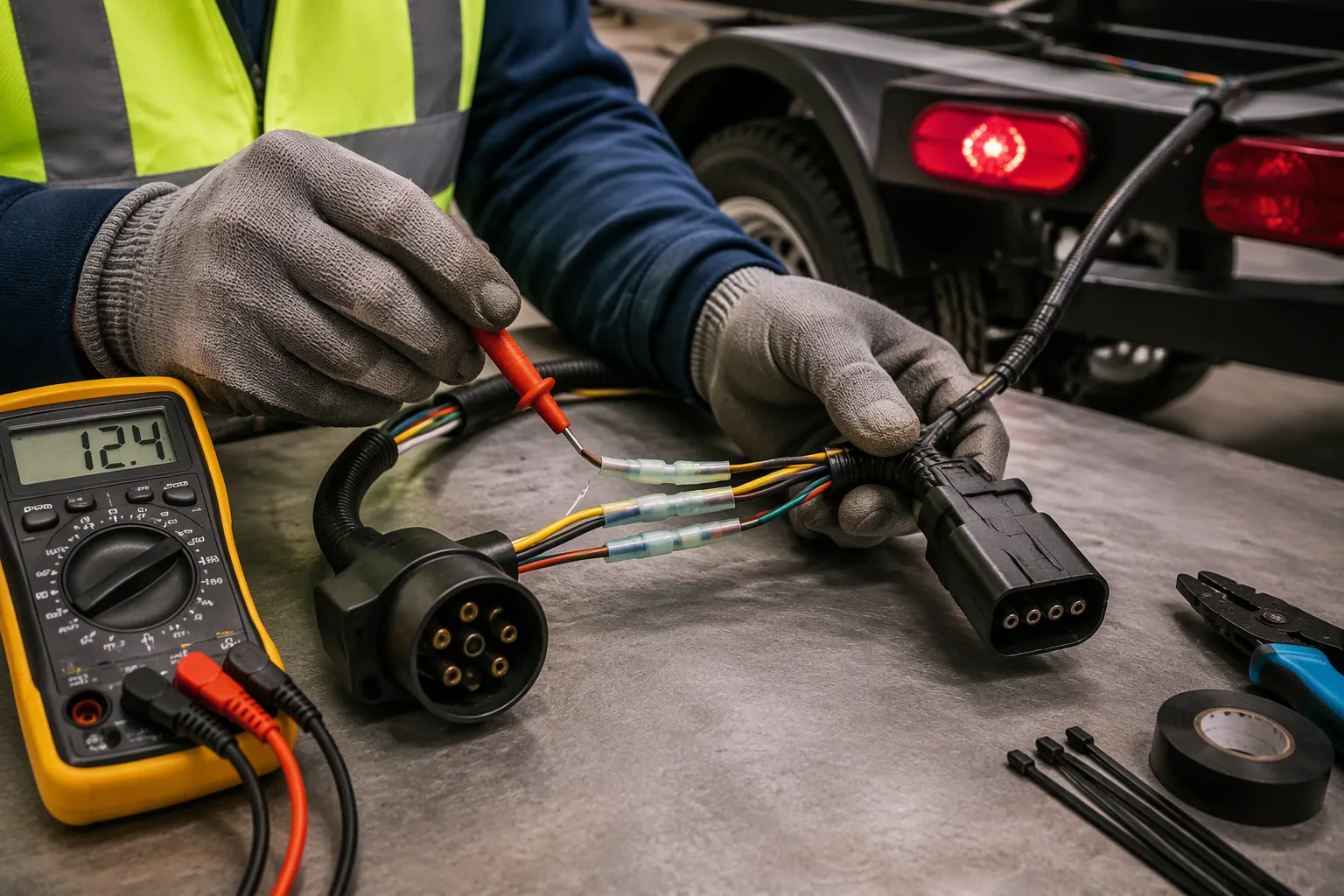
Add up the lamps on each circuit before you order. Count the running lights on the green circuit. Count the brake and turn lamps on each side. Compare each total to the rating your builder quotes for that circuit. Leave headroom for lamps you may add later, such as a marker light or a work light.
A circuit that runs at its limit leaves no room for a failed lamp or a corroded connection. Ask for the rating in writing, then check your lamp totals against it.
Verify Ground and Splice Quality
The ground wire carries the return current for every lamp on the trailer. A weak ground dims lights and causes strange cross-talk between circuits. Confirm the harness includes a dedicated ground conductor with the same gauge as the power wires. Check that the ground terminates at a clean metal point on the trailer frame.
Splice quality matters just as much. Factory crimps and sealed connectors resist vibration and moisture far better than field splices. Ask how the builder joins the fifth wire and how it seals each joint. Good 7 pin wire harness manufacturing practices carry over here, because both harness families face the same road conditions. Request a sealed, strain-relieved build, then inspect every joint before you tow.
4. Review Lighting and Safety Rules
Confirm Required Lamps and Signals
Your trailer must show the lamps your local rules require. Most jurisdictions expect taillights, brake lights, left and right turn signals, and a license plate lamp. Many also require side markers and reflectors. Check your state's rules before you order the harness. In the United States, FMVSS 108 sets the federal lighting standard for vehicles and trailers.
Match each required lamp to a circuit on your 4-way side. The run circuit feeds taillights and markers. The left and right circuits feed brake and turn lamps. Confirm the fifth wire's function does not carry a lamp the law requires. A reverse lamp is often optional. A required marker light is not. Write the lamp list down and hand it to your builder.
Plan for Inspection and Labeling
Many states inspect trailers at registration or at annual intervals. An inspector will check lamp function, lens condition, and wiring condition. A tidy harness passes faster. Route wires away from sharp edges and heat sources. Secure every run with clips or loom.
Label the harness before you install it. Tag each conductor at both ends with its function. Keep the builder's wiring diagram in the vehicle. A labeled harness speeds up roadside troubleshooting and inspection. Builders who supply 8 pin wire harness factories often apply the same labeling discipline to trailer harnesses. Ask for printed circuit tags and a sealed build sheet with your order. Then verify every lamp works before you leave the driveway.
5. Weigh Cost Against Durability
Compare Materials and Sealing
A cheap harness saves money when you buy it. But it often costs more over the life of the trailer. Compare the conductor material first. Copper carries current well and resists corrosion. Copper-clad aluminum weighs less and costs less, but it corrodes faster at exposed ends. Ask your builder which conductor you get.
Insulation and jacketing decide how long the harness survives sun, road salt, and flexing. Look for a jacket rated for outdoor use and abrasion. Sealed molded plugs beat open plugs with exposed pins. Heat-shrink and sealed splices keep moisture out of the joints. A quality 8 pin wire harness connector shows the same sealed construction you want on your 5-to-4 build. Inspect sample photos or a sample unit before you commit.
Price Customized 5 Wire to 4 Wire Harness Options
Prices vary with conductor gauge, run length, connector style, and sealing level. A short harness with standard plugs sits at the low end. A long run with heavy gauge, sealed molded ends, and printed labels sits higher. Neither option is wrong. Match the build to your actual towing conditions.
Ask each builder for a line-item quote. Separate the connector cost from the wire cost and the assembly labor. That breakdown lets you compare quotes fairly. A professional Customized 5 wire trailer harness to 4 wire should include the wiring diagram and circuit labels at no extra charge. Confirm the warranty terms in writing. A longer warranty usually signals a builder's confidence in the materials. Weigh that confidence against the upfront price, then choose the build that matches your trailer's real duty cycle.
Run one compact routine before you order. Map the five wires to four functions, match plugs and gauge, compare lamp load to rating, confirm your lighting rules, and weigh materials against price.
Treat the first four as safety items, not conveniences. A swapped turn signal or a weak ground fails on the road, not on the bench.
Write down your vehicle and trailer details first. Send them to a builder such as Xiamen Kehan Electronics Co., Ltd. Then re-check the finished harness against this list before you tow.
FAQ
Do you always need a converter for a 5-wire trailer?
Not always. Some trailers use the fifth wire only for a reverse lamp. Others route it to a separate accessory circuit. Check what that wire feeds on your trailer first. Then decide whether a converter, a dedicated feed, or a plain 4-way adapter fits your setup.
How do you confirm what the fifth wire does?
Trace the wire from the plug to its end point on the trailer. Test it with a meter while someone operates the reverse gear or the accessory switch. Compare the result to your trailer's wiring diagram. Never guess the function from color alone, because conventions vary between builders.
What details should you send a harness builder?
Send the vehicle year, make, and model, plus the plug type on both ends. List your lamp count per circuit and the distance from plug to taillight. Add the fifth wire's function and any local lighting rules. Clear details let the builder match the harness on the first attempt.
Can a 7-way vehicle feed a 5-wire trailer?
Yes. A 7-way plug carries the four basic circuits plus brake and charge lines. An adapter or custom harness can route the four shared circuits to your trailer's 5-wire plug. Confirm the auxiliary wire's function first, then specify which 7-way pins feed it.
How do you test the harness before the first tow?
Hook up the harness and check every lamp one at a time: run lights, left turn, right turn, brake, and ground. Wiggle each connector to catch loose joints. Confirm the fifth wire behaves as planned. Repeat the check after a short drive, then inspect again before any long trip.