


Types of Connectors Used in Medical Devices and Their Key Role in Wire Harnesses
2026-03-27 16:57Types of Connectors Used in Medical Devices and Their Key Role in Wire Harnesses
Medical devices of various sizes and forms rely heavily on connectors to ensure safe and reliable power transmission, high-speed data transfer, and precise fluid management. Many medical-grade connectors must meet stringent standards, including biocompatibility (ISO 10993), environmental sealing (IEC 60529), and electromagnetic interference (EMI) resistance (IEC 60601-1-2).
This article focuses on various medical connector technologies, covering specialized connectors for implantable devices, card edge connectors, and board-level interconnection solutions. It also explores header pins, in-line connectors suitable for board-to-board and wire-to-board integration, and spring-loaded connectors used in wearable and portable medical devices. Finally, it reviews widely used medical-grade connectors, such as circular metal connectors and quick-disconnect tubing connectors. Specifically, this article will discuss how these connectors achieve reliable interconnection within wire harness systems, integrating the perspective of wire harness design and application.
Specialized Connectors for Implantable Medical Devices and Their Wire Harness Integration
As shown in Figure 1, implantable medical devices (such as cardiac pacemakers, cochlear implants, and insulin pumps) utilize highly specialized connectors designed for long-term reliability, biocompatibility, and high-performance operation.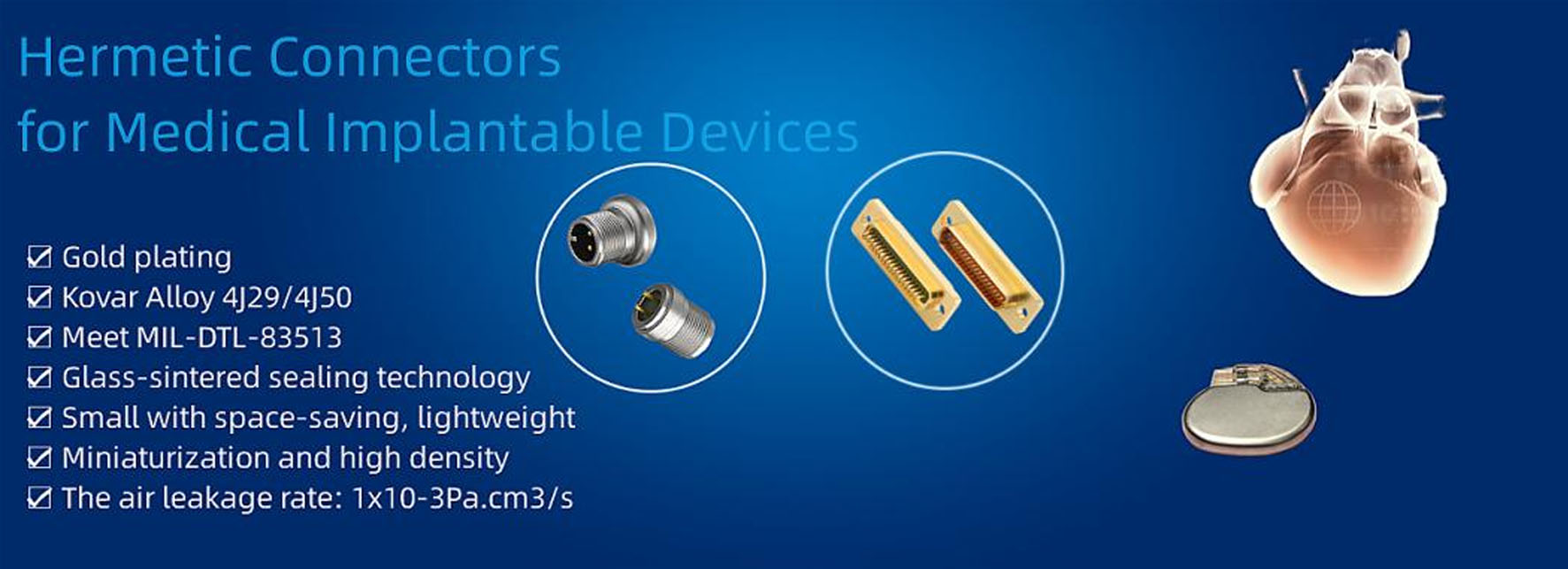
Figure 1. Hermetic connectors utilize gold-plated, Kovar alloy structures and glass-to-metal sealing technology to achieve high-reliability performance in medical implantable devices. Image credit: Sunkye
These connectors not only prevent contaminant ingress but also perform critical functions including power supply, data transmission, and wireless communication. They minimize EMI and resist external interference to maintain signal integrity. Key technical features include:
Hermetic Sealing: Provides airtight protection against pressure fluctuations, moisture, and other environmental factors that could affect electrical connections.
Biocompatibility: Ensures safe implantation and stable operation of devices such as pacemakers and defibrillators. Most implantable cardiac devices comply with stringent standards like IS-1, DF-1, IS-4, and DF-4.
High-Density Miniaturization: Supports miniaturized implantable devices by integrating power, data, and sensor signals into compact designs without compromising performance.
RF Coaxial: Ensures efficient wireless communication by maintaining robust signal transmission with minimal interference.
In medical wire harness applications, these specialized connectors often serve as the end interfaces of harnesses, integrated with high-reliability wires or micro-coaxial cables to form complete interconnection assemblies for implantable or internal devices. Wire harness design requires the selection of biocompatible insulating materials (such as PTFE or silicone rubber) and the use of precision welding or crimping processes to ensure long-term electrical stability in bodily fluid environments.
Using Card Edge Connectors to Facilitate High-Speed Medical Data Transmission
As shown in Figure 2, card edge connectors enable printed circuit boards (PCBs) with edge-mounted contact pads to connect directly to larger systems, thereby supporting high-speed data transmission and complex signal processing.
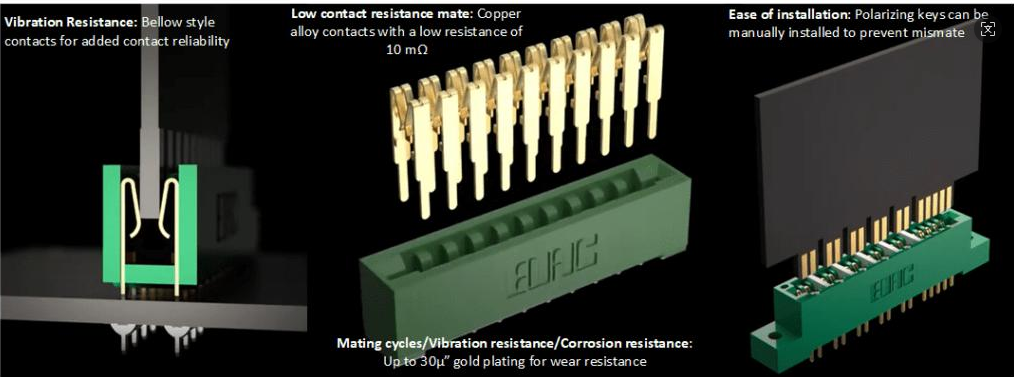
Figure 2. Card edge connectors feature bellows-type contacts for vibration resistance, copper alloy contacts for low resistance, and gold plating for wear resistance. (Image: ConnectorSupplier)
In hematology analyzers, data acquisition cards process sensor data through analog-to-digital conversion systems; in advanced patient monitoring systems, card edge connectors are used to expand storage or testing capabilities. Medical-grade card edge connectors must meet stringent reliability requirements—frequent mating and unmating in high-vibration environments can accelerate fretting corrosion, while exposure to reagents can increase wear. Thicker gold plating prevents oxidation of the base metal, enhances conductivity, and forms a protective barrier, thereby mitigating material degradation.
At the wire harness integration level, card edge connectors typically serve as the PCB termination point for harnesses, connecting to other system modules via precision cable assemblies. Harness design must consider impedance matching and shielding structures to maintain high-speed signal integrity while meeting the stringent EMI requirements of medical devices.
Achieving Reliable Board-to-Board and Wire-to-Board Connections
Header pin connectors, manufactured from high-conductivity copper alloys, are widely used in medical equipment such as X-ray machines, CT scanners, ultrasound systems, and MRI machines. They also support diagnostic cardiology equipment, cardiopulmonary support systems, patient monitors, and hematology analyzers.
These connectors achieve reliable board-to-board and wire-to-board connections by minimizing resistance and maintaining robust contact force. High-power headers support up to 20A for board-to-board power applications, and integrated ground plane contacts enhance electrical performance. For example, a 4mm pin spacing effectively reduces the risk of arcing, ensuring safety in high-power medical systems.
In medical wire harnesses, header pin connectors often serve as the critical interface between the harness and the main control board. Harness design must consider the matching of wire gauge to pin current ratings and employ appropriate strain relief structures to withstand mechanical stress from equipment movement or vibration.
While header pin connectors support board-to-board and wire-to-board connections, in-line connectors offer a more compact solution for wire-to-wire and wire-to-board applications, making them particularly suitable for medical wire harnesses. As shown in Figure 3, many medical header connector designs utilize full epoxy encapsulation to achieve IP67-rated dust protection and resistance to temporary liquid immersion in medical environments.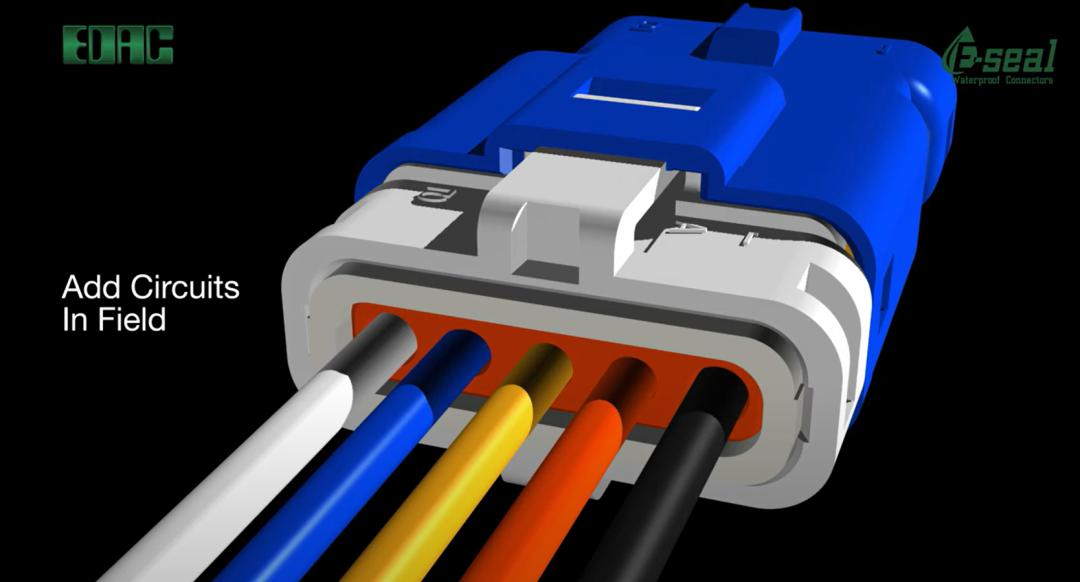
Figure 3. EDAC’s in-line connectors featuring E-Seal technology use a proprietary epoxy process to seal the entire back of the connector rather than individual pins. This design achieves an IP67 rating, providing dust protection and resistance to temporary immersion. Image credit: EDAC
In medical wire harness applications, in-line connectors are ideal for achieving quick connection and disconnection between devices or between sensors and host systems. Harness manufacturers can pre-assemble such connectors to provide modular, plug-and-play solutions, simplifying equipment assembly and field maintenance.
Spring-Loaded Connectors for Wearable and Portable Medical Devices
Spring-loaded (pogo-pin) connectors provide reliable charging and docking solutions for wearable health monitors, portable medical devices, and home health equipment. Many designs incorporate magnetic alignment features to enhance stability and ease of use. Rugged IP-rated versions resist vibration and minor misalignment, ensuring continuous operation in compact applications like hearing aids. Spring-loaded connectors maintain stable contact during turning, walking, and movement.
In medical wire harness applications, spring-loaded connectors are often integrated into the ends of charging or data synchronization harnesses, utilizing magnetic structures for convenient one-click docking. Their low insertion force makes them suitable for frequent connection and disconnection scenarios, while corrosion-resistant plating ensures long-term reliability.
Medical-Grade Connectors for Data, Power, and Fluid Management and Their Wire Harness Integration
Beyond implantable and board-level connectors, various medical-grade connectors facilitate safe data transmission, reliable electrical connections, and efficient fluid management in critical medical applications. The deep integration of these connectors with medical wire harnesses forms the foundation of complete system interconnection. Key types include:
Quick-Disconnect Tubing Connectors: As illustrated conceptually, these connectors enable safe, leak-free fluid and air transmission. Valve mechanisms seal upon disconnection, preventing leaks and contamination. Biocompatible materials and chemically resistant seals withstand disinfectants, medications, and sterilization processes. In harness applications, quick-disconnect tubing connectors typically serve as interfaces for pneumatic or fluidic lines, coordinating with electrical harnesses to achieve comprehensive device interconnection management.
Circular Metal Connectors: Offer durable, high-reliability connections. Metal housings provide excellent EMI shielding, and IP68-rated seals ensure sterilization resistance. Multiple keying options prevent mismating, and high mating cycle durability supports long-term use in harsh environments. In medical wire harnesses, such connectors are commonly used in surgical equipment, endoscope systems, and other scenarios demanding high reliability and protection. The internal harness structure often employs multi-core shielded configurations to ensure stable signal and power transmission.
USB Connectors: Used for data transmission and connection in patient monitoring systems, diagnostic equipment, and medical imaging devices. Medical-grade USB connectors feature rugged designs, waterproof sealing, and secure locking mechanisms for enhanced durability. In medical wire harnesses, USB interfaces often serve as communication channels between devices and external hosts or storage modules. Harness design must comply with electrical specifications for high-speed transmission.
HDMI Connectors: Support video display in medical imaging applications, such as point-of-care ultrasound. Such systems often require multiple video output options, including VGA, DVI, HDMI, and legacy formats like S-video or C-video. Medical-grade HDMI connectors are designed for demanding environments, resisting vibration, mechanical shock, and moisture. Their waterproof designs incorporate protective seals to prevent splashing and resist corrosive substances. In medical wire harnesses, HDMI harnesses require strict control of differential pair impedance and shielding effectiveness to ensure stable high-definition image transmission.
D-sub Connectors: Support sensor and actuator connections in medical monitors while ensuring robust electrical performance. Gold plating and secure mounting designs prevent contact degradation due to continuous vibration. Dedicated IP-rated seals protect D-sub connectors from dust and moisture. Many connectors feature metal shells grounded to the chassis and cable shielding to minimize EMI and maintain signal integrity. In medical wire harnesses, D-sub connectors are frequently used to terminate multi-conductor cables, enabling reliable interconnection between sensor arrays and control units.
RF Connectors: Transmit high-frequency signals in applications such as MRI machines, ultrasound devices, and patient monitoring systems. These connectors require precise impedance matching and robust shielding structures to maintain signal integrity and prevent EMI. Medical-grade RF connectors are also integrated into wearable devices to support reliable wireless communication. In medical wire harnesses, RF connectors are typically paired with coaxial cables to form high-frequency signal transmission paths. During harness assembly, strict control of strip length and crimping processes is required to ensure consistent RF performance.
Conclusion
In implantable, wearable, and diagnostic devices, medical-grade connectors and high-performance wire harnesses together form the core interconnection systems that support power delivery, data transmission, and fluid management. Advanced materials, precision engineering, and reliable environmental sealing technologies enable these connectors and their associated harnesses to withstand high vibration, frequent mating cycles, and the demanding clinical and physiological environment challenges. As medical devices continue to evolve towards miniaturization, intelligence, and higher reliability, the collaborative design and integrated application of connectors and wire harnesses will become increasingly critical.